
Obstruction Lighting
Northlane Solutions supplies low, medium and high intensity obstruction lights, solar powered units, monitoring systems and aircraft warning spheres for towers, cranes, buildings, stacks and offshore structures across Saudi Arabia, selected by structure height and location in accordance with ICAO Annex 14 obstacle marking and lighting requirements.
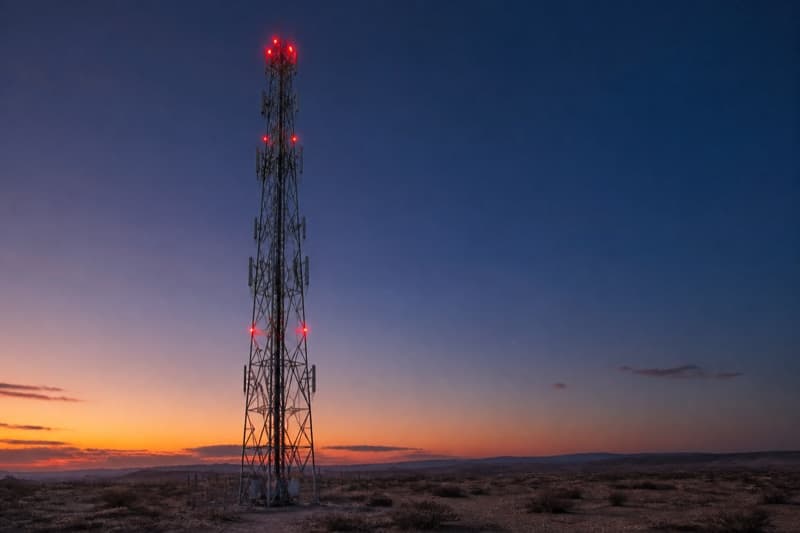
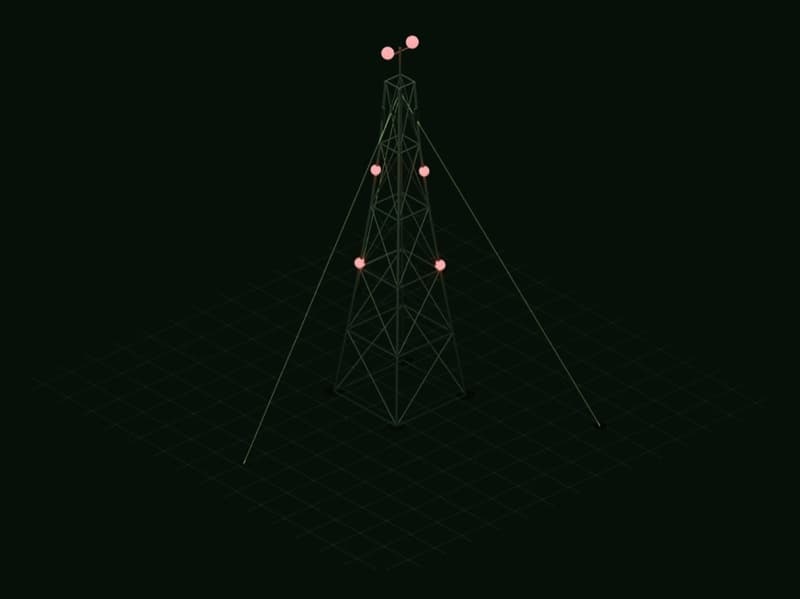
Any structure that penetrates the obstacle limitation surfaces around an aerodrome, or that simply sits tall enough to be a hazard to low flying aircraft, needs obstruction lighting. The requirement is not a matter of proximity to an airport alone: transmission towers, cranes on construction sites, tall buildings, industrial stacks and offshore platforms all fall under it depending on height and location, and the obligation typically sits with the structure's owner or operator rather than with the nearest aerodrome.
Intensity classes and when each applies
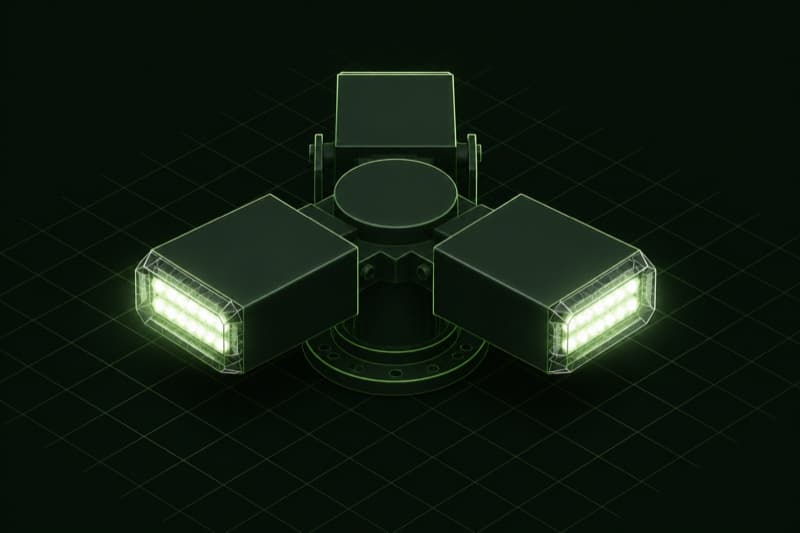
ICAO Annex 14 sets out low, medium and high intensity obstruction lights, and the correct class depends on the structure's height and its distance from an aerodrome's approach and departure paths rather than on preference. Low intensity units mark shorter structures and lower risk locations. Medium intensity units cover the mid range height band and are common on communication towers and industrial structures outside the immediate vicinity of an aerodrome. High intensity units, typically flashing white by day and red by night, mark the tallest structures and those closest to flight paths, where visibility during daylight matters as much as at night. Selecting the wrong class is not a minor specification error, since it changes what a pilot can actually see the structure to be.
Power supply and monitoring
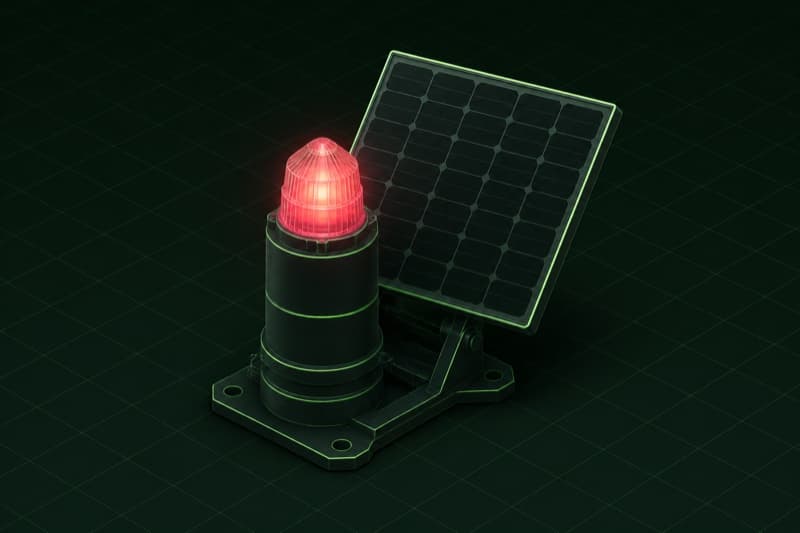
Many obstruction light locations, transmission towers and remote industrial structures in particular, have no reliable grid connection nearby, which is why solar powered obstruction lights are common in this market: self-contained units with battery backup that keep operating through cloudy periods and require no trenching to the structure. Monitoring is the other half of the reliability question. A failed obstruction light on a tall structure is a hazard that can go unnoticed for weeks without remote monitoring, so systems that report lamp status, battery condition and fault alarms back to a central point have become standard on structures where a site visit is expensive or difficult to arrange.
Aircraft warning spheres
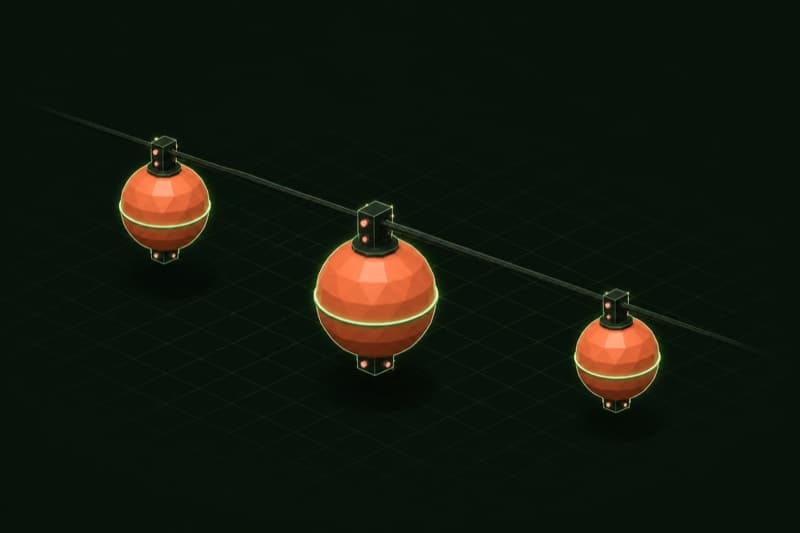
Where overhead transmission lines or cables cross an approach path or a valley used by low flying aircraft, the wire itself is the hazard rather than a tower, and aircraft warning spheres mounted directly on the conductor make the line visible against the sky in a way that a light at either end cannot achieve.
Delivery
Northlane Solutions specifies obstruction lighting to the height and location of each structure, supplies units matched to ICAO Annex 14 intensity requirements, and installs monitoring so lamp and battery status is visible without a site visit, then maintains the installed base on a scheduled basis.
Related products


Guides
Obstruction Light Types in Saudi Arabia: Low, Medium and High Intensity Explained
How to choose between low, medium and high intensity obstruction lights for towers, cranes and tall buildings in Saudi Arabia, day and night modes, and when each type applies under ICAO Annex 14.
What Drives the Cost of Obstruction Lighting Projects in Saudi Arabia
What actually drives obstruction lighting pricing in Saudi Arabia: structure height and intensity class, solar versus mains power, monitoring, portfolio quantity, and installation access.
GACA’s New Lighting Standards - How Saudi Owners Can Comply
GACA has issued updated airfield ground and obstruction lighting standards. Northlane Solutions explains what the changes mean for Saudi airport owners and how to meet the new requirements efficiently.
GACA Updates Airfield Lighting Standards: What Owners Need to Know
GACA recently updated airfield ground and obstruction lighting standards. Northlane Solutions helps Saudi owners understand the changes and comply with new requirements.
Frequently Asked Questions
Which structures need obstruction lighting in Saudi Arabia?+
Any structure penetrating the obstacle limitation surfaces around an aerodrome, or tall enough to be a hazard independent of an airport's proximity: towers, cranes, tall buildings, stacks and offshore platforms among them, with the intensity class set by height and location.
How do I know if I need low, medium or high intensity lights?+
It follows the structure's height and its position relative to an aerodrome's approach and departure paths under ICAO Annex 14. NLS assesses the structure against those criteria before specifying rather than defaulting to one class.
Why use solar powered obstruction lights instead of a grid connection?+
Many towers and remote structures have no reliable grid nearby. Solar units with battery backup avoid trenching to the structure and keep operating through cloudy periods, which usually makes them the practical choice for remote sites.
Can obstruction light status be monitored remotely?+
Yes. NLS installs monitoring systems that report lamp status, battery condition and fault alarms back to a central point, so a failure is flagged immediately rather than found on the next scheduled visit.