

Obstruction Light Monitoring
Obstruction light monitoring is a remote surveillance service that tracks lamp status, power supply and flash synchronization across a structure's obstruction lighting system, alerting the operator the moment a fault occurs instead of waiting for the next physical inspection. NLS deploys and manages monitoring systems alongside its obstruction lighting supply across Saudi Arabia so structures stay continuously compliant.
Inside the Obstruction Light Monitoring
An obstruction light monitoring system pairs sensing modules at each beacon with a communications link and a central software platform, so lamp status, power supply and flash synchronisation across a whole structure are visible from a single dashboard. Together these parts turn a fault that would otherwise wait for the next site visit into an immediate alert.

01
Beacon Sensor Module
Attaches to each obstruction light and reads lamp current, flash timing and photocell state directly at the fixture, catching a failing lamp or driver before it goes dark.

02
Communications Gateway
Collects readings from every sensor module on the structure and relays them to the monitoring platform over a cellular, radio or wired link, giving the system reach on structures where beacons are spread across a wide area.

03
Monitoring Software Platform
Displays live status for every monitored beacon, logs fault history and issues alerts to the operator the moment a lamp, power supply or synchronisation fault is detected.

04
Power Supply Monitor
Tracks voltage and current at the fixture's power feed, distinguishing a lamp failure from an upstream power fault so maintenance crews are dispatched with the right diagnosis, not a guess.

05
Alert Notification Unit
Pushes fault alerts to the operator by the notification channel configured for the site, keeping the structure's obstruction lighting compliance visible without requiring a physical inspection round.
FULLY ASSEMBLED
Obstruction Light Monitoring


| Monitored parameters | Lamp status, power supply condition and flash synchronisation across all connected beacons |
| Communications link | Cellular, radio or wired connection between the beacon sensors and the monitoring platform |
| Alerting approach | Real-time fault notification to the operator, replacing reliance on scheduled physical inspection |
| Compatibility | Integrates with low, medium and high intensity obstruction lighting fixtures on the same structure |
| Deployment | Sensor modules fitted per beacon with a central gateway serving the full structure |
| Operating environment | Engineered for continuous outdoor exposure at elevation across the Kingdom's climate conditions |
Why a failed obstruction light is a compliance problem, not just a maintenance one
A tower, crane or stack fitted with obstruction lights is compliant only while those lights actually work. A single failed lamp on an otherwise correctly lit structure creates a gap that is invisible from the ground during the day and often unnoticed until a scheduled inspection, an aviation authority query, or worse, an incident. Obstruction light monitoring closes that gap by watching the system continuously rather than periodically.
What the service tracks
A monitoring deployment typically reports lamp on and off status, power supply continuity (grid, generator or solar battery state), and, on structures with multiple synchronized high intensity fixtures, whether the flash pattern remains coordinated across units. Alerts are pushed to the responsible party by SMS, email or a monitoring dashboard depending on the system and the client's preference, so a fault triggers action within hours rather than being discovered weeks later.
Method
NLS assesses the structure's existing lighting system, or specifies monitoring as part of a new obstruction lighting supply, and fits sensors and a telemetry unit that communicate over cellular or satellite connectivity depending on site location. For remote or offshore structures with no reliable cellular coverage, satellite-based telemetry keeps the monitoring link active regardless of terrain. The system is commissioned alongside the lighting itself, with test alerts verified before handover so the client knows the alerting chain actually works before it is needed.
Deliverables
Clients receive a working monitoring link tied to their obstruction lighting, an agreed alert routing (who is notified and how), and, where requested, a periodic status report summarizing uptime and any fault events over the reporting period. This turns obstruction lighting from a fit-and-forget installation into a continuously verified compliance asset.
Who this suits
Monitoring is most valuable on structures where a fault would take time to notice through routine site presence, remote towers, offshore platforms, tall structures with multiple high intensity fixtures, and any site where the operator cannot practically walk past the structure and look up every night. NLS offers monitoring as an add-on to any new obstruction lighting supply and as a standalone retrofit onto existing lighting systems that currently have no visibility into fault status.
Specifications
- ✓Continuous remote tracking of lamp on/off status across the obstruction lighting system
- ✓Power supply monitoring across grid, generator and solar battery configurations
- ✓Flash synchronization verification on structures with multiple high intensity fixtures
- ✓Cellular or satellite telemetry depending on site connectivity, including remote and offshore locations
- ✓Alert routing by SMS, email or dashboard to the responsible party
- ✓Deployable on new NLS-supplied lighting or retrofitted onto existing obstruction lighting systems
Frequently Asked Questions
How quickly does obstruction light monitoring detect a lamp failure?+
Monitoring systems check lamp and power status continuously and push an alert as soon as a fault condition is detected, typically within minutes, rather than waiting for the next scheduled site visit or inspection.
Can monitoring be added to an obstruction lighting system NLS did not originally install?+
Yes. NLS assesses existing obstruction lighting systems and fits monitoring sensors and telemetry as a retrofit, independent of who originally supplied the lights.
Does obstruction light monitoring work on offshore or remote sites without cellular coverage?+
Yes. For sites without reliable cellular coverage, NLS specifies satellite-based telemetry so the monitoring link remains active regardless of terrain or distance from populated areas.
What is the role of the Beacon Sensor Module in Obstruction Light Monitoring?+
Attaches to each obstruction light and reads lamp current, flash timing and photocell state directly at the fixture, catching a failing lamp or driver before it goes dark.
What is the role of the Communications Gateway in Obstruction Light Monitoring?+
Collects readings from every sensor module on the structure and relays them to the monitoring platform over a cellular, radio or wired link, giving the system reach on structures where beacons are spread across a wide area.
What is the role of the Monitoring Software Platform in Obstruction Light Monitoring?+
Displays live status for every monitored beacon, logs fault history and issues alerts to the operator the moment a lamp, power supply or synchronisation fault is detected.
What is the role of the Power Supply Monitor in Obstruction Light Monitoring?+
Tracks voltage and current at the fixture's power feed, distinguishing a lamp failure from an upstream power fault so maintenance crews are dispatched with the right diagnosis, not a guess.
What is the role of the Alert Notification Unit in Obstruction Light Monitoring?+
Pushes fault alerts to the operator by the notification channel configured for the site, keeping the structure's obstruction lighting compliance visible without requiring a physical inspection round.
Who supplies Obstruction Light Monitoring in Saudi Arabia?+
Northlane Solutions (Northlane Solutions Company) supplies Obstruction Light Monitoring across Saudi Arabia, including Riyadh, Jeddah, Dammam and Jubail. Send your specification and quantities to info@northlanesolution.com for a quotation.
Related products
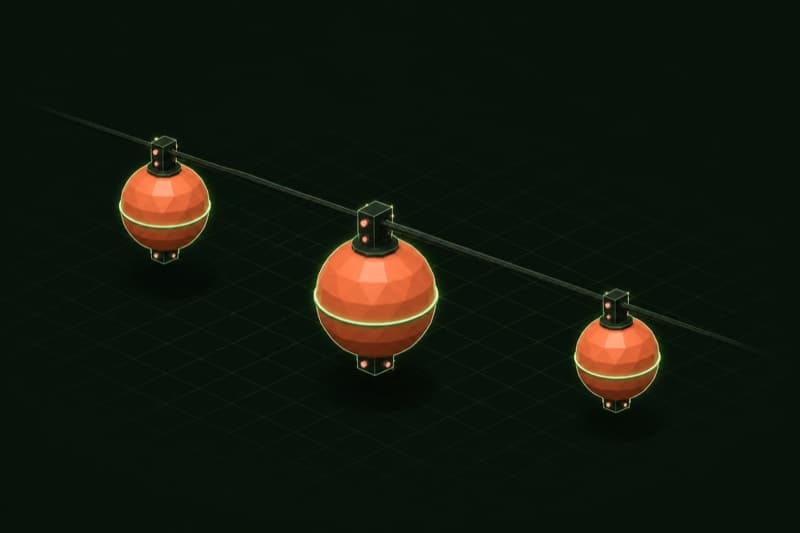
Aircraft Warning Spheres
Aircraft warning spheres are large coloured marker balls fitted onto overhead power lines, cables and wires that cross valleys, rivers or approach paths, giving pilots a visible daytime warning where a solid structure light is impractical. NLS supplies and installs aircraft warning spheres across Saudi Arabia in orange, white or a combination pattern per ICAO Annex 14 marking requirements.
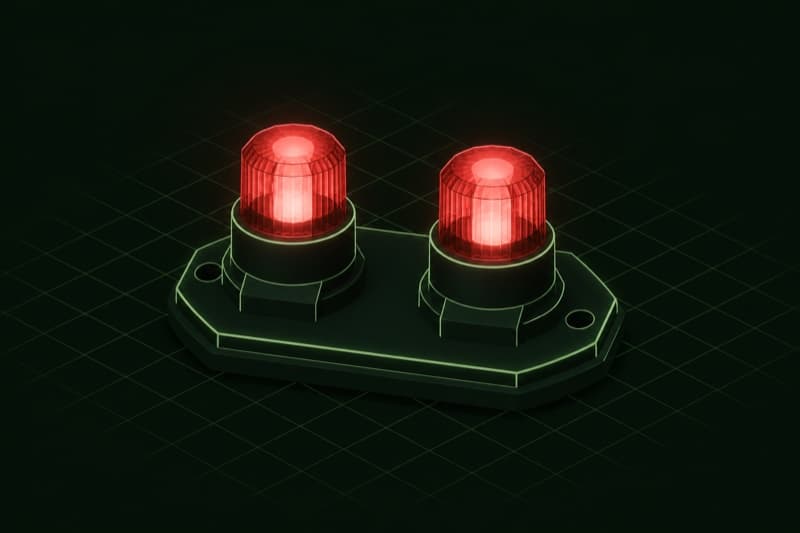
Low Intensity Obstruction Lights
Low intensity obstruction lights are fixed red beacons mounted on structures below roughly 45 metres, marking towers, cranes, rooftops and stacks for night visibility, specified under the low intensity obstruction light provisions of ICAO Annex 14 Volume I. NLS supplies and installs these fixtures across Saudi Arabia sourced from established international aviation lighting manufacturers.
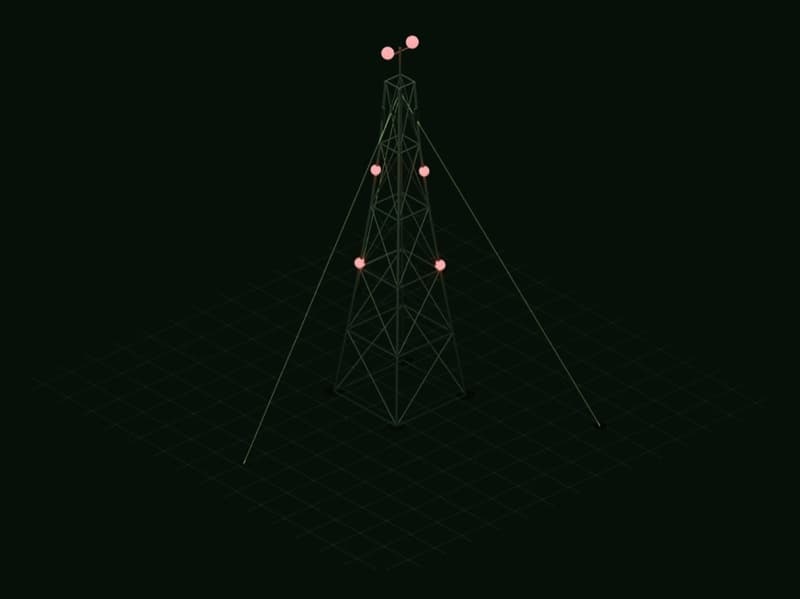
Medium Intensity Obstruction Lights
Medium intensity obstruction lights are flashing red or white beacons for structures roughly 45 to 150 metres tall, giving pilots earlier warning of towers, chimneys and elevated buildings, class selected by the aeronautical study under ICAO Annex 14 Volume I. NLS supplies and installs medium intensity systems throughout Saudi Arabia as part of turnkey obstruction lighting packages.
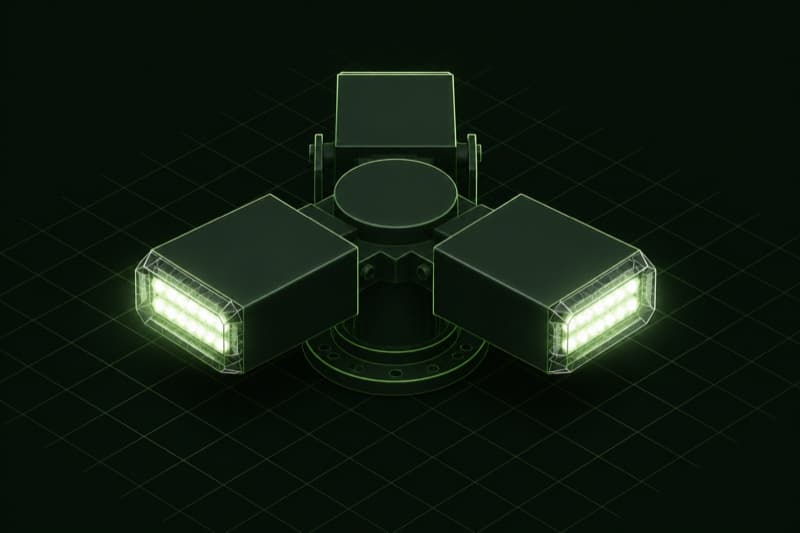
High Intensity Obstruction Lights
High intensity obstruction lights are powerful white flashing beacons for the tallest structures, transmission towers, tall buildings and offshore platforms, marking them under the high intensity provisions of ICAO Annex 14 Volume I, class set by the aeronautical study, so they remain visible by day and night from long range. NLS supplies and installs high intensity systems in Saudi Arabia.
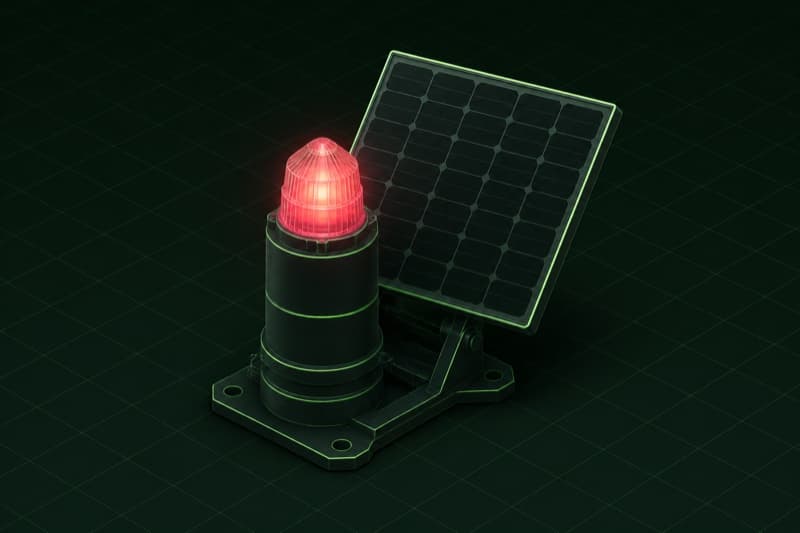
Solar Obstruction Lights
Solar obstruction lights combine a low or medium intensity beacon with an integral solar panel, battery and controller, marking towers, masts and remote structures that have no grid connection. NLS supplies and installs solar-powered obstruction lighting across Saudi Arabia for off-grid sites, sizing the solar and battery capacity to the site's location and duty cycle.