
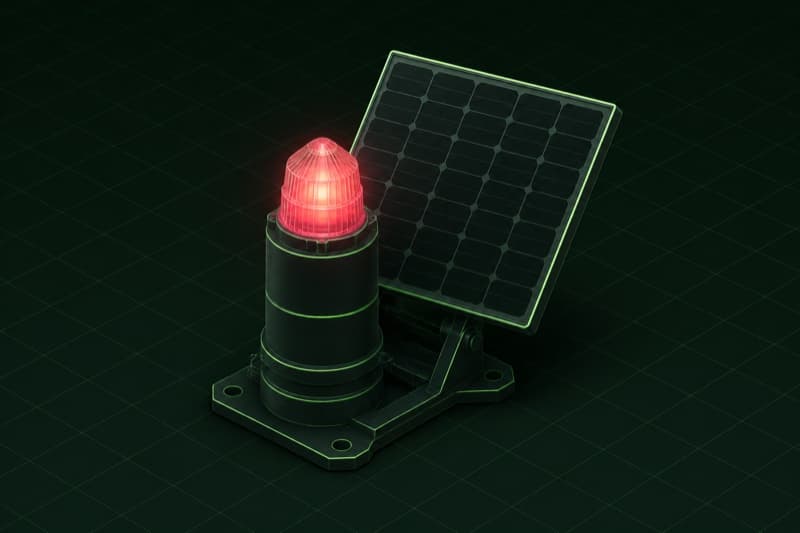
Solar Obstruction Lights
Solar obstruction lights combine a low or medium intensity beacon with an integral solar panel, battery and controller, marking towers, masts and remote structures that have no grid connection. NLS supplies and installs solar-powered obstruction lighting across Saudi Arabia for off-grid sites, sizing the solar and battery capacity to the site's location and duty cycle.
Inside the Solar Obstruction Lights
A solar obstruction light assembly integrates a low or medium intensity beacon with a solar panel, a battery bank and a charge controller sized to the site's solar resource and duty cycle, so the fixture runs indefinitely without a grid connection. Each part is matched so the light stays lit through the region's cloud days and duty cycle demands.

01
LED Beacon Head
Produces the flashing or steady low or medium intensity output at low power draw, since every watt the head consumes has to be recovered from the solar panel and battery through the site's duty cycle.

02
Solar Panel
Converts daylight into the charge current that replenishes the battery, sized to the structure's location and the local solar resource so the system recovers enough energy on a typical day to cover the following night.

03
Battery Bank
Stores the energy the panel collects and supplies the beacon overnight and through periods of reduced sunlight, sized with reserve autonomy for consecutive cloudy or dusty days.

04
Charge Controller
Regulates the current between the panel, battery and beacon head, protecting the battery from overcharge and deep discharge and managing the day and night switching without a grid-fed timer.

05
Weatherproof Enclosure
Houses the battery and controller in a sealed, corrosion resistant case, protecting the electronics that keep the system running unattended at remote off-grid structures.

06
Mounting Bracket
Fixes the beacon head and panel to the mast, tower or structure at the orientation that gives the panel clear sun exposure while keeping the light aligned to its required viewing angle.
FULLY ASSEMBLED
Solar Obstruction Lights


| Power source | Integral solar panel and battery bank, sized to site location and duty cycle, no grid connection required |
| Battery autonomy | Reserve capacity for consecutive low-sunlight days, sized per site solar assessment |
| Body material class | Corrosion resistant, weatherproof housing for unattended outdoor operation |
| Ingress protection approach | Sealed beacon, battery and controller compartments suited to dust and wind-driven rain at remote sites |
| Control compatibility | Automatic photocell-driven day and night switching, integrable with remote monitoring platforms |
| Mounting | Bracket mounting engineered for masts, towers and remote off-grid structures |
| Operating environment | Engineered for continuous off-grid operation across the Kingdom's solar resource and dust conditions |
Solving the off-grid obstruction lighting problem
Communications towers, meteorological masts, transmission structures and construction cranes on remote sites often sit far from the nearest grid connection. Running a dedicated power line to light a single tower is expensive and, on many sites across Saudi Arabia's interior and coastal desert regions, simply impractical. Solar obstruction lights solve this by pairing the beacon itself with a solar panel, battery bank and charge controller sized to keep the light running through its full duty cycle, including extended cloudy periods, without any external power feed.
How sizing works
A solar obstruction light is only as reliable as its power budget. NLS sizes the panel and battery capacity against the site's solar irradiance profile, the light's classification (low or medium intensity, flashing or steady), and the required autonomy, the number of consecutive low-sunlight days the system must survive without recharging. Getting this sizing wrong is the most common cause of solar obstruction light failure in the field, where an undersized battery leaves the light dark during exactly the conditions, storms and overcast periods, when visibility matters most.
Standards and classification stay the same
A solar-powered fixture still has to meet the same ICAO Annex 14 Volume I classification requirements as a grid-fed light of the same intensity. Solar supply changes how the light is powered, not what class of light the structure needs. NLS determines the required intensity class first, from the aeronautical study or site assessment, then specifies a solar system capable of running that class reliably.
Where NLS deploys these
Solar obstruction lights suit remote towers and masts, temporary crane installations on construction sites without permanent power yet, agricultural and pipeline infrastructure, and any structure where extending grid power solely to light an obstruction beacon does not make sense. NLS supplies the complete unit, panel, battery, controller and light, as one package and handles installation including panel orientation and mounting for maximum solar yield at the site's latitude.
Maintenance in remote locations
Because these installations are often far from routine site visits, NLS recommends remote monitoring on solar obstruction lights so battery state, panel output and lamp status can be checked without a physical visit, and so a fault is flagged before the light actually goes dark rather than discovered on the next scheduled inspection.
Specifications
- ✓Integral solar panel, battery bank and charge controller sized to site irradiance and required autonomy days
- ✓Low or medium intensity beacon output conforming to the same ICAO Annex 14 Volume I classes as grid-fed lights
- ✓Weatherproof, dust and heat rated enclosure suited to remote desert and coastal deployment
- ✓Adjustable panel mounting for optimal solar yield at the installation latitude
- ✓No dependency on grid power or generator fuel logistics at the site
- ✓Compatible with remote monitoring for battery state, panel output and lamp status
Frequently Asked Questions
Can solar obstruction lights operate reliably in cloudy or dusty conditions?+
Yes, provided the solar panel and battery are correctly sized for the site's irradiance profile and required autonomy period. NLS calculates this sizing from local solar data rather than a generic assumption, which is what keeps the light operating through extended overcast or dusty spells.
Do solar obstruction lights meet the same ICAO and FAA standards as grid-powered lights?+
Yes. The power source does not change the classification requirement. A solar unit is built to the same low or medium intensity standard the structure requires under ICAO Annex 14 Volume I, with the solar and battery system sized to sustain that output continuously.
How long can a solar obstruction light run without sunlight?+
This is set by the autonomy period the battery is sized for, typically several consecutive days depending on the site's climate and the light's classification. NLS specifies this figure with the client before supply rather than relying on a standard default that may not suit the site.
What is the role of the LED Beacon Head in Solar Obstruction Lights?+
Produces the flashing or steady low or medium intensity output at low power draw, since every watt the head consumes has to be recovered from the solar panel and battery through the site's duty cycle.
What is the role of the Solar Panel in Solar Obstruction Lights?+
Converts daylight into the charge current that replenishes the battery, sized to the structure's location and the local solar resource so the system recovers enough energy on a typical day to cover the following night.
What is the role of the Battery Bank in Solar Obstruction Lights?+
Stores the energy the panel collects and supplies the beacon overnight and through periods of reduced sunlight, sized with reserve autonomy for consecutive cloudy or dusty days.
What is the role of the Charge Controller in Solar Obstruction Lights?+
Regulates the current between the panel, battery and beacon head, protecting the battery from overcharge and deep discharge and managing the day and night switching without a grid-fed timer.
What is the role of the Weatherproof Enclosure in Solar Obstruction Lights?+
Houses the battery and controller in a sealed, corrosion resistant case, protecting the electronics that keep the system running unattended at remote off-grid structures.
What is the role of the Mounting Bracket in Solar Obstruction Lights?+
Fixes the beacon head and panel to the mast, tower or structure at the orientation that gives the panel clear sun exposure while keeping the light aligned to its required viewing angle.
Who supplies Solar Obstruction Lights in Saudi Arabia?+
Northlane Solutions (Northlane Solutions Company) supplies Solar Obstruction Lights across Saudi Arabia, including Riyadh, Jeddah, Dammam and Jubail. Send your specification and quantities to info@northlanesolution.com for a quotation.
Related products

Obstruction Light Monitoring
Obstruction light monitoring is a remote surveillance service that tracks lamp status, power supply and flash synchronization across a structure's obstruction lighting system, alerting the operator the moment a fault occurs instead of waiting for the next physical inspection. NLS deploys and manages monitoring systems alongside its obstruction lighting supply across Saudi Arabia so structures stay continuously compliant.
Aircraft Warning Spheres
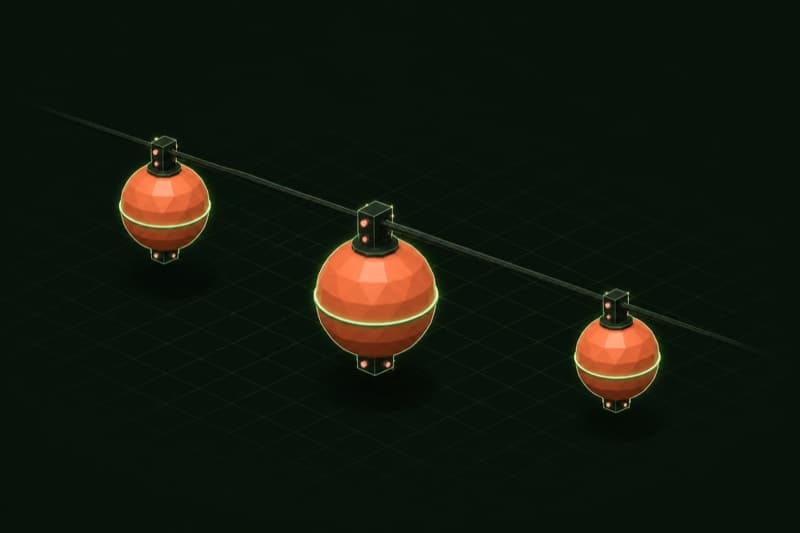
Aircraft warning spheres are large coloured marker balls fitted onto overhead power lines, cables and wires that cross valleys, rivers or approach paths, giving pilots a visible daytime warning where a solid structure light is impractical. NLS supplies and installs aircraft warning spheres across Saudi Arabia in orange, white or a combination pattern per ICAO Annex 14 marking requirements.

Low Intensity Obstruction Lights
Low intensity obstruction lights are fixed red beacons mounted on structures below roughly 45 metres, marking towers, cranes, rooftops and stacks for night visibility, specified under the low intensity obstruction light provisions of ICAO Annex 14 Volume I. NLS supplies and installs these fixtures across Saudi Arabia sourced from established international aviation lighting manufacturers.
Medium Intensity Obstruction Lights
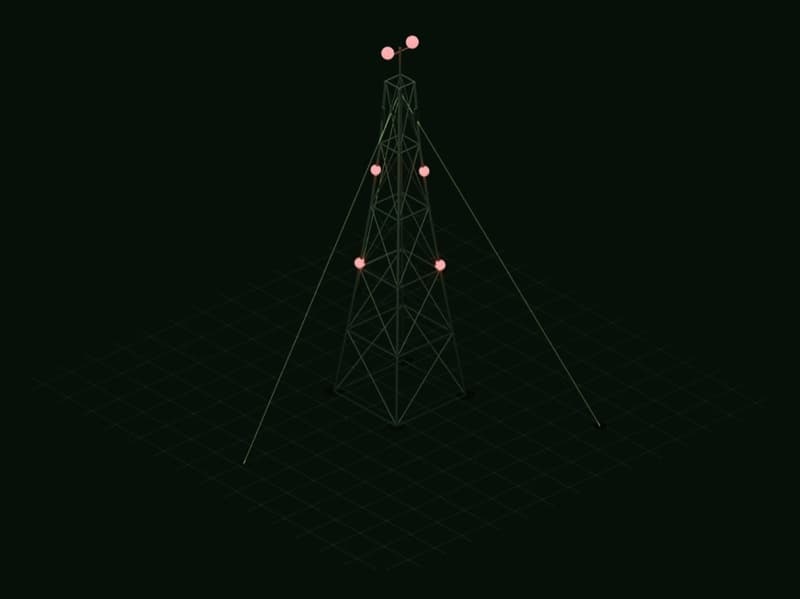
Medium intensity obstruction lights are flashing red or white beacons for structures roughly 45 to 150 metres tall, giving pilots earlier warning of towers, chimneys and elevated buildings, class selected by the aeronautical study under ICAO Annex 14 Volume I. NLS supplies and installs medium intensity systems throughout Saudi Arabia as part of turnkey obstruction lighting packages.
High Intensity Obstruction Lights
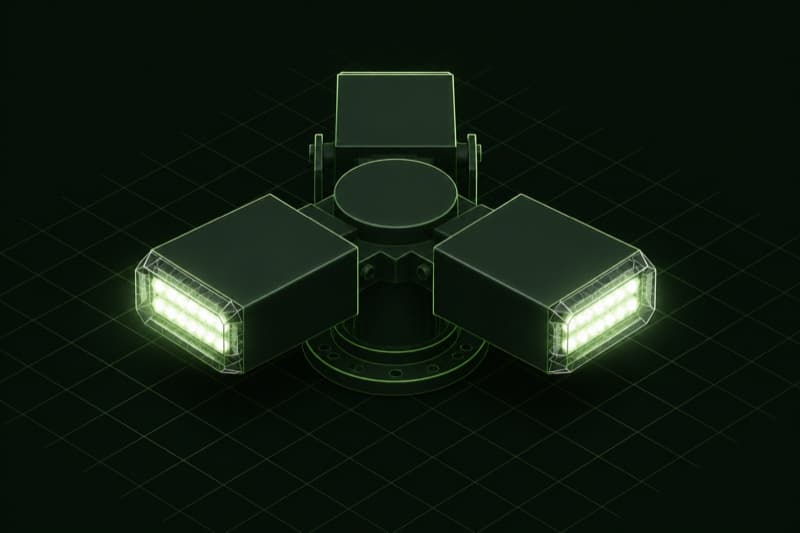
High intensity obstruction lights are powerful white flashing beacons for the tallest structures, transmission towers, tall buildings and offshore platforms, marking them under the high intensity provisions of ICAO Annex 14 Volume I, class set by the aeronautical study, so they remain visible by day and night from long range. NLS supplies and installs high intensity systems in Saudi Arabia.