
Posted on 2026-05-09
What Drives the Cost of Obstruction Lighting Projects in Saudi Arabia
Ask for a price on obstruction lighting in Saudi Arabia and the honest answer is: it depends on five things, and most quote requests only specify one or two of them. A single tower needs a different answer than a portfolio of forty. A site with grid power on hand costs less to light than one in the desert with none. Getting a number that actually holds once the order is placed means pinning down what is driving it before anyone prices anything.
Structure height and intensity class set the baseline
Obstruction lighting requirements scale with how tall a structure is and how it sits relative to nearby aerodrome operations, following the obstacle marking and lighting provisions of ICAO Annex 14 Volume I. A short structure typically needs a lower-intensity light, often just a steady or flashing red unit. A tall tower or stack usually needs medium or high-intensity white or dual-mode fixtures, sometimes at multiple levels up the structure rather than just the top. The dominant line item on most obstruction lighting quotes is not the light fixture itself, it is how many intensity levels and how many mounting points the height of the structure actually calls for. A tall tower carrying mid-level and top-level lighting is far more involved than a short pole with a single beacon, and the price reflects that directly.
Solar versus mains power changes the whole system
Where a structure sits relative to the electrical grid decides whether obstruction lighting is a lighting purchase or a small power system purchase. A tower on an industrial site with mains power nearby needs a fixture, a controller, and a cable run, which keeps the scope simple and the cost close to the equipment price alone. A tower in a remote area with no grid connection needs a solar array, batteries, and a charge controller sized for the local solar resource and the light's duty cycle, and that hardware is often several times the cost of the light fixture it powers. Site access for battery replacement and panel cleaning also becomes a recurring cost once the system is live, on top of the one-time install cost. Before requesting a number, know whether grid power reaches the base of every structure on the list, because that single fact splits the quote into two entirely different scopes.
Monitoring requirements add a layer most buyers do not anticipate
A basic obstruction light with no remote status reporting is the cheapest configuration available, and it is also the configuration that leaves an operator finding out a light has failed only when someone reports seeing a dark tower at night, which is the outcome regulators are trying to prevent. Remote monitoring, typically a GSM or satellite link reporting light status back to a central point, adds hardware, a subscription cost for the communication link, and integration work to get status data into wherever the operator actually watches it. For a single tower this can look like an unnecessary add. Across a portfolio of towers spread over a wide area, monitoring is often what makes ongoing compliance realistic at all, because nobody is driving out to inspect forty structures on a schedule. Whether monitoring is a nice-to-have or effectively mandatory depends entirely on how many structures are involved and how far apart they sit, which is exactly why this driver has to be scoped per project rather than assumed either way.
Portfolio quantity changes the unit economics
A single obstruction light on one crane during a construction phase is priced close to retail, because there is no economy of scale to draw on and mobilization for the installation crew has to be absorbed by that one unit. A portfolio of towers, whether that is a telecom operator's tower estate, a wind farm, or a cluster of cranes on one large site, changes the math. Bulk procurement of fixtures brings the per-unit hardware cost down. One mobilization covers many installation points instead of one. Spare parts and future replacement units can be batched into the same order instead of triggering a fresh procurement cycle each time a light fails. Anyone comparing a per-tower quote for one structure against a per-tower quote for a forty-tower rollout and expecting the same number is comparing two different pricing regimes, not the same service at different volumes.
Installation access is often the line item nobody scoped
The lighting equipment itself is usually the most predictable part of an obstruction lighting project. Getting a technician safely to the mounting point, and getting cable or conduit run to it, is where actual site conditions start moving the number. A rooftop structure with an existing access ladder and a nearby power point is straightforward. A guyed mast, a stack that needs rope access or a man-lift, or a remote tower with no road access and no existing power infrastructure all add cost that has nothing to do with the light fixture and everything to do with reaching it safely and running cable to it. Working at height on live industrial or aviation-adjacent infrastructure also brings safety and permitting requirements that add time before installation can start. A quote built without a site visit or at minimum detailed site photographs and access information is a placeholder, not a real number, because access conditions are frequently the single largest variable in the installed cost once equipment is accounted for.
Getting an accurate number
An obstruction lighting quote that holds up is one built on the actual answers to five questions: how tall is the structure and what intensity class does that height call for, is grid power available at the base or does the system need to be self-powered, does the operator need remote status monitoring or is periodic visual inspection acceptable, is this one structure or a portfolio that changes the procurement math, and what does the installation team actually have to deal with to reach the mounting points safely. Structures marked and lit without a clear answer to each of these tend to get re-quoted, sometimes after equipment has already been ordered against the wrong assumption. Northlane Solutions supplies and installs obstruction lighting across Saudi Arabia engineered to the obstacle marking and lighting requirements of ICAO Annex 14 Volume I, sized to the structure, the power situation, and the monitoring requirement each project actually has. Self-powered sites are covered by Solar Obstruction Lights and remote status checks by Obstruction Light Monitoring.
FAQ
Q: What is the single biggest driver of obstruction lighting cost in Saudi Arabia? A: Structure height and the intensity class it requires under ICAO Annex 14 Volume I is usually the starting driver, since it decides how many fixtures, at how many levels, and at what intensity a structure needs. Power source and site access frequently overtake it once a project moves away from a straightforward site with grid power nearby.
Q: Is solar obstruction lighting more expensive than mains-powered lighting? A: The equipment cost is higher upfront because a solar system needs a panel, battery, and charge controller sized to the light's duty cycle and the local solar resource, on top of the fixture itself. It is frequently the only realistic option for remote towers with no grid connection, where running mains power to the site would cost far more than the solar system it replaces.
Q: Does every obstruction light need remote monitoring? A: No, but the case for it grows with the number of structures and how spread out they are. A single accessible tower can often be managed with periodic visual inspection. A portfolio of towers across a wide area is difficult to keep compliant without remote status reporting, since a failed light otherwise goes undetected until someone reports it.
Q: Why does a portfolio of towers cost less per unit than a single tower? A: Bulk procurement lowers the per-unit hardware cost, one mobilization covers multiple installation points instead of one, and spares can be batched into the same order. A single-tower quote has to absorb all of that overhead against one unit, which is why per-tower pricing on a small order looks nothing like per-tower pricing on a large rollout.
Related products
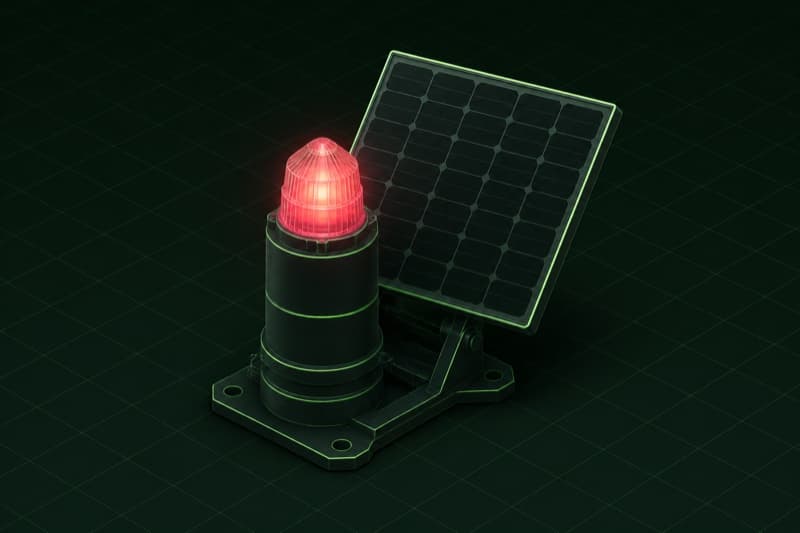
Solar Obstruction Lights
Solar obstruction lights combine a low or medium intensity beacon with an integral solar panel, battery and controller, marking towers, masts and remote structures that have no grid connection. NLS supplies and installs solar-powered obstruction lighting across Saudi Arabia for off-grid sites, sizing the solar and battery capacity to the site's location and duty cycle.

Obstruction Light Monitoring
Obstruction light monitoring is a remote surveillance service that tracks lamp status, power supply and flash synchronization across a structure's obstruction lighting system, alerting the operator the moment a fault occurs instead of waiting for the next physical inspection. NLS deploys and manages monitoring systems alongside its obstruction lighting supply across Saudi Arabia so structures stay continuously compliant.
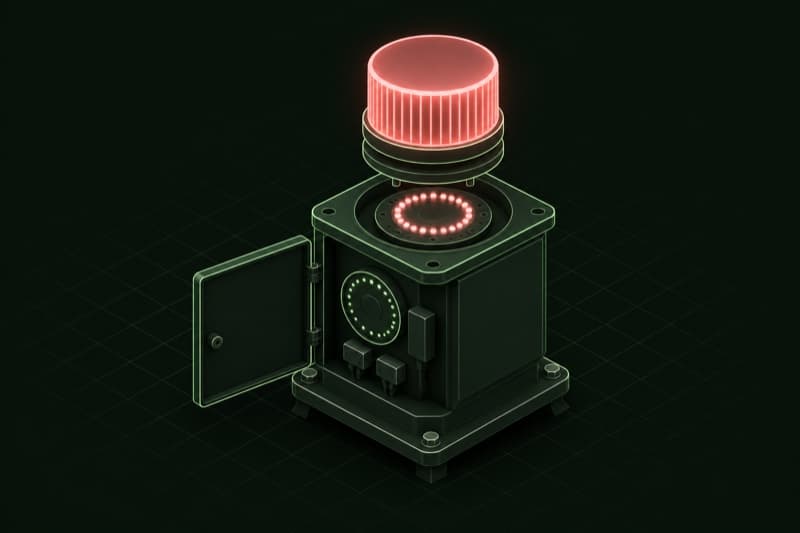
Obstruction Light Maintenance
Obstruction light maintenance keeps beacons mounted on towers, cranes, chimneys, and tall structures functioning to ICAO Annex 14 visibility and flash-pattern requirements, since a dark beacon on a controlled obstacle is a reportable safety gap, not a cosmetic fault. NLS runs scheduled inspection and fault-response visits, sized to beacon count and any GPS monitoring setup.

Low Intensity Obstruction Lights
Low intensity obstruction lights are fixed red beacons mounted on structures below roughly 45 metres, marking towers, cranes, rooftops and stacks for night visibility, specified under the low intensity obstruction light provisions of ICAO Annex 14 Volume I. NLS supplies and installs these fixtures across Saudi Arabia sourced from established international aviation lighting manufacturers.