
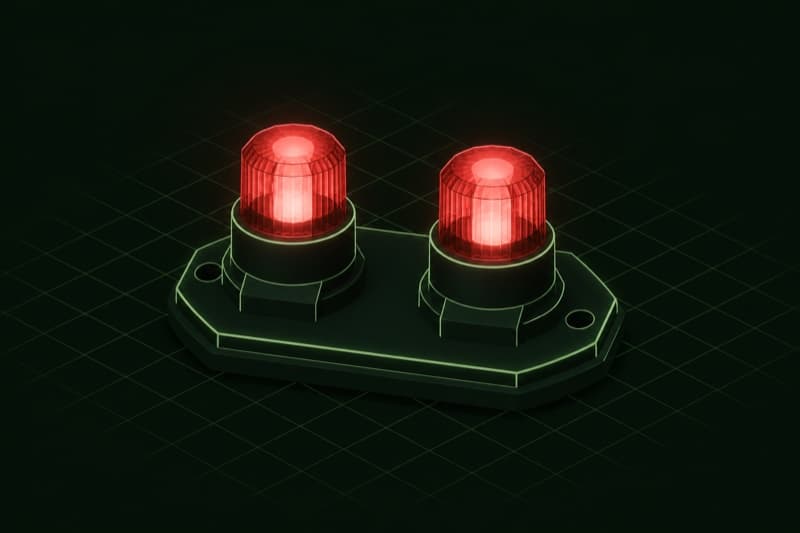
Low Intensity Obstruction Lights
Low intensity obstruction lights are fixed red beacons mounted on structures below roughly 45 metres, marking towers, cranes, rooftops and stacks for night visibility, specified under the low intensity obstruction light provisions of ICAO Annex 14 Volume I. NLS supplies and installs these fixtures across Saudi Arabia sourced from established international aviation lighting manufacturers.
Inside the Low Intensity Obstruction Lights
A low intensity obstruction light is a fixed red beacon mounted on the highest point of a structure to make it visible to pilots at night. A weatherproof lens, its LED source, a dusk to dawn photocell and a mounting bracket work together as a self-contained unit that requires no external switching.
01
Obstruction Lens
Filters and shapes the LED output into the steady red signal specified for low intensity obstruction marking, giving the fixture visibility from the relevant approach and overflight angles.
02
LED Lamp Module
Provides the fixed red light output at the intensity the applicable class requires, with a long service life that reduces the need for access to the structure's highest point for relamping.
03
Photocell Sensor
Switches the fixture on at dusk and off at dawn by sensing ambient light level, keeping the light active through the hours obstruction marking is required without manual intervention.
04
Weatherproof Housing
Encloses the lamp module and electronics against rain, dust and UV exposure at height, where the fixture is difficult to reach for maintenance and must run unattended for long periods.
05
Mounting Bracket
Secures the fixture to the structure's apex or the position the aeronautical study identifies, holding it steady against wind loading at height.
| Light colour | Fixed red, steady burning as specified for low intensity obstruction marking |
| Switching | Automatic dusk to dawn operation via integral photocell, no external control required |
| Body material class | Corrosion resistant metal or UV stabilised polymer suited to prolonged rooftop or tower exposure |
| Ingress protection approach | Sealed housing rated for continuous outdoor exposure without maintenance access |
| Mounting position | Highest point or points of the structure as determined by the aeronautical study |
| Operating environment | Engineered for unattended rooftop, tower and stack exposure across the Kingdom's climate conditions |
What low intensity obstruction lights do
Any fixed structure that intrudes into navigable airspace, a communications tower, a construction crane, a rooftop plant room, a chimney stack, needs a visible marker after dark. Low intensity obstruction lights are the entry point of the obstruction lighting hierarchy: fixed red beacons sized for structures generally under 45 metres above ground or where the aeronautical study calls for the lowest applicable intensity class.
Where they fit against the standards
ICAO Annex 14 Volume I sets the marking and lighting framework for obstacles near aerodromes, including the low intensity fixed red classes most commonly specified for shorter structures. GACAR Part 139 governs how Saudi aerodrome operators apply these requirements to structures inside their zones. A qualified aeronautical study, not the structure owner's preference, determines which class and how many lights a given structure needs.
Buying considerations in Saudi Arabia
Procurement teams sourcing obstruction lights in the Kingdom typically weigh three things: conformance documentation against the governing standard, power compatibility with the site (grid-fed, generator-backed, or solar where no supply exists), and long-term serviceability given the heat and dust exposure common across Saudi sites. Fixtures need weatherproof housings rated for outdoor duty cycles and UV-stable lenses that hold their photometric output through years of desert sun.
Turnkey supply and installation
NLS handles the full scope: reviewing the structure's height and location against the applicable standard, specifying the correct light class and quantity, supplying fixtures from established international aviation lighting OEMs, and carrying out installation and commissioning on site. Mounting brackets, cabling, and control gear are matched to the structure type, whether that is a lattice tower, a rooftop parapet, or a static crane. Where a project already has design drawings, NLS supplies against that specification; where it does not, NLS advises on the correct fixture class before supply.
Maintenance and continuity
A light that fails silently defeats its purpose. NLS pairs installation with scheduled maintenance visits and, on request, remote monitoring so a lamp failure or power interruption is flagged and corrected before it becomes a compliance gap. This keeps towers, cranes, and rooftop structures continuously marked through the life of the asset, not just at the point of handover.
Specifications
- ✓Steady-burning or flashing red output conforming to ICAO Annex 14 Volume I obstacle lighting provisions
- ✓Fixed red output aligned with the low intensity obstruction light classification of ICAO Annex 14 Volume I
- ✓Weatherproof, UV-stable housings rated for continuous outdoor duty in high-temperature, high-dust environments
- ✓Mounting kits suited to lattice towers, rooftop parapets, static cranes and stack rims
- ✓Compatible with grid power, generator backup, or solar supply where no fixed connection exists
- ✓Optional interface with remote monitoring and photocell-based dusk-to-dawn control
Frequently Asked Questions
When does a structure need low intensity obstruction lights instead of medium or high intensity?+
The applicable class comes from an aeronautical study that weighs the structure's height, its distance from aerodrome traffic patterns, and the governing standard, not from the owner's preference. Low intensity fixtures typically apply to shorter structures such as cranes, rooftop equipment, and towers under roughly 45 metres. NLS reviews the structure details against ICAO and the applicable FAA advisory circular before recommending a class.
Can low intensity obstruction lights run off solar power on a remote site?+
Yes. Where a site has no reliable grid connection, low intensity fixtures can be paired with a solar power and battery unit sized to the light's duty cycle. NLS supplies both the light and the solar package as one turnkey scope so remote towers and masts stay marked without a dedicated power run.
Does NLS install low intensity obstruction lights or only supply the fixtures?+
Both. NLS provides turnkey design, supply, installation, and commissioning, then follows up with maintenance so the lights keep operating correctly through the structure's service life.
What is the role of the Obstruction Lens in Low Intensity Obstruction Lights?+
Filters and shapes the LED output into the steady red signal specified for low intensity obstruction marking, giving the fixture visibility from the relevant approach and overflight angles.
What is the role of the LED Lamp Module in Low Intensity Obstruction Lights?+
Provides the fixed red light output at the intensity the applicable class requires, with a long service life that reduces the need for access to the structure's highest point for relamping.
What is the role of the Photocell Sensor in Low Intensity Obstruction Lights?+
Switches the fixture on at dusk and off at dawn by sensing ambient light level, keeping the light active through the hours obstruction marking is required without manual intervention.
What is the role of the Weatherproof Housing in Low Intensity Obstruction Lights?+
Encloses the lamp module and electronics against rain, dust and UV exposure at height, where the fixture is difficult to reach for maintenance and must run unattended for long periods.
What is the role of the Mounting Bracket in Low Intensity Obstruction Lights?+
Secures the fixture to the structure's apex or the position the aeronautical study identifies, holding it steady against wind loading at height.
Who supplies Low Intensity Obstruction Lights in Saudi Arabia?+
Northlane Solutions (Northlane Solutions Company) supplies Low Intensity Obstruction Lights across Saudi Arabia, including Riyadh, Jeddah, Dammam and Jubail. Send your specification and quantities to info@northlanesolution.com for a quotation.
Related products
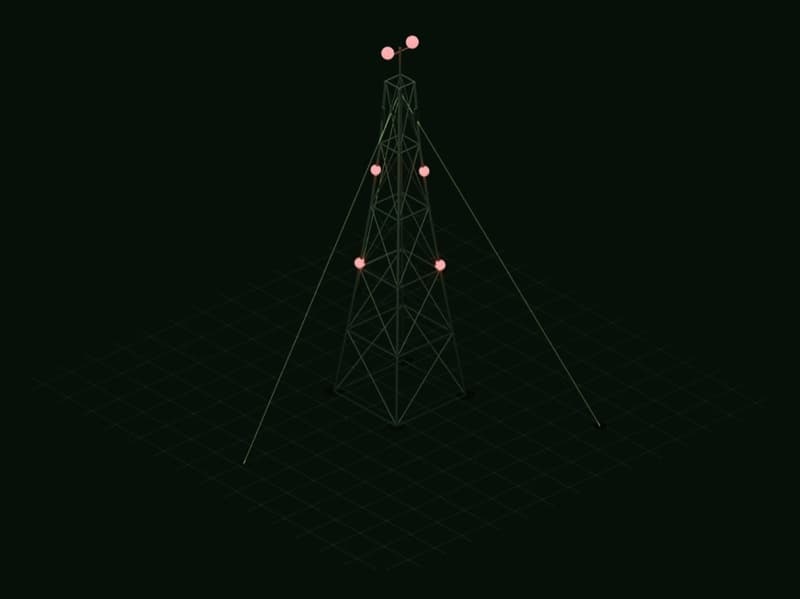
Medium Intensity Obstruction Lights
Medium intensity obstruction lights are flashing red or white beacons for structures roughly 45 to 150 metres tall, giving pilots earlier warning of towers, chimneys and elevated buildings, class selected by the aeronautical study under ICAO Annex 14 Volume I. NLS supplies and installs medium intensity systems throughout Saudi Arabia as part of turnkey obstruction lighting packages.
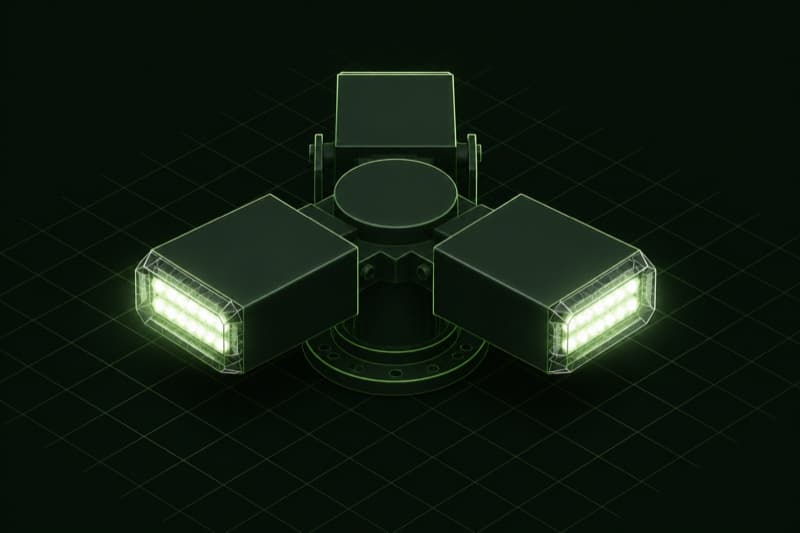
High Intensity Obstruction Lights
High intensity obstruction lights are powerful white flashing beacons for the tallest structures, transmission towers, tall buildings and offshore platforms, marking them under the high intensity provisions of ICAO Annex 14 Volume I, class set by the aeronautical study, so they remain visible by day and night from long range. NLS supplies and installs high intensity systems in Saudi Arabia.
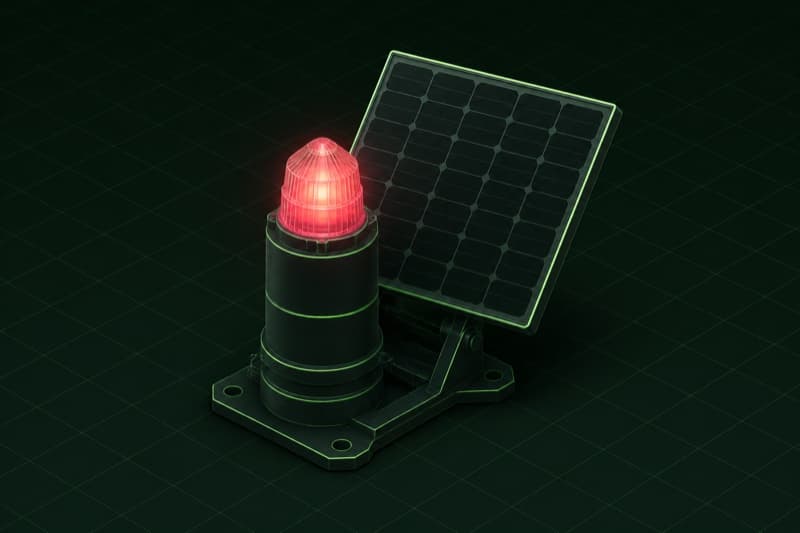
Solar Obstruction Lights
Solar obstruction lights combine a low or medium intensity beacon with an integral solar panel, battery and controller, marking towers, masts and remote structures that have no grid connection. NLS supplies and installs solar-powered obstruction lighting across Saudi Arabia for off-grid sites, sizing the solar and battery capacity to the site's location and duty cycle.

Obstruction Light Monitoring
Obstruction light monitoring is a remote surveillance service that tracks lamp status, power supply and flash synchronization across a structure's obstruction lighting system, alerting the operator the moment a fault occurs instead of waiting for the next physical inspection. NLS deploys and manages monitoring systems alongside its obstruction lighting supply across Saudi Arabia so structures stay continuously compliant.
Aircraft Warning Spheres
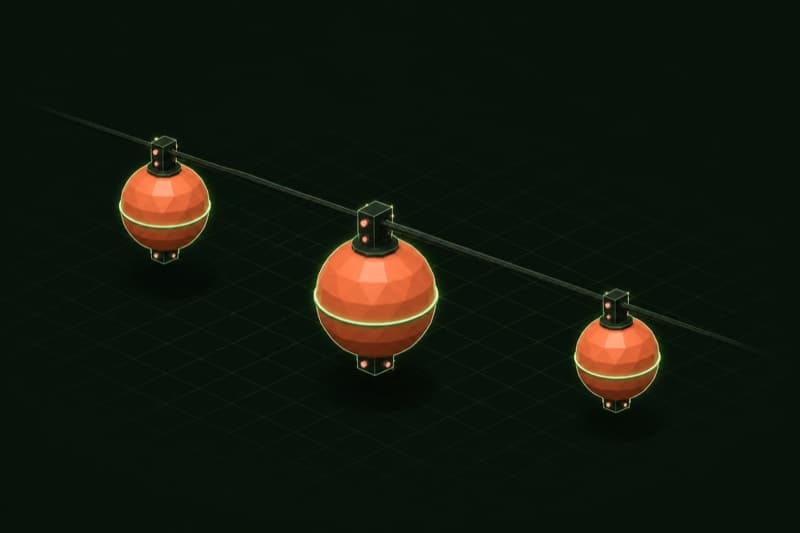
Aircraft warning spheres are large coloured marker balls fitted onto overhead power lines, cables and wires that cross valleys, rivers or approach paths, giving pilots a visible daytime warning where a solid structure light is impractical. NLS supplies and installs aircraft warning spheres across Saudi Arabia in orange, white or a combination pattern per ICAO Annex 14 marking requirements.
Guides
Obstruction Light Types in Saudi Arabia: Low, Medium and High Intensity Explained
How to choose between low, medium and high intensity obstruction lights for towers, cranes and tall buildings in Saudi Arabia, day and night modes, and when each type applies under ICAO Annex 14.
What Drives the Cost of Obstruction Lighting Projects in Saudi Arabia
What actually drives obstruction lighting pricing in Saudi Arabia: structure height and intensity class, solar versus mains power, monitoring, portfolio quantity, and installation access.