
Posted on 2026-10-03
GACA’s New Lighting Standards - How Saudi Owners Can Comply
GACA’s latest update to airfield ground and obstruction lighting standards changes what Saudi airport owners must comply with. The new checklist adds performance thresholds, testing intervals and documentation rules that must be met before any lighting system can be placed into service. Northlane Solutions helps you meet those rules without surprise delays.
Why the update matters now
The Saudi General Authority of Civil Aviation released the revised standards through its online portal (see the Forms section on the GACA website). The changes reflect international best practice, newer LED technology and tighter safety margins for night operations. For owners, the shift means older lighting inventories may no longer satisfy the required photometric output or fault‑tolerance levels. Contractors will have to prove that each lamp, cable and control unit meets the new specifications before they can be accepted by the regulator.
What the checklist now requires
The updated document lists a series of concrete items:
- Minimum luminous intensity for runway edge, threshold and taxiway lights, expressed in candela. The values are higher than those used in many legacy installations.
- Mandatory use of fault‑tolerant power supplies that can sustain operation for at least 30 minutes after a single‑phase failure.
- Periodic photometric testing every 12 months, with results recorded in a digital log that can be exported to GACA’s portal.
- Clear labeling of all obstruction lights, including intensity class and power source, whether solar or grid‑connected.
- Integration of lighting control and monitoring systems that support remote status checks and alarm generation.
These items are not optional. Missing a single point can halt an airport’s certification renewal and expose the owner to fines.
How Northlane can help you meet the new rules
Northlane Solutions supplies airfield and heliport lighting to Saudi operators. The portfolio includes LED runway edge lights, high‑intensity obstruction beacons and a full suite of control and monitoring hardware. Ask for photometric data against the published thresholds before you order, so that re-testing does not come as a surprise.
We also run a Compliance‑Ready Service that bundles engineering review, installation supervision and post‑installation testing. When you contract us, you receive:
- A gap analysis that compares your existing inventory against the new standards.
- Detailed design drawings that incorporate the required fault‑tolerant power architecture.
- Installation by crews who are familiar with GACA’s inspection procedures.
- A final photometric report that can be uploaded directly to the authority’s portal.
You can read more about our core capabilities in the Airfield Ground Lighting and Obstruction Lighting service pages.
Practical steps for owners and contractors
- Audit your current lighting assets: Pull the data sheets for every lamp, cable and controller. Check the luminous intensity and power‑supply specifications against the new GACA tables.
- Prioritize replacements: Focus first on runway edge and threshold lights, as they carry the highest intensity requirements. Obstruction beacons can follow once the critical runway areas are compliant.
- Engage a certified supplier early: Ordering LED fixtures with the correct class can take 4‑6 weeks, especially if custom mounting kits are needed.
- Plan the testing schedule: Allocate a two‑day window for each runway segment to perform the mandatory photometric measurements. Our field teams can bring calibrated photometers and generate the required digital logs on site.
- Integrate control systems: If you are still using analog switches, consider upgrading to an Airfield Lighting Control and Monitoring System (ALCMS). The system logs every lamp status and alerts you to failures before they become safety issues.
Following this sequence reduces the risk of last‑minute changes and keeps the project within budget.
Gaps worth checking first
Two gaps turn up often when lighting is reviewed against updated requirements. The first is edge and threshold lights that were specified to an older intensity and have lost output with age, so a photometric test finds them below the current threshold even though they still switch on. The second is obstruction lights whose intensity class and power source are not recorded anywhere, which makes the labeling and documentation rules hard to meet. Both are far cheaper to find in a desk audit and a photometric test than during a regulator's inspection.
FAQ
What is the first thing I should check after the GACA update?
Start with a simple inventory list. Compare each lamp’s candela rating and power‑supply type to the values published in the new standard. Anything below the threshold will need replacement or upgrade.
Can existing LED fixtures be retrofitted to meet the new fault‑tolerance rule?
In many cases a retrofit is possible by adding a certified constant‑current regulator or a fault‑tolerant transformer. Our engineers can assess whether a retrofit is viable for your specific units.
How long does the photometric testing process take?
A typical runway segment can be measured in one full day. The test includes setting up the photometer, recording readings for each lamp and uploading the data to GACA’s portal.
Does Northlane provide ongoing support after installation?
Yes. We offer maintenance contracts that include periodic inspections, spare‑part supply and remote monitoring through our ALCMS platform. This keeps your lighting system compliant for the long term.
Related products

AGL Maintenance Contracts
AGL maintenance contracts cover the scheduled preventive checks and corrective repair response that keep runway, taxiway, and apron lighting circuits within ICAO Annex 14 and GACAR Part 139 serviceability limits between inspections. NLS structures these as a fixed scope of visits, fault response, and reporting, sized to the airfield's fixture count and circuit layout.
Runway Edge Lights
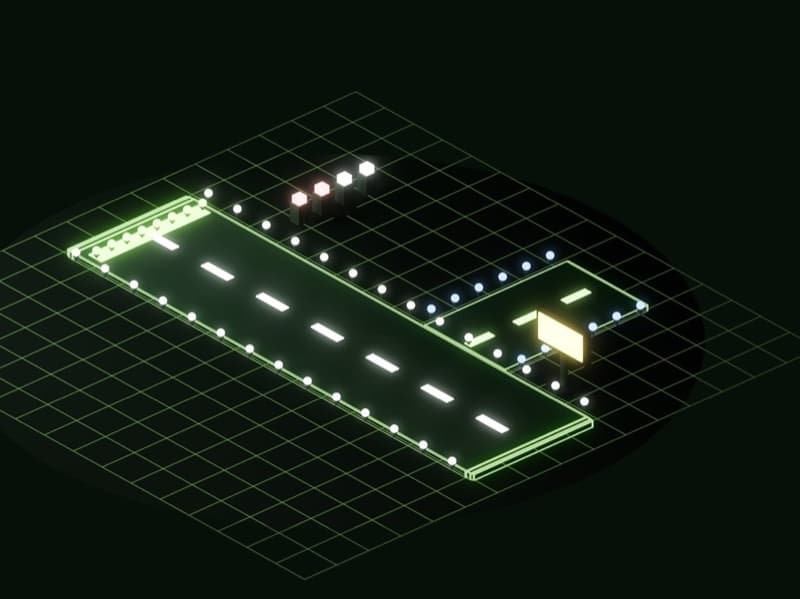
Runway edge lights are the fixed white fixtures spaced along both sides of a runway that define its usable width at night or in low visibility, switching to yellow along the final section approaching the runway end on longer runways. Northlane Solutions supplies runway edge light fixtures engineered to ICAO Annex 14 Volume I, elevated and in-pavement, across Saudi Arabia.
Threshold & Runway End Lights
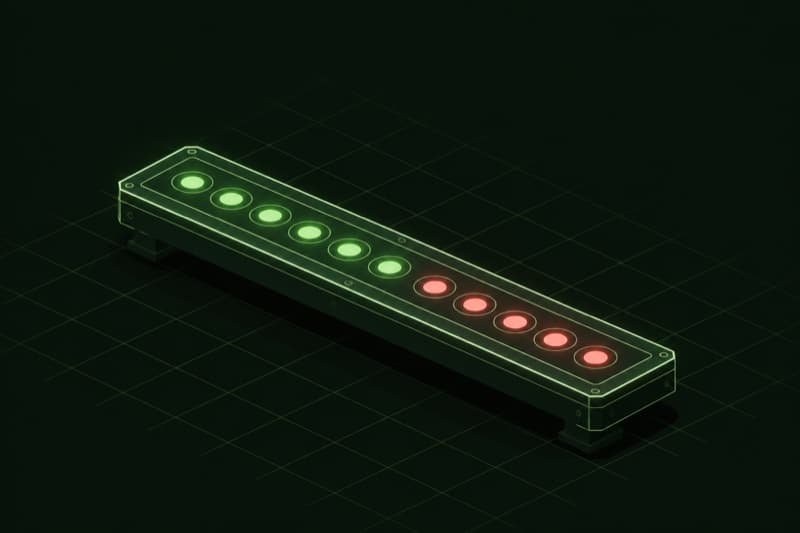
Threshold and runway end lights mark where the landing surface begins and ends, showing green to an approaching aircraft and red to one departing off the far end. Northlane Solutions supplies threshold and end light fixtures, wing-bar arrays, and associated circuit components engineered to ICAO Annex 14 Volume I, for airfield and heliport projects across Saudi Arabia.
Taxiway Lighting
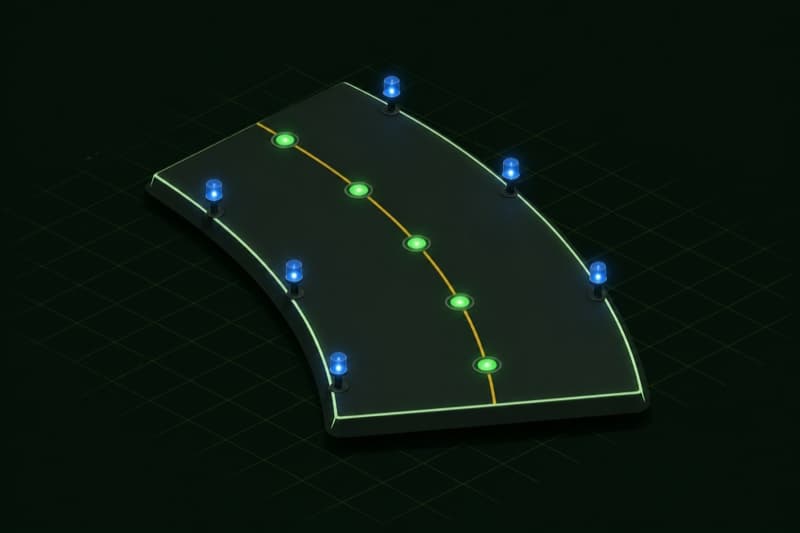
Taxiway lighting, blue edge lights and green centreline lights, guides an aircraft between the runway and apron on the ground at night or in low visibility. Northlane Solutions supplies taxiway edge and centreline fixtures built to ICAO Annex 14 Volume I, including elevated and in-pavement centreline options, as turnkey supply and installation for airfield and heliport projects across Saudi Arabia.