
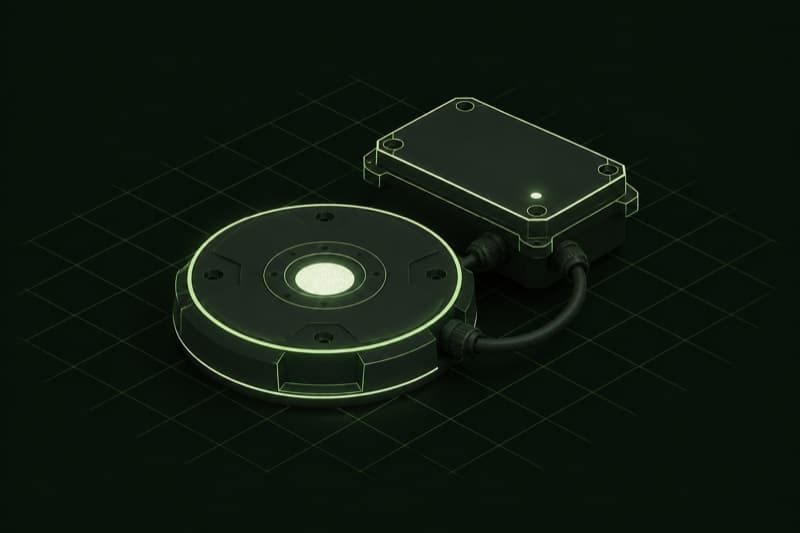
Individual Lamp Control and Monitoring System (ILCMS)
ILCMS reports and controls the status of each fixture on a series airfield lighting circuit individually, rather than only the circuit as a whole, so a controller sees exactly which runway light has failed. NLS sources ILCMS field units built to comply with ICAO Annex 14 maintenance and monitoring guidance, for Saudi airbase and heliport lighting circuits.
Inside the Individual Lamp Control and Monitoring System (ILCMS)
ILCMS pushes fault visibility down from the circuit to the single fixture, using a sensing unit and a communication module at each lamp position that report back to a concentrator, which in turn hands the data to the ALCMS workstation.

01
Fixture Current Sensing Unit
Measures whether current is actually flowing through a specific fixture or the isolation transformer feeding it, the reading that tells the system a single lamp has failed rather than the circuit as a whole.

02
Field Communication Module
Encodes the sensing unit's reading and carries it back over a dedicated monitoring pair or power-line signal, so fixture status reaches the concentrator without a separate cable run to every lamp position.

03
Monitoring Concentrator
Gathers the field signals from every fixture on a circuit and consolidates them into one data stream, the aggregation point between the field units and the ALCMS layer above.

04
Weatherproof Field Enclosure
Houses the sensing and communication electronics inside the base can or handhole, sealed against water ingress and rated to withstand pavement loading at an in-ground installation point.

05
ALCMS Communication Gateway
Passes the concentrator's fixture-level data into the protocol the ALCMS workstation reads, the link that must be protocol-compatible before individual lamp status can appear on the controller's display.
FULLY ASSEMBLED
Individual Lamp Control and Monitoring System (ILCMS)


| Monitoring level | Per-fixture or per-isolation-transformer fault detection |
| Field communication | Dedicated monitoring pair or power-line carrier signal back to the monitoring concentrator |
| Integration | Specified as an addition to an existing ALCMS and CCR layer, not a standalone system |
| Installation location | Base can or handhole at the fixture or isolation transformer position |
| Priority application | Precision approach path indicators and threshold lighting circuits, where multi-fixture failure degrades visual guidance |
| Enclosure rating | Sealed against water ingress and rated for pavement loading at in-ground installation |
A standard series airfield lighting circuit reports failure at the circuit level only: a CCR flags that current or voltage on the loop has moved outside expected range, which tells a controller something on the circuit has failed but not which fixture. Individual lamp control and monitoring closes that gap by fitting each fixture, or each series isolation transformer feeding a fixture, with a sensing unit that reports its own status back to a central monitor, so a fault shows up as a specific fixture location rather than an unresolved circuit alarm.
The practical value shows up during maintenance: without ILCMS, confirming which of 40 or 60 fixtures on a runway edge circuit has actually failed means a physical walk-and-test inspection, done at night or during a runway closure window, before a technician can even start the repair. With ILCMS reporting fixture location directly to the ALCMS workstation, maintenance staff go straight to the failed unit, shortening the runway closure or restricted-operations window a lamp change requires.
ICAO Annex 14 and the associated ICAO aerodrome maintenance guidance material push toward this level of fixture-level fault visibility for busy or safety-critical circuits, particularly precision approach path indicators and threshold lighting where an undetected multi-fixture failure degrades the visual guidance a pilot relies on. ILCMS is specified as an addition to the ALCMS and CCR layer already on a project rather than a standalone system, since it depends on the ALCMS to display and log the fixture-level data it collects.
A project team typically sends the circuit count and fixture count where individual monitoring is required, plus the ALCMS platform already specified or installed, and NLS returns matched ILCMS field units and a USD quote. NLS confirms ILCMS-to-ALCMS communication compatibility before quoting, since fixture-level monitoring only works when both layers speak the same protocol.
Specifications
- ✓Fixture-level or transformer-level status sensing, reporting to the central ALCMS platform
- ✓Aligned with ICAO Annex 14 maintenance and monitoring guidance for safety-critical circuits (PAPI, threshold lighting)
- ✓Reduces fault-location time from a physical walk-inspection to a direct fixture reference
- ✓Communication protocol matched to the specific ALCMS platform on each project
- ✓Retrofit-compatible for existing series circuits with an ALCMS upgrade
- ✓Supports prioritized maintenance scheduling by flagging repeat-fault fixture locations
Frequently Asked Questions
What's the difference between ALCMS and ILCMS?+
ALCMS is the overall control and monitoring workstation for the airfield's circuits and CCR units. ILCMS is the layer that reports status for each individual fixture on a circuit, feeding that detail up into the ALCMS display rather than replacing it.
Do all airfield circuits need individual lamp monitoring?+
ICAO Annex 14 guidance points toward fixture-level monitoring mainly for safety-critical circuits, PAPI and threshold lighting in particular, rather than mandating it universally. NLS scopes ILCMS to the circuits a project's design specifies it for.
Who supplies ILCMS for airfield lighting in Saudi Arabia?+
NLS sources ILCMS field units matched to the ALCMS platform already specified or installed on a project, for Saudi airbase and heliport lighting circuits requiring fixture-level fault visibility.
What is the role of the Fixture Current Sensing Unit in Individual Lamp Control and Monitoring System (ILCMS)?+
Measures whether current is actually flowing through a specific fixture or the isolation transformer feeding it, the reading that tells the system a single lamp has failed rather than the circuit as a whole.
What is the role of the Field Communication Module in Individual Lamp Control and Monitoring System (ILCMS)?+
Encodes the sensing unit's reading and carries it back over a dedicated monitoring pair or power-line signal, so fixture status reaches the concentrator without a separate cable run to every lamp position.
What is the role of the Monitoring Concentrator in Individual Lamp Control and Monitoring System (ILCMS)?+
Gathers the field signals from every fixture on a circuit and consolidates them into one data stream, the aggregation point between the field units and the ALCMS layer above.
What is the role of the Weatherproof Field Enclosure in Individual Lamp Control and Monitoring System (ILCMS)?+
Houses the sensing and communication electronics inside the base can or handhole, sealed against water ingress and rated to withstand pavement loading at an in-ground installation point.
What is the role of the ALCMS Communication Gateway in Individual Lamp Control and Monitoring System (ILCMS)?+
Passes the concentrator's fixture-level data into the protocol the ALCMS workstation reads, the link that must be protocol-compatible before individual lamp status can appear on the controller's display.
Who supplies Individual Lamp Control and Monitoring System (ILCMS) in Saudi Arabia?+
Northlane Solutions (Northlane Solutions Company) supplies Individual Lamp Control and Monitoring System (ILCMS) across Saudi Arabia, including Riyadh, Jeddah, Dammam and Jubail. Send your specification and quantities to info@northlanesolution.com for a quotation.
Related products
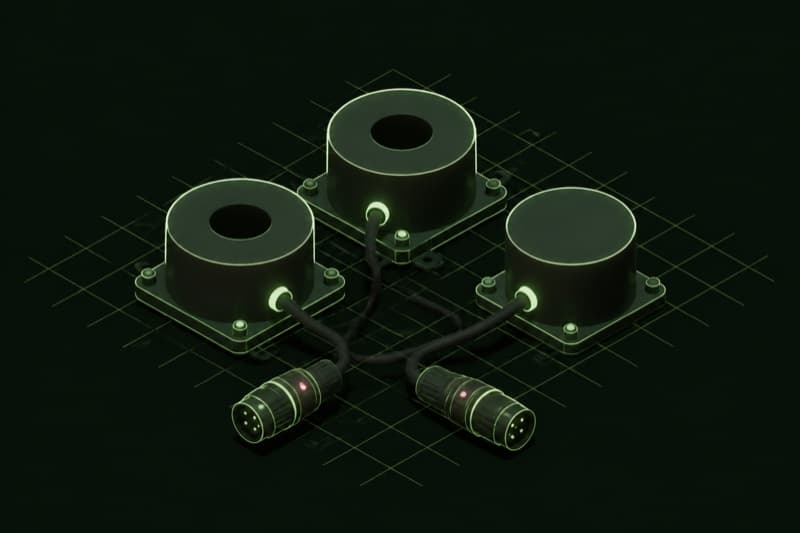
Series Isolation Transformers
A series isolation transformer connects one airfield lighting fixture to a high-voltage series circuit while keeping the fixture's own wiring isolated at low voltage, and protects the rest of the circuit if that one fixture fails or is disconnected. NLS sources isolation transformers built to FAA AC 150/5345-47 and IEC 61822, sized to fixture wattage and rated series circuit current.
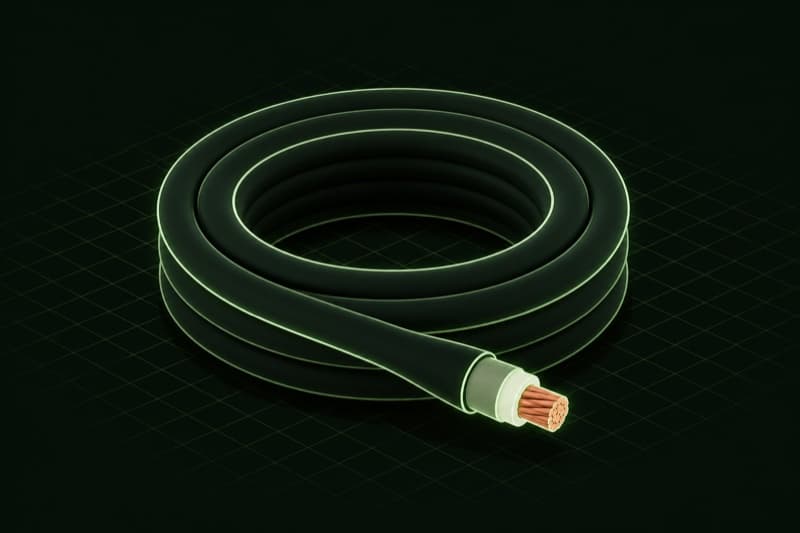
L-824 Airfield Lighting Cable
L-824 is the FAA specification for the cross-linked polyethylene insulated, direct-burial cable that carries series circuit current between the CCR, isolation transformers, and every fixture on an airfield lighting loop. NLS sources L-824 cable in the current-carrying sizes and armour options a project's circuit design and duct or direct-burial routing require, for Saudi airbase and heliport lighting projects.
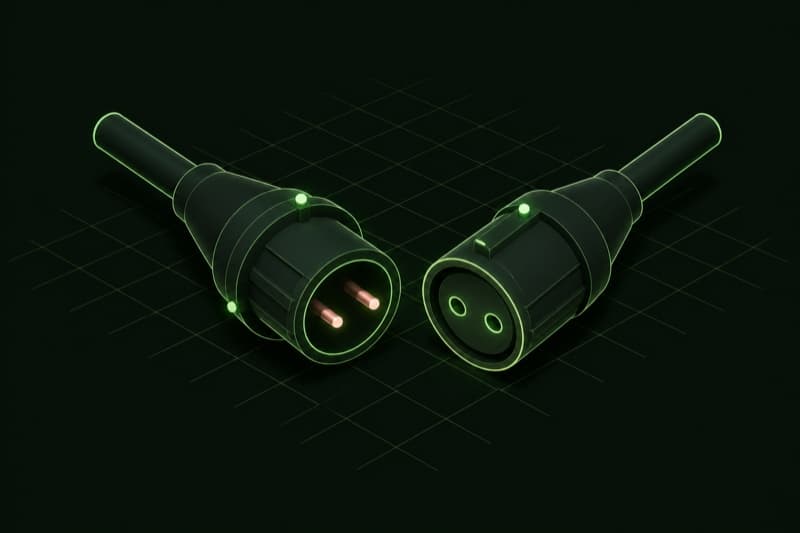
L-823 Connector Kits
L-823 connector kits are the FAA-specified, factory-molded plug and receptacle sets that join L-824 cable to airfield lighting fixtures and isolation transformers, sealed against water ingress at a below-grade or in-pavement splice point. NLS sources L-823 kits matched to cable size and current rating, supplied as part of the same series circuit package as the cable, transformers, and fixtures.
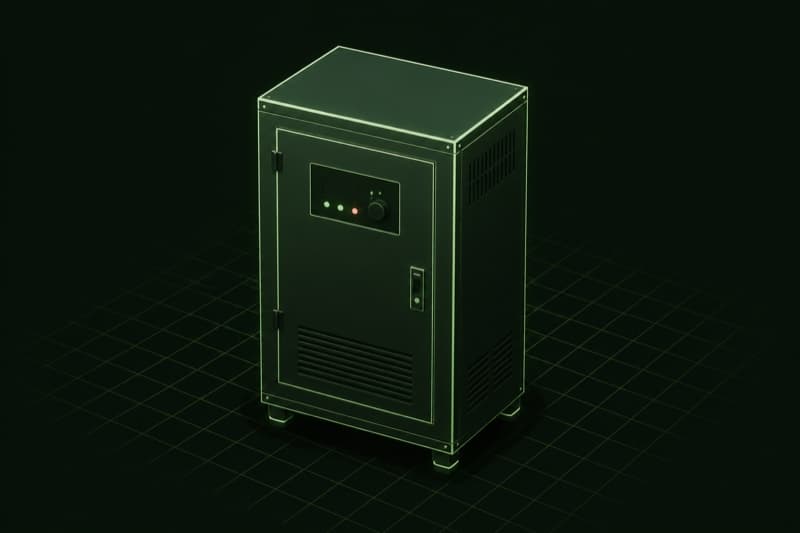
Constant Current Regulators (CCR)
A constant current regulator (CCR) feeds a series airfield lighting circuit a fixed current, commonly 6.6A, regardless of how many fixtures are wired into the loop, so every light in the string burns at the same intensity. NLS sources CCR units built to FAA AC 150/5345-10 and IEC 61822, sized to the circuit length a project's lighting plan specifies.
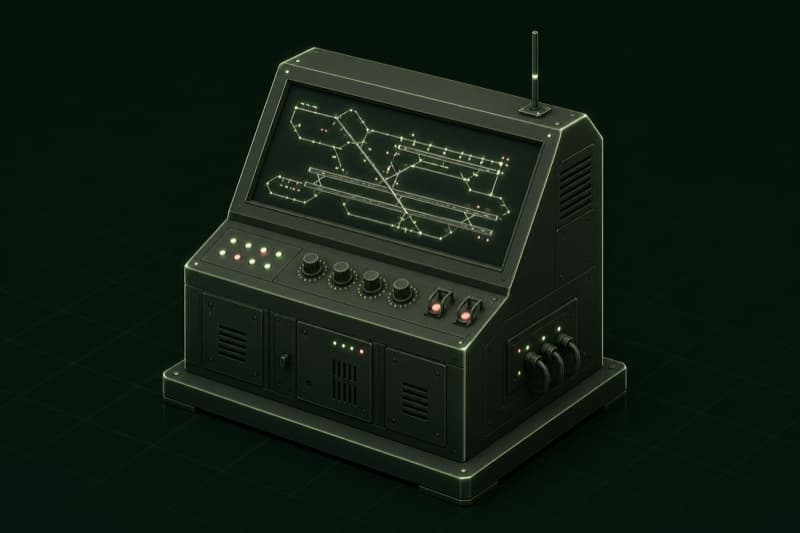
Airfield Lighting Control and Monitoring System (ALCMS)
An ALCMS is the software and control panel platform an air traffic controller uses to switch airfield lighting circuits on and off, select brightness steps, and see live fault status for every CCR and circuit from one workstation. NLS sources ALCMS platforms built to ICAO Annex 14 control requirements, integrated with the CCR equipment already on a project.
Guides
Planning a Halogen to LED Airfield Ground Lighting Conversion
How to plan a halogen to LED airfield ground lighting conversion: CCR compatibility checks, mixed-circuit operation during phasing, photometric requirements, and sequencing work without closing the runway.
What Drives the Cost of Obstruction Lighting Projects in Saudi Arabia
What actually drives obstruction lighting pricing in Saudi Arabia: structure height and intensity class, solar versus mains power, monitoring, portfolio quantity, and installation access.