
Posted on 2026-08-15
Planning a Halogen to LED Airfield Ground Lighting Conversion
Most airports and airbases in Saudi Arabia still run some portion of their airfield ground lighting on halogen fixtures, and most of the failures in a conversion project trace back to one decision made too early: buying LED fixtures before checking whether the existing constant current regulators can actually drive them. A halogen to LED conversion is not a like-for-like bulb swap. It's an electrical compatibility exercise first, a photometric exercise second, and a scheduling exercise third, and the projects that go over budget usually got the order wrong.
Why CCR compatibility comes before fixture selection
Airfield ground lighting circuits run in series off a constant current regulator, typically stepped between 2.8A and 6.6A depending on the circuit class, with each fixture designed to drop a fixed voltage at the rated current. Halogen fixtures are simple resistive loads and tolerate this arrangement without complaint. LED fixtures carry internal driver electronics that need to recognize the series current waveform and regulate it down to what the LED array actually needs, and not every LED fixture on the market is built to run on every generation of CCR.
Older CCRs, particularly units installed more than 15 years ago, can produce a current waveform with characteristics that some LED drivers don't handle cleanly; the isolation transformers in each fixture also need to match the CCR's step configuration. Before any fixture is ordered, the CCR make, model, output steps, and waveform behavior need to be documented and checked against the LED fixture's compatibility list. Skipping this step is how projects end up with fixtures that flicker, fail to reach full brightness at low current steps, or trip regulator protection circuits after installation, at which point the fix is either a CCR replacement that wasn't in the original budget or a fixture swap that wasn't in the schedule.
Mixed circuits during the transition
Very few conversions replace every fixture on every circuit in a single closure window. The realistic path is one circuit or one runway section at a time, which means halogen and LED fixtures sit on different circuits simultaneously, and sometimes on the same circuit during a staged fixture-by-fixture swap. This is workable, but it needs planning: a circuit carrying a mix of halogen and LED loads changes the total impedance the CCR sees, and the regulator's current control has to stay within tolerance across that mix at every brightness step, not just at full output.
The safer sequencing keeps whole circuits homogeneous where the circuit design allows it, converting one full circuit at a time rather than alternating fixtures within a circuit. Where a partial-circuit swap is unavoidable, a CCR performance check across all its steps, not just the ones typically used at night, catches problems before they show up during an unannounced low-visibility operation.
Photometric performance can't be assumed from a datasheet alone
ICAO Annex 14 Volume I and FAA AC 150/5345 series specify photometric requirements for runway edge, threshold, centerline, and approach lighting, covering intensity, beam spread, and color as a function of the fixture's role and the runway's approach category. An LED fixture's published photometric curve on a manufacturer datasheet is measured under controlled lab conditions, and the real installed performance depends on mounting height, aim angle, and how close the actual current step matches what the datasheet assumes. A conversion plan should verify photometric performance against the governing standard for the specific runway category and light type being replaced, not accept a datasheet match as sufficient on its own, particularly for PAPI and approach lighting where aim tolerance is tighter than edge lighting.
Color consistency across a converted runway also needs attention. Halogen and LED sources render color differently even when both nominally meet the same chromaticity requirement, and a runway lit half in halogen and half in LED during a phased conversion can show a visible tone difference from the cockpit that's worth flagging to operations before pilots ask about it.
Phasing without closing the runway
Airports rarely have the luxury of a full runway closure long enough for a complete AGL conversion, and most conversions are planned around short nightly work windows or NOTAM'd partial closures rather than one continuous shutdown. A realistic phasing plan breaks the runway into sections that can each be completed, tested, and returned to service within a single work window, with fallback halogen fixtures kept on hand in case a section can't be finished before the window closes and the runway needs to reopen on the existing system.
Sequencing usually starts with the sections least critical to current operations, working toward threshold and touchdown zone lighting last, once the CCR compatibility and photometric checks have been proven on lower-risk sections first. Testing each converted section under actual night conditions, not just a daytime continuity check, before moving to the next section catches problems while the crew and equipment are still mobilized.
NLS plans and executes halogen to LED airfield ground lighting conversions in Saudi Arabia, from CCR compatibility assessment through phased installation and commissioning to ICAO Annex 14 and FAA AC 150/5345 photometric requirements. Two product pages sit at the center of a conversion: Constant Current Regulators (CCR), which decide what fixtures a circuit can drive, and Photometric Testing, which proves the finished installation meets the required light output.
FAQ
Q: Can I just replace halogen fixtures with LED ones on my existing CCR without any other changes? A: Sometimes, but it has to be verified first, not assumed. The CCR's output steps, waveform, and isolation transformer configuration need to be checked against the specific LED fixture's compatibility requirements. Some older CCRs need a firmware update, a transformer change, or in some cases a full CCR replacement before LED fixtures will run reliably on them.
Q: Can halogen and LED fixtures run on the same circuit during a phased conversion? A: They can, but a mixed circuit changes the load the CCR has to regulate, and that mix needs to stay within the CCR's current tolerance at every brightness step. Converting whole circuits at a time is the more predictable approach; partial-circuit mixing works but needs a CCR performance check across all steps before being relied on operationally.
Q: How do I know the new LED fixtures will actually meet ICAO photometric requirements once installed? A: A manufacturer datasheet shows lab-measured performance, not installed performance. Verification against ICAO Annex 14 Volume I or FAA AC 150/5345 requirements for the specific fixture role and runway category, accounting for actual mounting height and aim angle, is the step that confirms real-world compliance rather than assuming the datasheet transfers directly.
Q: How long does a full runway AGL conversion take without closing the airport? A: It depends on the number of circuits, the length of available work windows, and how the runway is sectioned, so there's no fixed figure that applies generally. A phased plan built around actual nightly closure windows or NOTAM'd partial closures, with each section tested before the runway returns to service, is what determines the real timeline for a specific airfield.
Related products
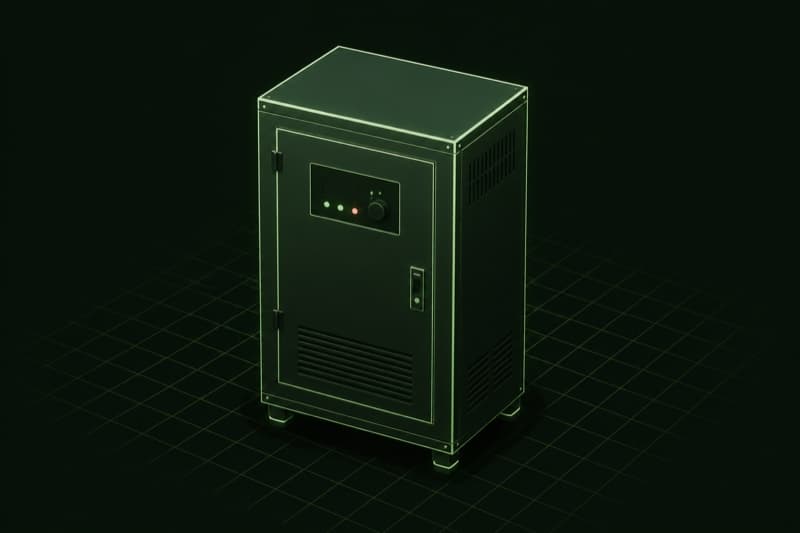
Constant Current Regulators (CCR)
A constant current regulator (CCR) feeds a series airfield lighting circuit a fixed current, commonly 6.6A, regardless of how many fixtures are wired into the loop, so every light in the string burns at the same intensity. NLS sources CCR units built to FAA AC 150/5345-10 and IEC 61822, sized to the circuit length a project's lighting plan specifies.
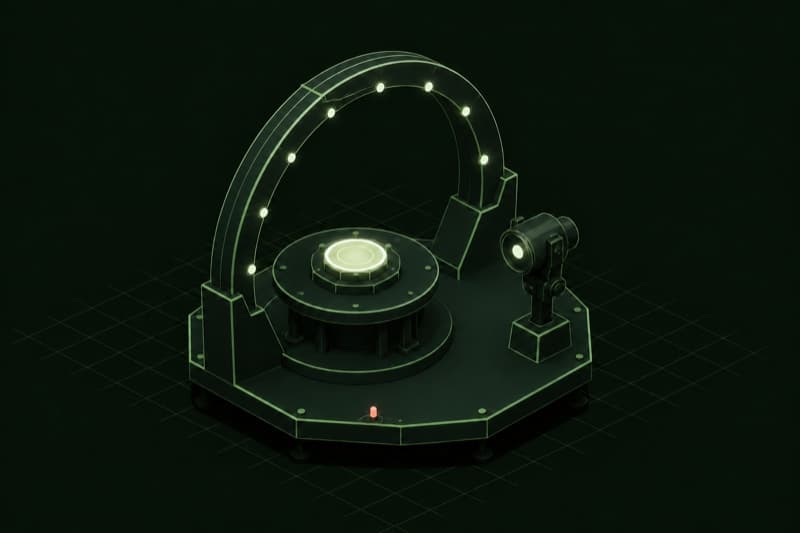
Photometric Testing
Photometric testing measures a runway, taxiway, or heliport lighting system's actual light intensity and colour against the values ICAO Annex 14 requires, since a fixture can look fine and still under-perform after years of lens ageing or CCR drift. NLS runs mobile photometric survey and reports results against the applicable standard for the licence file.
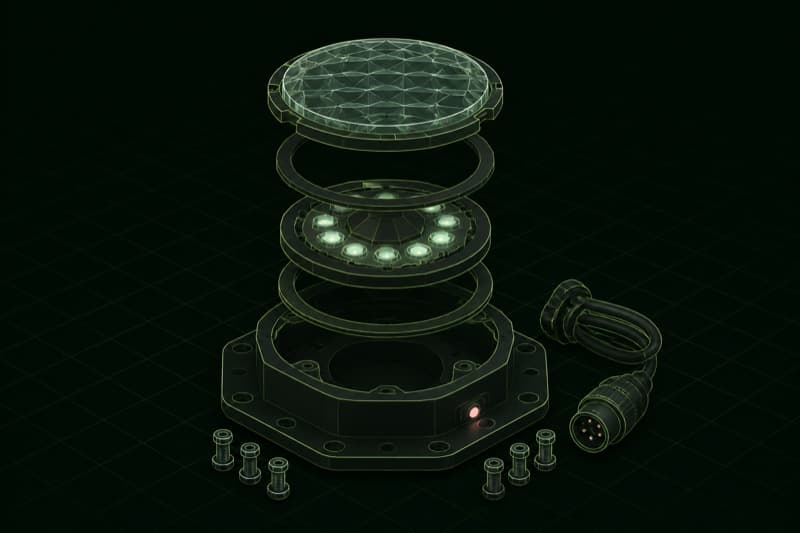
AGL Spare Parts
AGL spare parts covers replacement fixtures, lenses, LED modules, constant current regulators, isolating transformers, and connector kits sourced to match an airfield's existing lighting system exactly, so a repair restores original photometric and electrical performance rather than introducing a mismatched component. NLS sources these from established international aviation lighting OEMs against the fixture make, model, and circuit rating already installed.

Runway Edge Lights
Runway edge lights are the fixed white fixtures spaced along both sides of a runway that define its usable width at night or in low visibility, switching to yellow along the final section approaching the runway end on longer runways. Northlane Solutions supplies runway edge light fixtures engineered to ICAO Annex 14 Volume I, elevated and in-pavement, across Saudi Arabia.