
Runway Friction Testing Services
Also called: runway friction test, skid resistance test, skiddometer survey, runway friction survey
Runway friction testing services deliver a continuous friction survey of a runway using calibrated equipment, correlated to ICAO reference friction levels, and reported in the format a civil aviation authority requires. The service covers scheduling, wetted-surface test runs, data correlation, and a friction report with low-friction sections flagged for maintenance.
Runway friction testing as a service covers the full survey cycle an airport operator needs without owning and maintaining the test equipment itself: scheduling the test window around runway availability, running the continuous friction measuring equipment over the wetted surface at the required test speed, correlating readings against the reference friction device standard the national authority specifies, and issuing a friction report that maps coefficient against runway distance with any sub-threshold sections called out.
ICAO Annex 14 Volume I sets both the minimum friction level a runway must maintain and the survey frequency logic tied to traffic volume and pavement age, and GACAR applies the same reference framework to licensed Saudi aerodromes. A friction survey that skips correlation against the specified reference device, or reports an average rather than a full distance profile, does not meet what most national authorities actually require for a compliance submission, which is why the reporting format matters as much as the raw measurement.
Saudi airports run a heavier maintenance case than the ICAO baseline assumes on two fronts: touchdown zone rubber buildup accumulates faster on high-movement runways, and airborne dust settling on the pavement between rainfall events changes the surface's baseline friction independent of rubber contamination, so a friction survey scheduled only on a fixed calendar interval can miss a fast-developing low-friction section between visits. A testing programme built around actual traffic volume and local dust conditions, rather than a generic interval, catches degradation earlier than the minimum-compliance schedule does.
NLS delivers runway friction testing services on a turnkey basis, calibrated equipment, trained operators, and a correlated report against ICAO and GACAR reference standards, scheduled around an airport's operational windows to minimise runway closure time. A project typically starts with runway length, pavement type, and current traffic volume, and NLS returns a testing scope and schedule with a USD quote. Rubber removal and resurfacing recommendations, where a survey flags a section below threshold, are scoped as a separate follow-on rather than bundled automatically into the testing service.
Specifications
- ✓Continuous friction profile against the friction planning levels the aerodrome operator and the civil aviation authority apply to that runway
- ✓Test method and correlation against the reference friction device the civil aviation authority specifies
- ✓Reporting format aligned with GACAR compliance submission requirements
- ✓Survey scheduling built around traffic volume and pavement age, not a fixed generic interval
- ✓Coordination with airport operations to minimise runway closure time during test windows
- ✓Follow-on rubber removal or resurfacing recommendation scoped separately when a section reads below threshold
Frequently Asked Questions
Who performs runway friction testing in Saudi Arabia?+
NLS delivers runway friction testing services, calibrated equipment, trained operators, and reports correlated to ICAO Annex 14 and GACAR reference standards, scheduled around airport operational windows across Saudi Arabia.
How often should a runway friction survey be scheduled?+
Survey frequency depends on traffic volume, pavement age, and local dust and rubber accumulation conditions rather than a single fixed interval. NLS scopes a testing programme against an airport's actual operating pattern rather than a generic calendar.
What happens if a runway friction survey finds a section below threshold?+
The friction report flags the exact location and extent of the sub-threshold section. Rubber removal or resurfacing work to restore friction is scoped as a separate follow-on service once the cause, rubber deposit, polishing, or contamination, is identified.
Who supplies Runway Friction Testing Services in Saudi Arabia?+
Northlane Solutions (Northlane Solutions Company) supplies Runway Friction Testing Services across Saudi Arabia, including Riyadh, Jeddah, Dammam and Jubail. Send your specification and quantities to info@northlanesolution.com for a quotation.
Related products

Heliport Friction Testing
Heliport friction testing verifies the touchdown and lift-off area (TLOF) and final approach and take-off area (FATO) surfaces meet the slip resistance a helicopter needs, tested using portable or trailer-mounted equipment rather than fixed-wing runway rigs, since most heliport surfaces are smaller and often elevated. NLS delivers heliport friction testing referenced against ICAO Annex 14 Volume II and CAP 437.

Continuous Friction Measuring Equipment
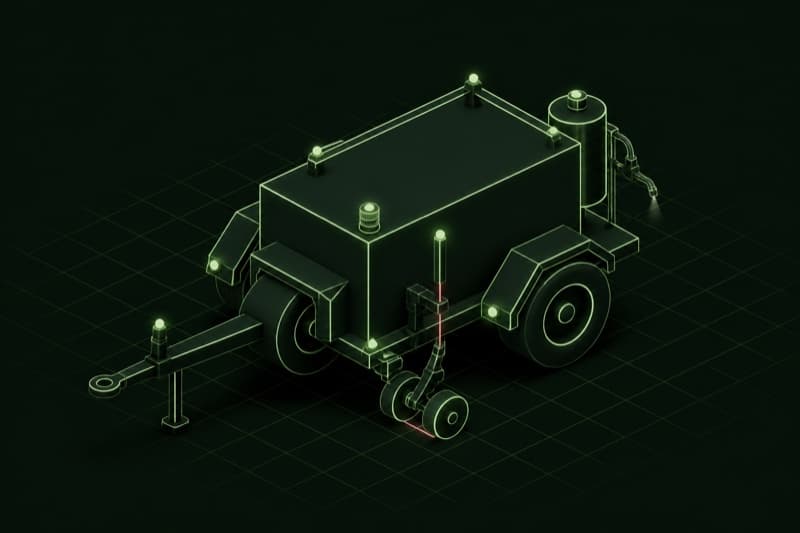
Continuous friction measuring equipment (CFME) is a vehicle or trailer mounted test rig that drags a wetted test wheel, geared to run at a fixed slip ratio, along a runway to record friction coefficient continuously over the full surface length, flagging low-friction sections before they become a landing hazard. NLS supplies CFME units tested and correlated to the reference friction device the authority accepts.
Guides
Runway Rubber Removal and Friction Testing: Why Airports Schedule Both Together
Why rubber deposits from landing aircraft drive runway friction loss, how friction testing catches it, why ultra high pressure water removal is the standard method, and how airports build a rubber removal schedule around traffic volume.
Offshore Helideck Requirements Under CAP 437: What Operators Need to Know
What CAP 437 actually requires on an offshore helideck: perimeter lighting, status lights, friction, drainage, net versus no-net deck design, and the inspection routine that keeps a deck operational.