Posted on 2026-06-20
Offshore Helideck Requirements Under CAP 437: What Operators Need to Know
CAP 437 is the UK CAA's standard for offshore helicopter landing areas, and it has become the practical reference most operators in the Gulf design against even where the local regulator is GACA rather than the CAA. It covers the deck itself, not just the lighting on it, and offshore projects that skip sections of it tend to find out during the pre-operational inspection, not before.
Perimeter lighting defines the deck at night
The perimeter of a helideck is marked by a ring of lights set into or around the deck edge, and CAP 437 sets out how that ring should read to a pilot on approach: continuous, evenly spaced, and visible from the direction of approach without being obscured by deck edge nets or safety netting. The lights need to survive the environment they sit in, salt spray, vibration, and routine deck traffic, which is why offshore fixtures are built differently from an onshore airfield equivalent even when the photometric intent is the same. A perimeter that looks complete in daylight can still fail the standard if fixtures are spaced unevenly or shadowed by deck furniture.
Status lights tell the pilot the deck is usable
Separate from the perimeter ring, CAP 437 calls for a status light system, commonly a red/green or red/amber/green indication, that tells an approaching pilot whether the deck is currently available for landing. This is not decorative. It reflects a live operational decision, obstruction on deck, deck movement limits exceeded, fire cover not in place, and the lighting system has to be wired so that status can change in real time from the helideck control point. Getting this circuit wrong, or leaving it hardwired to a single state, defeats the purpose of having it at all.
Friction is a coating and maintenance problem, not just a design one
A helideck surface needs a minimum level of skid resistance, particularly relevant given how often these decks are wet from spray, rain, or firefighting drills. CAP 437 references friction performance qualitatively rather than prescribing a single coating brand, and the practical challenge is that friction degrades over time as coatings wear, oxidize, or get patched unevenly. Decks due for recoating are usually flagged by a drop in measured friction well before the surface looks visibly worn, which is why friction testing sits on a schedule rather than being triggered only by visual inspection.
Drainage keeps fuel and firefighting water off the deck
An offshore helideck has to shed water and any spilled fuel quickly, both for skid resistance and because pooled liquid near an aircraft is a fire and slip hazard. CAP 437's drainage guidance covers deck slope and drain placement so that runoff moves away from the landing area and refuelling point rather than collecting under a parked aircraft. On a net deck this interacts with the netting structure itself, since drainage channels have to route around or through the support frame without creating a trip or snag point.
Net versus no-net deck design changes several other decisions
Helidecks are broadly built as either a solid plated deck or a net (aluminium planking or perforated grid) deck, and CAP 437 treats the two differently in places. Net decks allow wash-through in high sea states and reduce weight on a platform topside, but they change how perimeter lighting fixtures are mounted, how drainage is engineered, and how deck marking paint or friction coating is applied, since not every coating system bonds the same way to a net substrate. The choice is usually driven by the platform's structural and environmental case rather than by lighting or friction convenience, but every downstream system has to be specified against whichever deck type is actually installed.
Inspection culture is what keeps a compliant deck compliant
A helideck that met CAP 437 at commissioning does not stay compliant by default. Salt corrosion, UV degradation of coatings, and mechanical damage from deck traffic all move requirements out of tolerance gradually, which is why CAP 437 environments run on a routine of periodic inspection covering lighting function, friction, structural condition, and net or plating integrity. Operators that treat inspection as a compliance checkbox tend to catch problems late, at the point a deck gets suspended from operations, rather than early, when a lighting fixture or coating patch is a scheduled maintenance item. NLS supplies offshore-rated helideck lighting systems and friction testing and inspection support engineered to CAP 437 for operators in Saudi Arabia. Related product pages include Helideck Status Lights and Heliport Friction Testing.
FAQ
Q: What does CAP 437 require for helideck perimeter lighting? A: CAP 437 calls for a continuous, evenly spaced ring of lights around the deck edge, visible to an approaching pilot and built to survive an offshore environment. It also requires a separate status light system that indicates in real time whether the deck is currently available for landing.
Q: How often does helideck friction need to be tested? A: CAP 437 does not fix a universal interval, since it depends on coating type, traffic, and environmental exposure, but offshore operators typically run friction testing on a routine schedule rather than only when a surface looks visibly worn, because friction can drop measurably before wear becomes visible.
Q: What is the difference between a net helideck and a plated helideck? A: A plated deck is a solid surface, while a net deck uses aluminium planking or a perforated grid that allows water and wind to pass through, reducing structural load in high sea states. The choice affects how lighting, drainage, and friction coatings are engineered, since each system has to be specified for the deck type actually installed.
Q: Why does a helideck that passed its original inspection later get flagged as non-compliant? A: Salt corrosion, UV wear on coatings, and mechanical damage from routine deck traffic degrade lighting, friction, and structural condition gradually after commissioning. CAP 437 compliance is maintained through periodic inspection, not established once and assumed permanent.
Related products
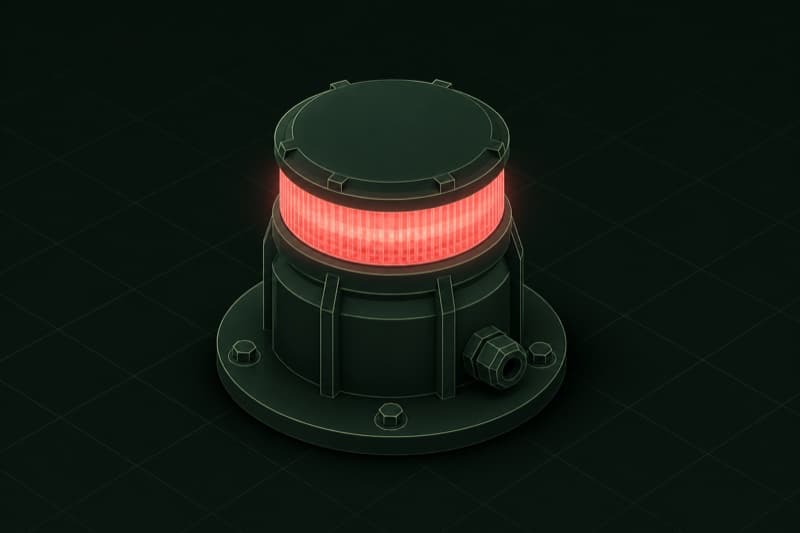
Helideck Status Lights
Helideck status lighting signals to an approaching pilot whether a deck is available, with a flashing red state indicating the deck is unsafe to land, controlled from the deck operator's station under CAP 437. NLS sources and installs helideck status lighting for helideck and heliport projects in Saudi Arabia.
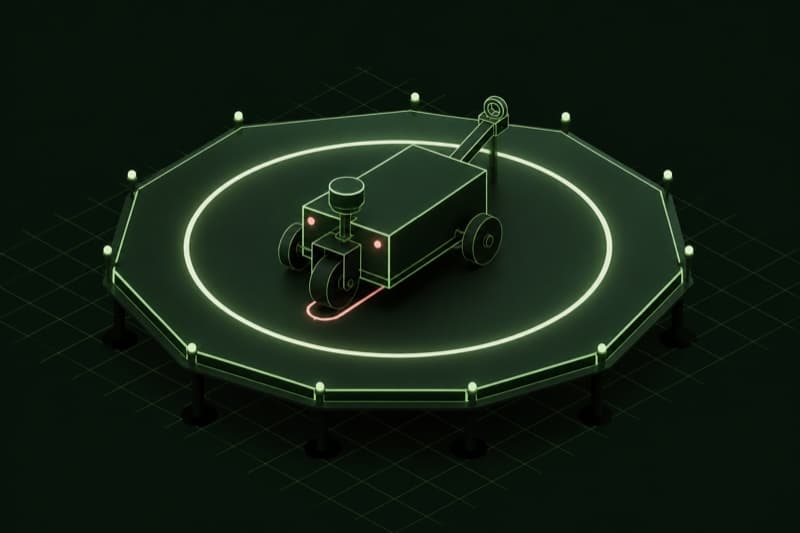
Heliport Friction Testing
Heliport friction testing verifies the touchdown and lift-off area (TLOF) and final approach and take-off area (FATO) surfaces meet the slip resistance a helicopter needs, tested using portable or trailer-mounted equipment rather than fixed-wing runway rigs, since most heliport surfaces are smaller and often elevated. NLS delivers heliport friction testing referenced against ICAO Annex 14 Volume II and CAP 437.
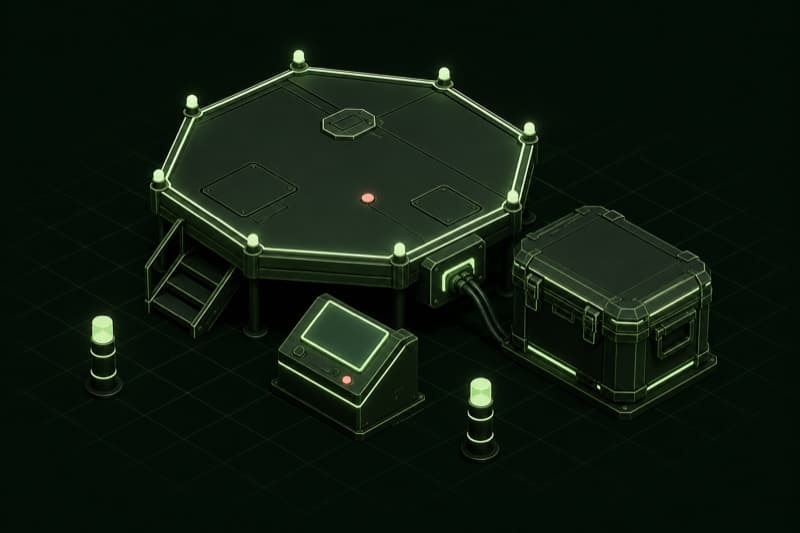
Heliport Maintenance Contracts
Heliport maintenance contracts cover the scheduled checks and fault response that keep a helideck or ground-level heliport's lighting, markings, and wind indicator operating within ICAO Annex 14 Volume II and CAP 437 (for offshore helidecks) serviceability limits between full inspections. NLS scopes these against the heliport's actual fixture set and traffic level rather than a fixed generic visit list.
TLOF Perimeter Lights
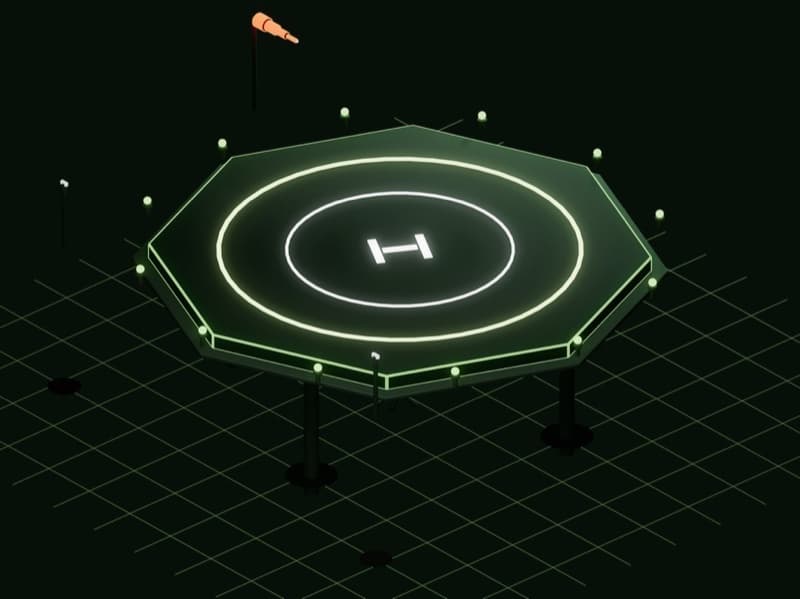
TLOF perimeter lights are the fixed green fixtures that outline the touchdown and lift-off area of a helipad or heliport so a pilot can identify its edges and orientation at night or in low visibility. NLS sources and installs TLOF perimeter lighting engineered to ICAO Annex 14 Volume II and GACAR Part 138 across Saudi Arabia.