

Heliport Friction Testing
Heliport friction testing verifies the touchdown and lift-off area (TLOF) and final approach and take-off area (FATO) surfaces meet the slip resistance a helicopter needs, tested using portable or trailer-mounted equipment rather than fixed-wing runway rigs, since most heliport surfaces are smaller and often elevated. NLS delivers heliport friction testing referenced against ICAO Annex 14 Volume II and CAP 437.
Heliport friction testing addresses a surface category that standard runway friction equipment isn't always suited to: the touchdown and lift-off area and final approach and take-off area of a helipad are typically far smaller than a runway, often surfaced in painted concrete, non-slip coating, or a steel deck rather than asphalt, and on an elevated helideck or rooftop pad, a full-size vehicle-towed test trailer physically cannot access the surface at all. Portable friction testers and compact trailer units fill that gap, delivering the same wetted-surface, continuous or spot-reading methodology on a footprint that fits a rooftop or offshore deck.
ICAO Annex 14 Volume II sets the surface friction expectation for heliports alongside marking and lighting requirements, and where a heliport sits on an offshore platform or building rooftop, CAP 437 adds the helideck-specific friction and surface coating requirements that a ground-level heliport doesn't need to meet. A non-slip coating system common on steel helidecks degrades differently from painted or bare concrete, losing grip through coating wear and salt or sand abrasion rather than rubber buildup, which changes both the test interval and what a low reading actually indicates.
Saudi heliport friction testing covers hospital helipads, industrial and oil and gas platform helidecks, and VIP or private helipads, each carrying a different surface type and access constraint. A hospital rooftop pad needs portable equipment and a tested access plan around the building's structural loading, while an oil and gas platform helideck brings CAP 437 non-slip coating requirements into the survey scope alongside the standard friction reading.
NLS delivers heliport friction testing on a turnkey basis, referenced against ICAO Annex 14 Volume II and CAP 437 where applicable, with equipment sized to the pad's access and surface type. A project typically starts with pad dimensions, surface material, and whether the site is ground-level, rooftop, or offshore, and NLS returns a testing scope and schedule with a USD quote alongside the airfield ground lighting and other aviation infrastructure NLS already supplies into Saudi projects.
Specifications
- ✓Surface friction assessment against ICAO Annex 14 Volume II heliport standards
- ✓Additional helideck-specific friction and non-slip coating checks per CAP 437 for offshore and elevated pads
- ✓Portable and compact trailer-mounted equipment sized for rooftop, offshore, and confined-access pads
- ✓TLOF and FATO area coverage on painted concrete, non-slip coating, or steel deck surfaces
- ✓Access and structural loading plan coordinated for rooftop and platform-mounted heliports
- ✓Turnkey scheduling alongside NLS's broader aviation infrastructure supply in Saudi Arabia
Frequently Asked Questions
Who tests helipad friction in Saudi Arabia?+
NLS delivers heliport friction testing referenced against ICAO Annex 14 Volume II and CAP 437 for offshore and elevated pads, using portable and compact trailer equipment suited to hospital, industrial, and platform helideck access constraints across Saudi Arabia.
Why does a rooftop helipad need different friction testing equipment than a runway?+
A full-size vehicle-towed friction trailer cannot access a rooftop or offshore deck. Portable friction testers and compact trailer units deliver the same wetted-surface test methodology on a footprint and weight the structure can actually accommodate.
Does a helideck non-slip coating need different friction checks than painted concrete?+
Yes. A non-slip coating on a steel helideck loses grip through coating wear and salt or sand abrasion rather than rubber deposit buildup, so CAP 437's helideck-specific criteria cover a different degradation pattern than the friction checks applied to a ground-level painted concrete pad.
Who supplies Heliport Friction Testing in Saudi Arabia?+
Northlane Solutions (Northlane Solutions Company) supplies Heliport Friction Testing across Saudi Arabia, including Riyadh, Jeddah, Dammam and Jubail. Send your specification and quantities to info@northlanesolution.com for a quotation.
Related products

Continuous Friction Measuring Equipment
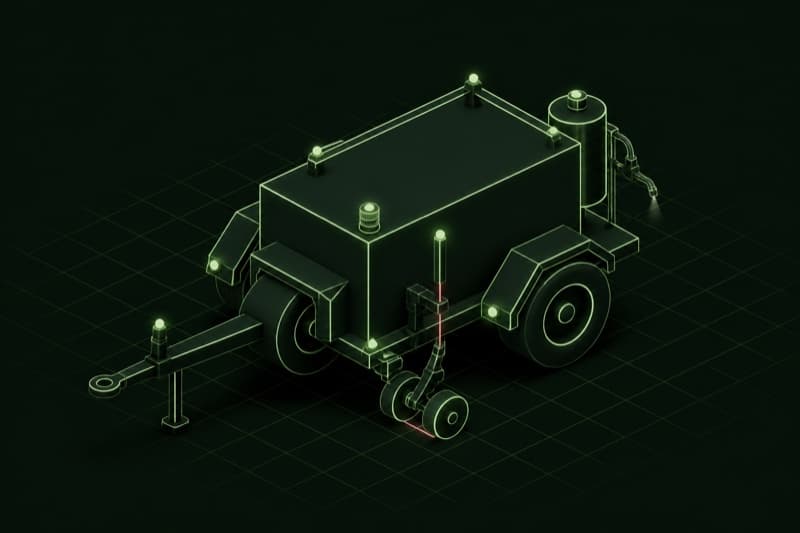
Continuous friction measuring equipment (CFME) is a vehicle or trailer mounted test rig that drags a wetted test wheel, geared to run at a fixed slip ratio, along a runway to record friction coefficient continuously over the full surface length, flagging low-friction sections before they become a landing hazard. NLS supplies CFME units tested and correlated to the reference friction device the authority accepts.
Runway Friction Testing Services
Runway friction testing services deliver a continuous friction survey of a runway using calibrated equipment, correlated to ICAO reference friction levels, and reported in the format a civil aviation authority requires. The service covers scheduling, wetted-surface test runs, data correlation, and a friction report with low-friction sections flagged for maintenance.
Guides
Offshore Helideck Requirements Under CAP 437: What Operators Need to Know
What CAP 437 actually requires on an offshore helideck: perimeter lighting, status lights, friction, drainage, net versus no-net deck design, and the inspection routine that keeps a deck operational.
Runway Rubber Removal and Friction Testing: Why Airports Schedule Both Together
Why rubber deposits from landing aircraft drive runway friction loss, how friction testing catches it, why ultra high pressure water removal is the standard method, and how airports build a rubber removal schedule around traffic volume.