
Posted on 2026-04-25
Runway Rubber Removal and Friction Testing: Why Airports Schedule Both Together
Every landing leaves a small deposit of tire rubber on the touchdown zone, and on a busy runway that deposit accumulates fast enough to change how the surface behaves under a wet tire. Rubber removal and friction testing exist as a pair because one measures the problem and the other fixes it, and airports that run them on unrelated schedules tend to find friction complaints arriving before the removal contractor is due back.
Why rubber accumulation is a friction problem, not a cosmetic one
Tire rubber is soft relative to the runway pavement underneath it, and as landings repeat in the touchdown zone, that rubber builds into a layer that can fill the surface texture the pavement relies on for wet-weather grip. A dry runway with heavy rubber deposits can still look fine and perform fine, because dry friction depends less on surface microtexture. The same runway wet tells a different story: water can't escape through a texture that rubber has filled in, and the aircraft tire rides on a thin film of water rather than gripping pavement, the classic aquaplaning risk. This is why rubber contamination is treated as a runway safety issue under ICAO Annex 14 guidance rather than a pavement appearance issue, and why it concentrates almost entirely in the touchdown zones rather than spreading evenly down the runway.
Friction testing is what turns a visual observation into a maintenance trigger
A continuous friction measuring device, towed or self-contained, runs down the runway at a set speed with a wetted test tire and records a friction coefficient along the length of the surface. ICAO Annex 14 and equivalent national standards (GACAR Part 139 in the Saudi context) frame how measured friction is compared against the maintenance and design objective levels the aerodrome operator and the civil aviation authority set for that runway, and a runway that reads below the maintenance planning level in a defined section triggers corrective action, which in the vast majority of contamination cases means rubber removal rather than resurfacing. The value of routine friction testing is that it catches the decline before it becomes visible or before a pilot report flags it, since friction typically degrades gradually across dozens or hundreds of cycles rather than dropping suddenly.
Ultra high pressure water is the standard removal method
Several methods can strip rubber from a runway surface, but ultra high pressure water blasting has become the dominant method at active airports because it removes the rubber layer effectively while leaving the underlying pavement texture largely intact, which matters because the goal is restoring the original surface texture, not cutting into it. Chemical rubber removal agents and mechanical grinding are both used in specific circumstances, but water blasting avoids the residue-management issues of chemical methods and the risk of surface damage that comes with aggressive mechanical abrasion. The process is run as a mobile operation, typically overnight or during a scheduled runway closure window, since it requires the section being treated to be out of active use.
Runway closures are the real scheduling constraint
Rubber removal is not a task most airports can slot in casually, because the treated section of runway has to be closed to traffic for the duration of the work and for the surface to be inspected and cleared afterward. Airports with a single runway, or with traffic patterns that make closure windows scarce, plan rubber removal around the lowest-traffic hours available and often coordinate it with other planned maintenance to avoid opening the same closure window twice. This scheduling reality, more than the removal technology itself, is usually what determines how often a given runway actually gets treated, rather than a fixed calendar interval applied uniformly across an airport network.
How traffic volume drives the removal interval
There's no single interval that fits every runway, because rubber accumulation rate tracks landing frequency, aircraft weight mix, and how concentrated the touchdown zone usage actually is. A runway handling high volumes of heavy commercial traffic in a tight touchdown pattern builds up rubber measurably faster than a general aviation strip with light, dispersed traffic. This is why friction testing data, rather than a generic calendar rule, is what should be driving the removal schedule in practice: an airport tracking its own friction trend over successive surveys can see the actual rate of decline for its specific traffic mix and schedule removal against that trend rather than against an assumption borrowed from a different airport's operating profile.
Building the two into one maintenance program
The airports that manage this well treat friction testing and rubber removal as one connected program rather than two separate maintenance line items. Friction surveys run on a fixed schedule regardless of visible rubber condition, because degradation isn't always visible early. Removal gets scheduled against the friction trend and against available closure windows, not against a fixed interval that ignores actual traffic. And touchdown zone markings get reinspected after each removal cycle, since ultra high pressure water blasting affects paint markings in the treated zone as much as it affects rubber. NLS supports runway friction testing and rubber removal programs across Saudi airports, working to ICAO Annex 14 and GACAR Part 139 friction and pavement standards. The two halves of the program have their own pages: Runway Friction Testing Services and Runway Rubber Removal.
FAQ
Q: How does rubber buildup on a runway actually reduce friction? A: Tire rubber deposited during landing fills in the surface texture the pavement relies on to let water escape from under a tire in wet conditions. Dry-weather friction is affected less, but wet-weather friction drops because water can't drain through a texture that rubber has filled, raising aquaplaning risk in the touchdown zone specifically.
Q: Why is ultra high pressure water the preferred rubber removal method? A: It strips the rubber layer effectively while preserving the underlying pavement surface texture, which is the actual objective of the work. Chemical methods leave residue-management issues and mechanical grinding risks damaging the surface texture it's supposed to restore, so water blasting has become the standard method at most active airports.
Q: How often should a runway be tested for friction? A: Standards frame planning levels rather than a fixed testing interval, and airports typically run friction surveys on a routine schedule independent of visible rubber condition, since friction degradation is often not visible until it's already below the design objective level. The actual removal frequency should then be set from each runway's own friction trend rather than a generic calendar rule.
Q: Does rubber removal close the runway? A: Yes, the section being treated needs to be out of active use for the duration of the work and for a post-work inspection, which is why scheduling around low-traffic windows, and coordinating with other planned maintenance, is usually the bigger constraint on how often removal actually happens.
Related products
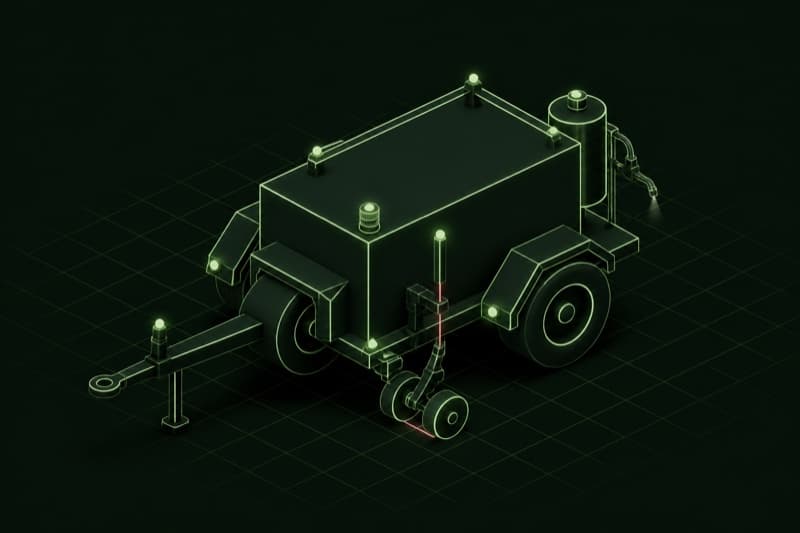
Runway Friction Testing Services
Runway friction testing services deliver a continuous friction survey of a runway using calibrated equipment, correlated to ICAO reference friction levels, and reported in the format a civil aviation authority requires. The service covers scheduling, wetted-surface test runs, data correlation, and a friction report with low-friction sections flagged for maintenance.
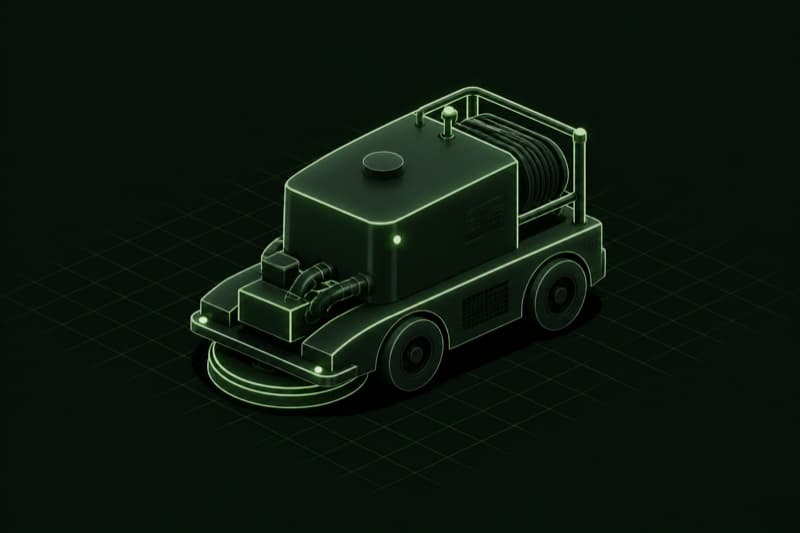
Runway Rubber Removal
Runway rubber removal strips the tyre deposits that build up in the touchdown zone and reduce pavement friction to unsafe levels. NLS delivers this as a scheduled service using high-pressure water or shot-blast methods matched to the pavement type, verified by post-work friction testing to ICAO Annex 14 and FAA AC 150/5320-12 thresholds, for airports and airbases across Saudi Arabia.
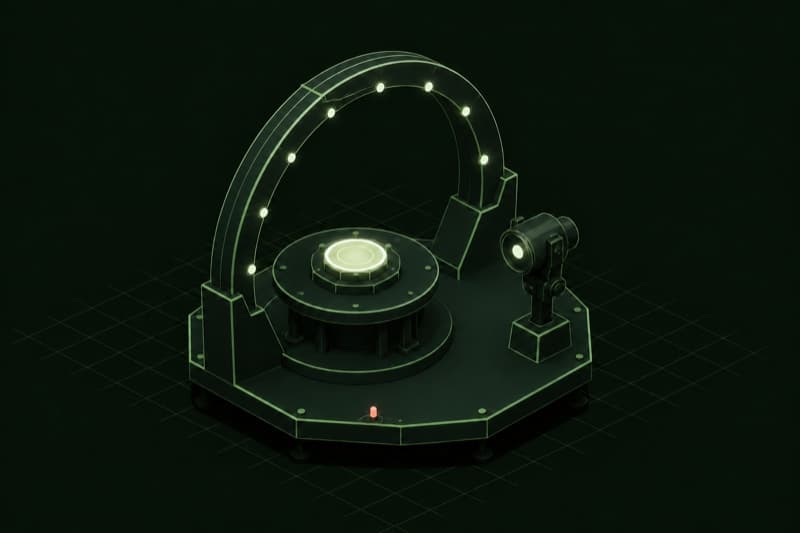
Photometric Testing
Photometric testing measures a runway, taxiway, or heliport lighting system's actual light intensity and colour against the values ICAO Annex 14 requires, since a fixture can look fine and still under-perform after years of lens ageing or CCR drift. NLS runs mobile photometric survey and reports results against the applicable standard for the licence file.

Heliport Friction Testing
Heliport friction testing verifies the touchdown and lift-off area (TLOF) and final approach and take-off area (FATO) surfaces meet the slip resistance a helicopter needs, tested using portable or trailer-mounted equipment rather than fixed-wing runway rigs, since most heliport surfaces are smaller and often elevated. NLS delivers heliport friction testing referenced against ICAO Annex 14 Volume II and CAP 437.