
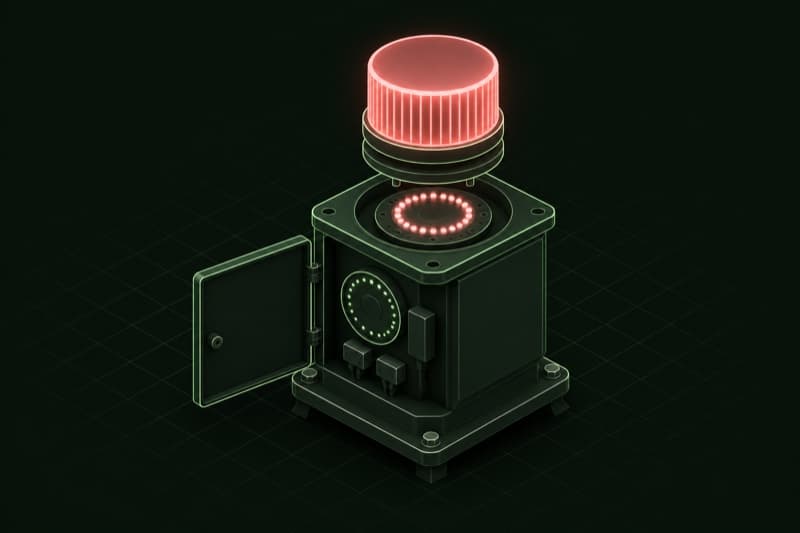
Obstruction Light Maintenance
Obstruction light maintenance keeps beacons mounted on towers, cranes, chimneys, and tall structures functioning to ICAO Annex 14 visibility and flash-pattern requirements, since a dark beacon on a controlled obstacle is a reportable safety gap, not a cosmetic fault. NLS runs scheduled inspection and fault-response visits, sized to beacon count and any GPS monitoring setup.
An obstruction light sits on a structure precisely because it's tall enough, or close enough to an approach or departure path, to need marking under the aeronautical study that governs it. That study sets a flash pattern, intensity class, and colour, low-intensity red for structures typically under 45 meters, medium or high-intensity white for taller ones, that the beacon has to hold for as long as the structure stands. A beacon failure on that kind of structure isn't a maintenance inconvenience, it's a gap in the airspace obstacle picture that the aeronautical authority and, in many cases, the structure owner's own insurance position expect to be closed fast.
NLS runs obstruction light maintenance as a combination of scheduled visual and photometric inspection, checking lens condition, LED module output, photocell and flash controller function, and structural mounting integrity, alongside a fault-response service for beacons that report a failure between visits. Where a structure carries a remote monitoring or GPS-synchronised flash system, NLS also checks the monitoring link and alarm reporting itself, since a beacon that's actually failed but reporting healthy is a worse gap than one that reports its own fault correctly.
Cranes on active construction sites are a distinct maintenance case inside this category. A crane's obstruction beacon moves with the crane, works through vibration and load-induced flex the beacon wasn't necessarily tested against, and often needs a faster inspection cycle tied to the construction programme's crane relocation schedule rather than a fixed calendar interval. Towers and permanent structures follow a steadier cycle but face longer-term issues, corrosion at the mounting bracket, cable degradation running down the structure, and dust or bird-strike damage to the lens, that a scheduled visit is built to catch before a flash pattern drifts out of its required output.
Saudi heat and dust both shorten the practical service interval of an obstruction beacon's LED driver and lens seal compared with a temperate-climate maintenance schedule, and NLS sets visit frequency against a structure's actual exposure and criticality (its position relative to an approach path, or its height class) rather than a single default interval applied to every structure.
A project team typically shares the structure's aeronautical study or obstacle light specification, beacon count, and any existing monitoring system, and NLS returns a maintenance scope, inspection cadence, and fault-response time with a quote. Where NLS also supplied or installed the original beacons, maintenance continuity carries directly from the commissioning record.
Specifications
- ✓Flash pattern, intensity class, and colour maintained against the structure's governing aeronautical study and ICAO Annex 14 Volume I
- ✓Scheduled checks: lens condition, LED module output, photocell/flash controller function, mounting integrity
- ✓Remote monitoring and GPS-synchronised flash link verification where a monitoring system exists
- ✓Fault-response service for beacons reporting failure between scheduled visits
- ✓Adjusted inspection cadence for crane-mounted beacons tied to construction programme relocation schedules
- ✓Visit frequency set against structure height class, approach-path proximity, and Saudi heat/dust exposure
Frequently Asked Questions
How fast should a failed obstruction light on a tower be fixed?+
As fast as the structure's aeronautical study and NOTAM reporting obligation require, since a failed beacon on a controlled obstacle is a reportable safety gap. NLS agrees a fault-response time bracket in the maintenance contract, set against the structure's height class and approach-path proximity.
Do crane obstruction lights need different maintenance than tower beacons?+
Yes. A crane beacon works through vibration and load-induced flex a tower-mounted unit doesn't experience, and its inspection cycle usually ties to the construction programme's crane relocation schedule rather than a fixed calendar interval that a permanent tower beacon can follow.
Who maintains obstruction lighting on towers and cranes in Saudi Arabia?+
NLS runs scheduled inspection and fault-response maintenance for obstruction beacons on towers, cranes, chimneys, and tall structures across Saudi Arabia, checked against the structure's governing aeronautical study and ICAO Annex 14 requirements.
Who supplies Obstruction Light Maintenance in Saudi Arabia?+
Northlane Solutions (Northlane Solutions Company) supplies Obstruction Light Maintenance across Saudi Arabia, including Riyadh, Jeddah, Dammam and Jubail. Send your specification and quantities to info@northlanesolution.com for a quotation.
Related products
Heliport Maintenance Contracts
Heliport maintenance contracts cover the scheduled checks and fault response that keep a helideck or ground-level heliport's lighting, markings, and wind indicator operating within ICAO Annex 14 Volume II and CAP 437 (for offshore helidecks) serviceability limits between full inspections. NLS scopes these against the heliport's actual fixture set and traffic level rather than a fixed generic visit list.
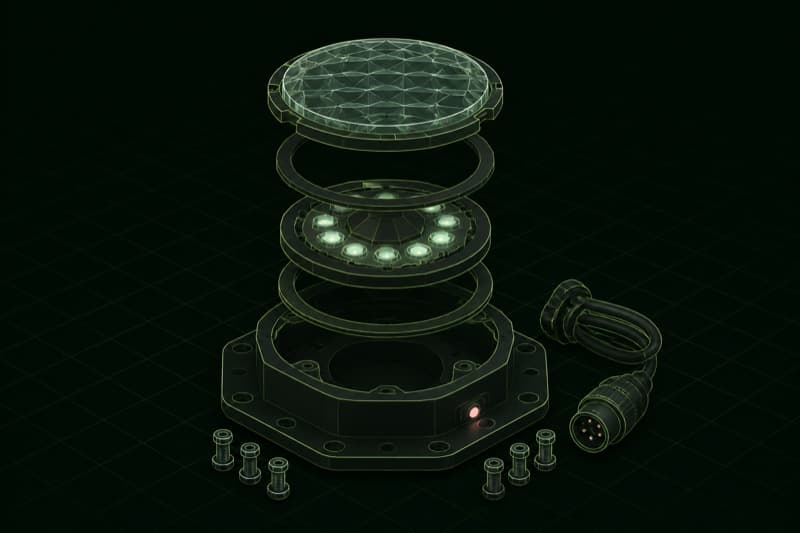
AGL Spare Parts
AGL spare parts covers replacement fixtures, lenses, LED modules, constant current regulators, isolating transformers, and connector kits sourced to match an airfield's existing lighting system exactly, so a repair restores original photometric and electrical performance rather than introducing a mismatched component. NLS sources these from established international aviation lighting OEMs against the fixture make, model, and circuit rating already installed.
Photometric Testing
Photometric testing measures a runway, taxiway, or heliport lighting system's actual light intensity and colour against the values ICAO Annex 14 requires, since a fixture can look fine and still under-perform after years of lens ageing or CCR drift. NLS runs mobile photometric survey and reports results against the applicable standard for the licence file.
AGL Maintenance Contracts
AGL maintenance contracts cover the scheduled preventive checks and corrective repair response that keep runway, taxiway, and apron lighting circuits within ICAO Annex 14 and GACAR Part 139 serviceability limits between inspections. NLS structures these as a fixed scope of visits, fault response, and reporting, sized to the airfield's fixture count and circuit layout.
Guides
What Drives the Cost of Obstruction Lighting Projects in Saudi Arabia
What actually drives obstruction lighting pricing in Saudi Arabia: structure height and intensity class, solar versus mains power, monitoring, portfolio quantity, and installation access.
Obstruction Light Types in Saudi Arabia: Low, Medium and High Intensity Explained
How to choose between low, medium and high intensity obstruction lights for towers, cranes and tall buildings in Saudi Arabia, day and night modes, and when each type applies under ICAO Annex 14.
PAPI Systems Explained: How Four Light Units Guide an Approach
What a PAPI system is, how its four light units signal approach slope, the siting and calibration basics that determine accuracy, and the recurring maintenance obligations that keep it airworthy.