
Posted on 2026-03-14
PAPI Systems Explained: How Four Light Units Guide an Approach
A pilot on final approach doesn't need a chart or a radio call to know whether the aircraft is high, low, or on the correct glide path. A quick glance at four lights beside the runway answers that in about two seconds. That's the entire purpose of a Precision Approach Path Indicator, and its simplicity is exactly why it has to be sited and calibrated with real precision behind the scenes.
What PAPI actually is
A PAPI installation is a row of four light units positioned beside the runway, usually near the touchdown zone on the left side (though right-side and split configurations exist for specific runway layouts). Each unit projects a beam that's white in the upper part of its vertical spread and red in the lower part, with a sharp transition between the two. From the cockpit, the pilot reads the pattern of white and red lights across all four units to judge position on the glide path, without needing to interpret a needle, a number, or a radio callout.
The system exists because a runway threshold alone gives a pilot almost no depth cue on a dark night or in reduced visibility, and even in good visibility, human depth perception on a long final approach is unreliable. PAPI converts an angular position that's hard to judge by eye into a simple, high-contrast color pattern that reads correctly at a glance, which is why it remains standard equipment at the vast majority of instrument and many visual runways worldwide, specified under ICAO Annex 14 Volume I.
How the four light units signal slope
Each of the four units is aimed at a slightly different elevation angle, spaced in small increments around the runway's designated approach angle, most commonly 3 degrees. An aircraft exactly on the correct glide path sees two units showing white and two showing red, an even split that reads as "on slope." An aircraft above the glide path sees more white units than red, because it's looking down into the white portion of more units' beams than it should be. An aircraft below the glide path sees more red than white, for the same reason in reverse. All four units red means significantly low; all four white means significantly high, and either extreme calls for an immediate correction.
The transition between white and red within each unit's beam is engineered to be sharp, not gradual, so the pilot sees a clear color change rather than an ambiguous fade as the aircraft's position shifts. That sharpness is a function of the optical design inside each unit and the precision of the elevation setting, which is exactly why calibration drift, even a fraction of a degree, matters more for PAPI than it would for a less safety-critical light.
Siting is not a rough placement exercise
Where the four units sit relative to the runway, and where each one is aimed vertically, is governed by the runway's approach category, the eye-to-wheel height of the aircraft types using it, and the required obstacle clearance surface for that approach. Larger aircraft with a higher cockpit position relative to their wheels need the PAPI angle set to keep the wheels clear of obstacles while the pilot still reads an "on slope" indication, so the same nominal glide angle can require a different PAPI elevation setting depending on the runway's design aircraft.
Lateral positioning matters too. The four units need to be far enough back from the runway edge and correctly spaced along the strip so that the light pattern reads correctly from the range of lateral positions an aircraft might occupy on a stabilized approach, not just from the runway centerline. Obstacles in the approach path, including terrain, buildings, or even trees that grow over time, can interrupt one or more of the beams and need to be checked against the calculated obstacle clearance surface, not just eyeballed from the ground.
Calibration basics
Each PAPI unit's beam elevation is set using precision optical or electronic aiming tools during commissioning, referenced against the runway's actual surveyed threshold elevation and the calculated glide path angle for that specific runway, not a generic default. The four units must also be matched to each other; if one unit's transition angle drifts relative to the other three, the "two white, two red" reading no longer represents the true on-slope position, and a pilot flying a stabilized approach based on that reading is actually flying a slightly different glide path than intended.
Calibration isn't a one-time setting. Ground settlement under the unit foundations, vibration, and routine maintenance disturbance can all shift a unit's aim by a small amount over time, small enough to be invisible from the ground but large enough to matter at the far end of a three-mile final approach. Periodic recalibration checks, referenced back to the original survey data, catch this drift before it becomes an operational safety issue rather than after.
Maintenance obligations that keep PAPI airworthy
Because PAPI is a flight safety instrument rather than a general illumination fixture, its maintenance regime is more exacting than ordinary airfield lighting. Routine checks cover lamp or LED output intensity (dimming below the required threshold changes how the color transition reads in daylight and in haze), aim angle verification, lens cleanliness (a dirty or scratched lens scatters light and blurs the sharp white-to-red transition pilots depend on), and unit-to-unit consistency across all four lights. Any vegetation or new construction in the approach path needs to be checked against the obstacle clearance surface on a recurring basis, not just at initial commissioning, since a tree grown over several seasons or a temporary structure erected during nearby construction can both intrude into a beam without anyone flagging it until an inspection catches it.
A single malfunctioning or misaimed unit degrades the whole system's readability, since the pilot's interpretation depends on comparing all four lights together, which is why most operating authorities treat a PAPI fault as requiring prompt correction or a NOTAM rather than a routine work-order item. NLS supplies, installs, sites, and calibrates PAPI systems in Saudi Arabia to ICAO Annex 14 Volume I requirements, with the recurring inspection and recalibration support that keeps a PAPI installation reading correctly year after year. Recalibration and the post-installation light output check sit under Photometric Testing, and the runway lighting around the PAPI units is covered by Runway Edge Lights.
FAQ
Q: How does a pilot read a PAPI system in practice? A: The pilot looks across all four light units at once. Two white and two red means the aircraft is on the correct glide path. More white than red means the aircraft is above the glide path; more red than white means it's below. All four red or all four white signals a significant deviation that needs immediate correction.
Q: What's the difference between PAPI and the older VASI system? A: VASI (Visual Approach Slope Indicator) uses two or three light bar pairs arranged perpendicular to the runway and interpreted differently than PAPI's row of four units. PAPI has become the standard configuration at most runways because its single row of four units gives a more precise, easier-to-read indication across a wider range of approach angles, and ICAO Annex 14 now favors it as the primary standard configuration.
Q: Why does PAPI need such precise calibration compared to other airfield lights? A: PAPI's entire function depends on a sharp, accurately positioned transition between white and red in each unit's beam, referenced to the runway's actual glide path angle. A small aim error changes what "on slope" looks like to the pilot, which is a safety-relevant error in a way that a slightly dim runway edge light generally isn't.
Q: How often does a PAPI system need to be recalibrated or inspected? A: There's no single universal interval; it depends on the specific installation, ground conditions, and the operating authority's maintenance program. What matters operationally is that aim angle, light intensity, lens condition, and the obstacle clearance surface in the approach path are checked on a recurring schedule referenced back to the original commissioning survey, since small drift is invisible from the ground but significant on approach.
Related products
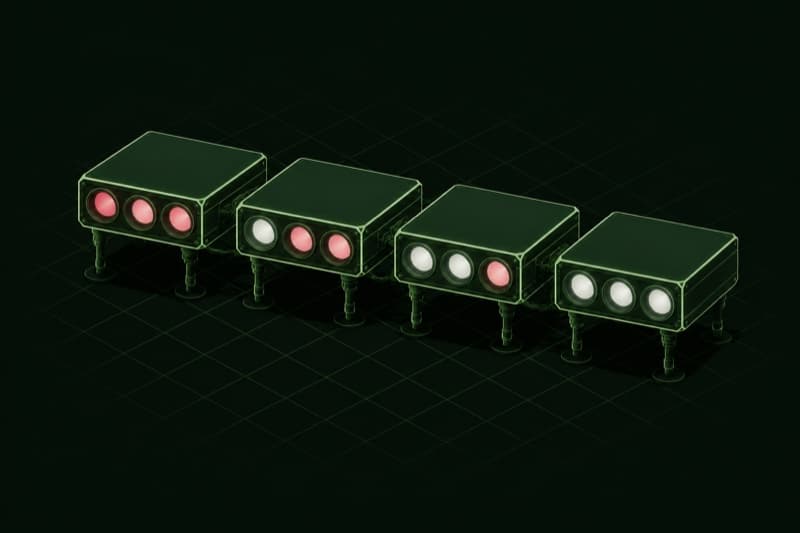
PAPI Systems
A PAPI, precision approach path indicator, is a row of ground units beside the runway that shows a pilot on final approach whether the aircraft sits above, on, or below the correct glide path through red and white lights. Northlane Solutions supplies PAPI systems built to ICAO Annex 14 Volume I for runway and heliport approaches across Saudi Arabia.
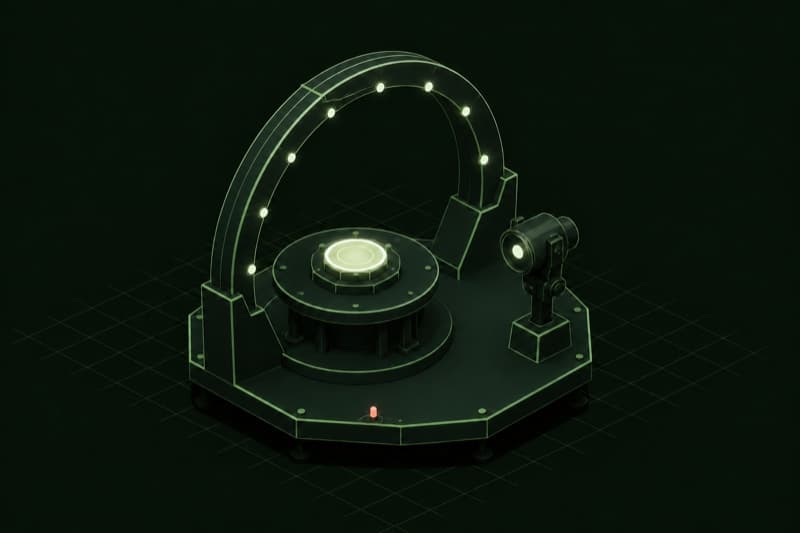
Photometric Testing
Photometric testing measures a runway, taxiway, or heliport lighting system's actual light intensity and colour against the values ICAO Annex 14 requires, since a fixture can look fine and still under-perform after years of lens ageing or CCR drift. NLS runs mobile photometric survey and reports results against the applicable standard for the licence file.
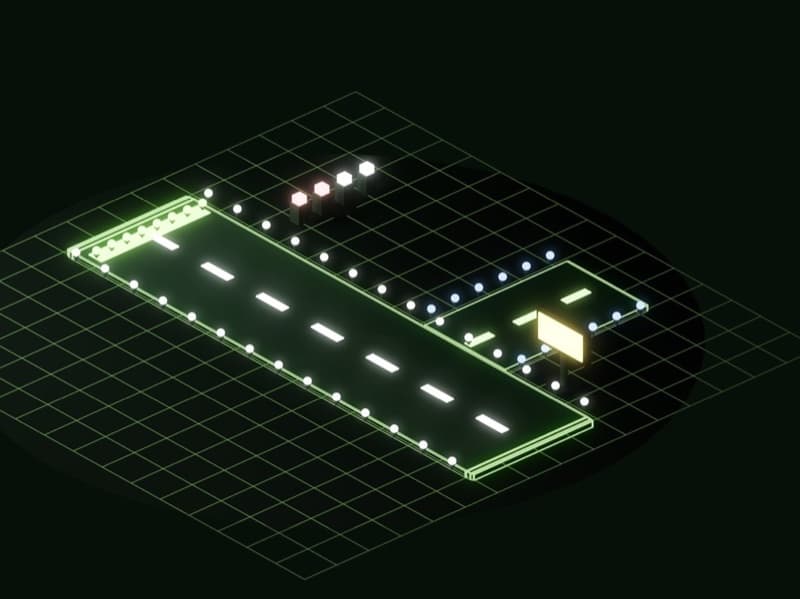
Runway Edge Lights
Runway edge lights are the fixed white fixtures spaced along both sides of a runway that define its usable width at night or in low visibility, switching to yellow along the final section approaching the runway end on longer runways. Northlane Solutions supplies runway edge light fixtures engineered to ICAO Annex 14 Volume I, elevated and in-pavement, across Saudi Arabia.
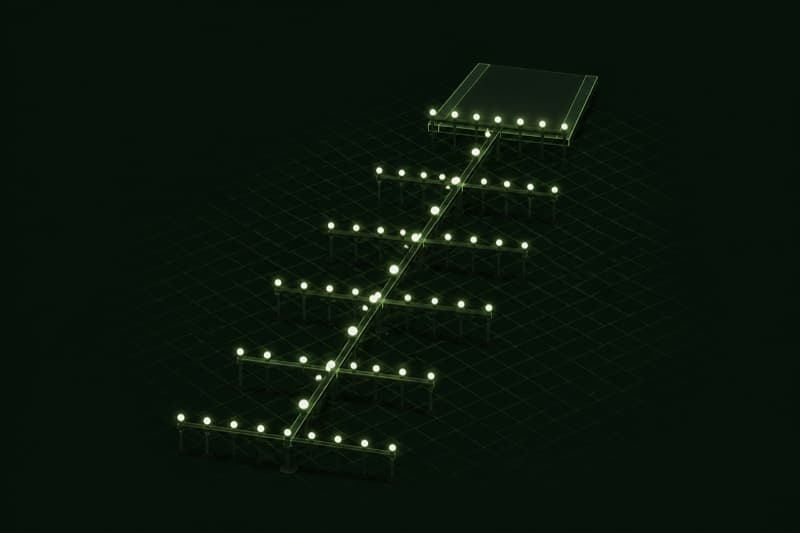
Approach Lighting Systems
An approach lighting system extends a defined pattern of light bars, and on longer configurations sequenced flashing lights, outward from the runway threshold along the extended centreline, giving a pilot on final approach horizontal guidance before the runway itself becomes visible. Northlane Solutions supplies approach lighting sized to the runway's approach category, engineered to ICAO Annex 14 Volume I.