
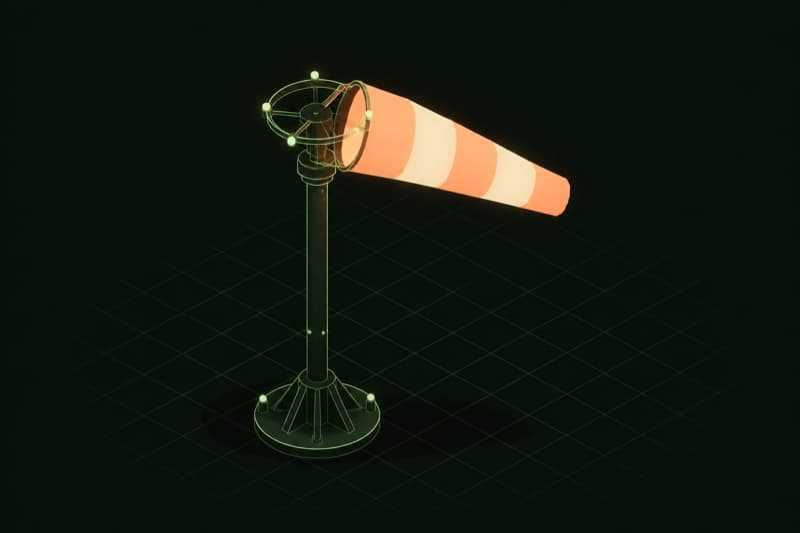
Illuminated Wind Cones (Windsocks)
Also called: windsock, wind sock, illuminated windsock, lighted wind sock, wind direction indicator
Illuminated wind cones give pilots a visual read on wind direction and relative speed during night operations and low-light approach, mounted on a frangible mast with an internal or external light source. NLS supplies and installs illuminated wind cones engineered to ICAO Annex 14 and FAA AC 150/5345 series requirements, for airports, heliports, and helidecks across Saudi Arabia.
Inside the Illuminated Wind Cones
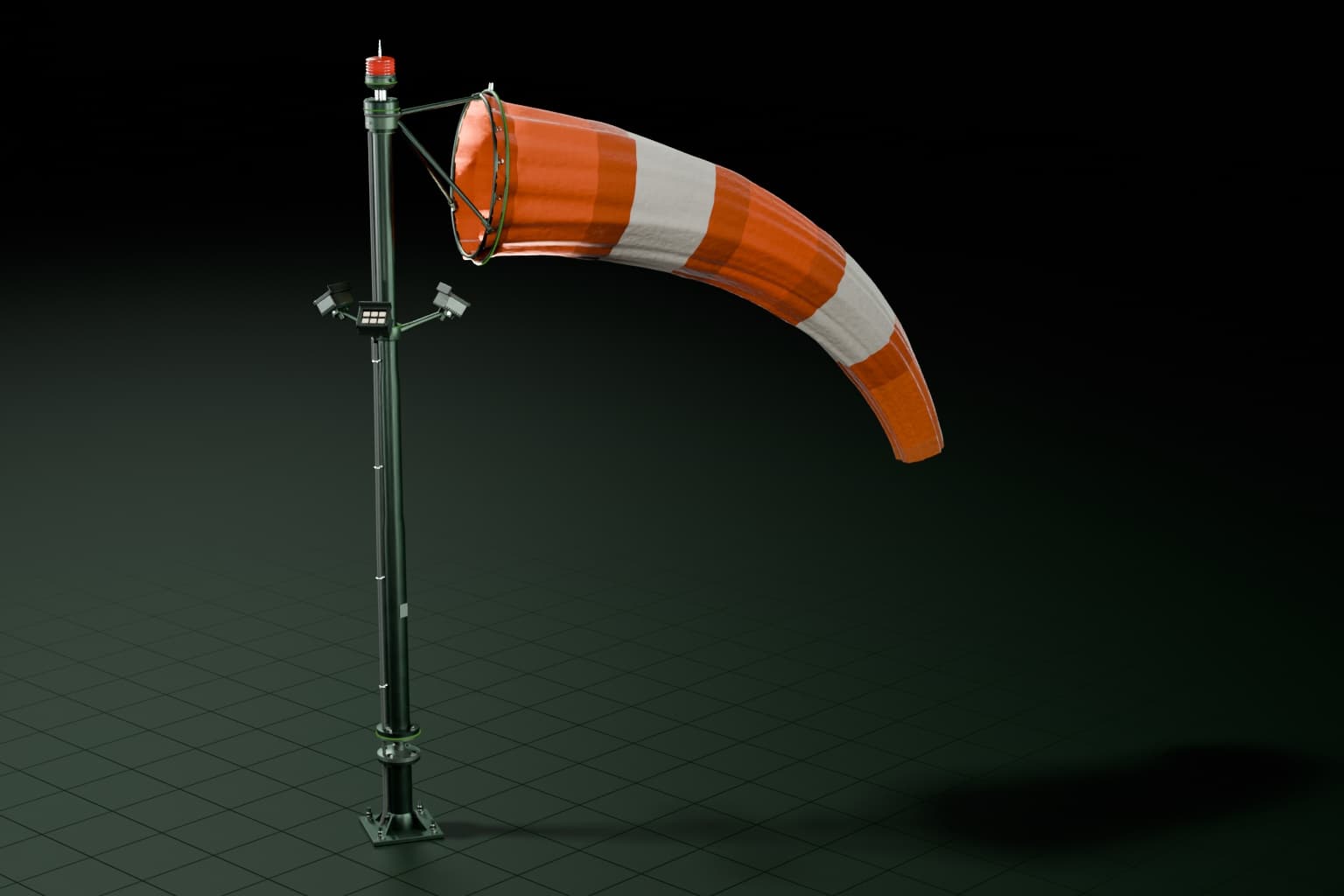
Download technical datasheet (PDF)An illuminated wind cone assembly pairs a fabric cone with a lighting source, a frangible support structure, and a mount that keeps the fabric free to swing with the wind. Each component has one job: read wind direction accurately in daylight, stay visible after dark, and fail safely if an aircraft ever strikes the mast.


01
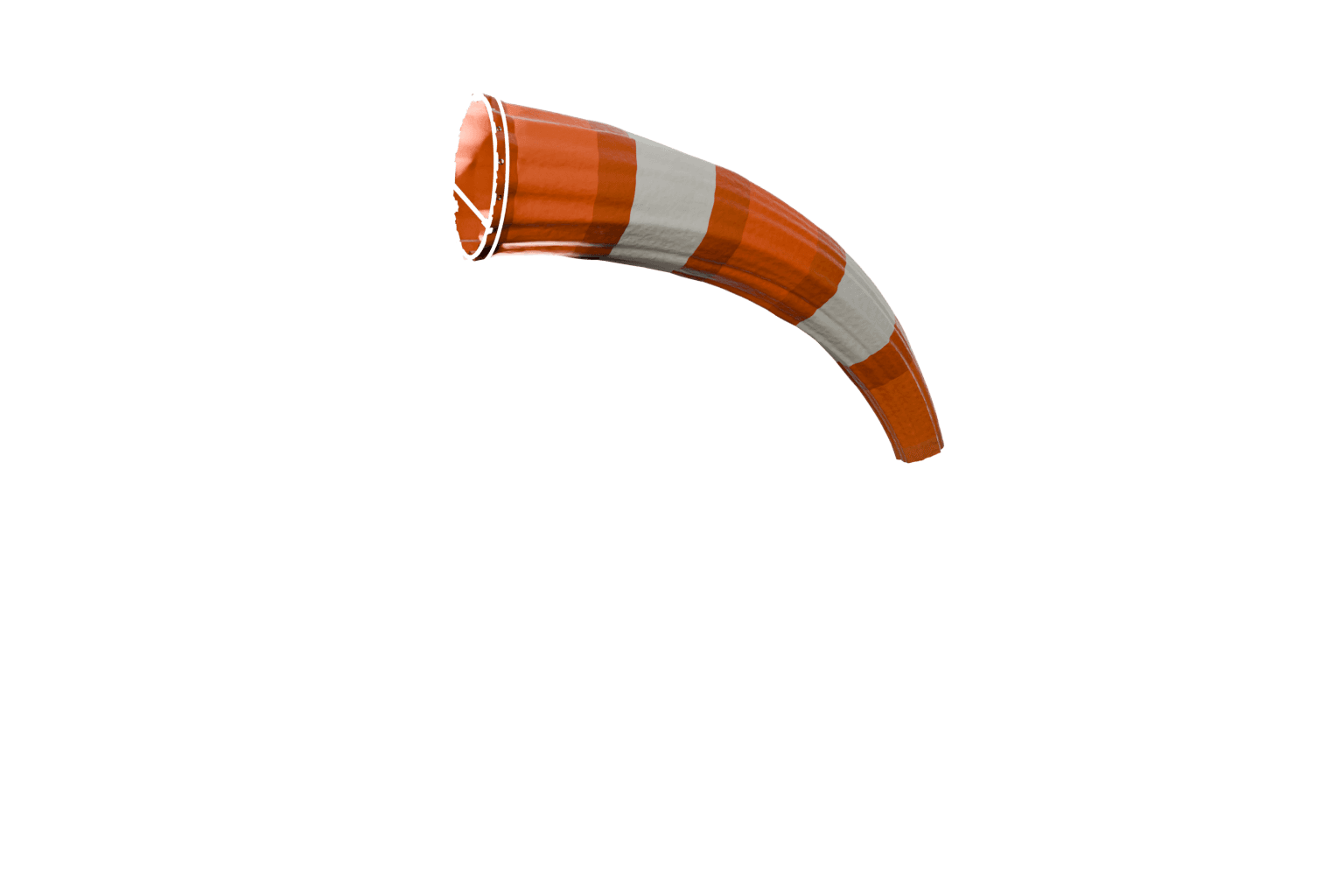
Cone Sleeve
The orange and white segmented fabric body that catches the wind and shows its direction and relative strength by the angle it holds. It is the only part a pilot actually reads, so its fabric condition and sizing against the applicable code reference are what regulators inspect first.
02
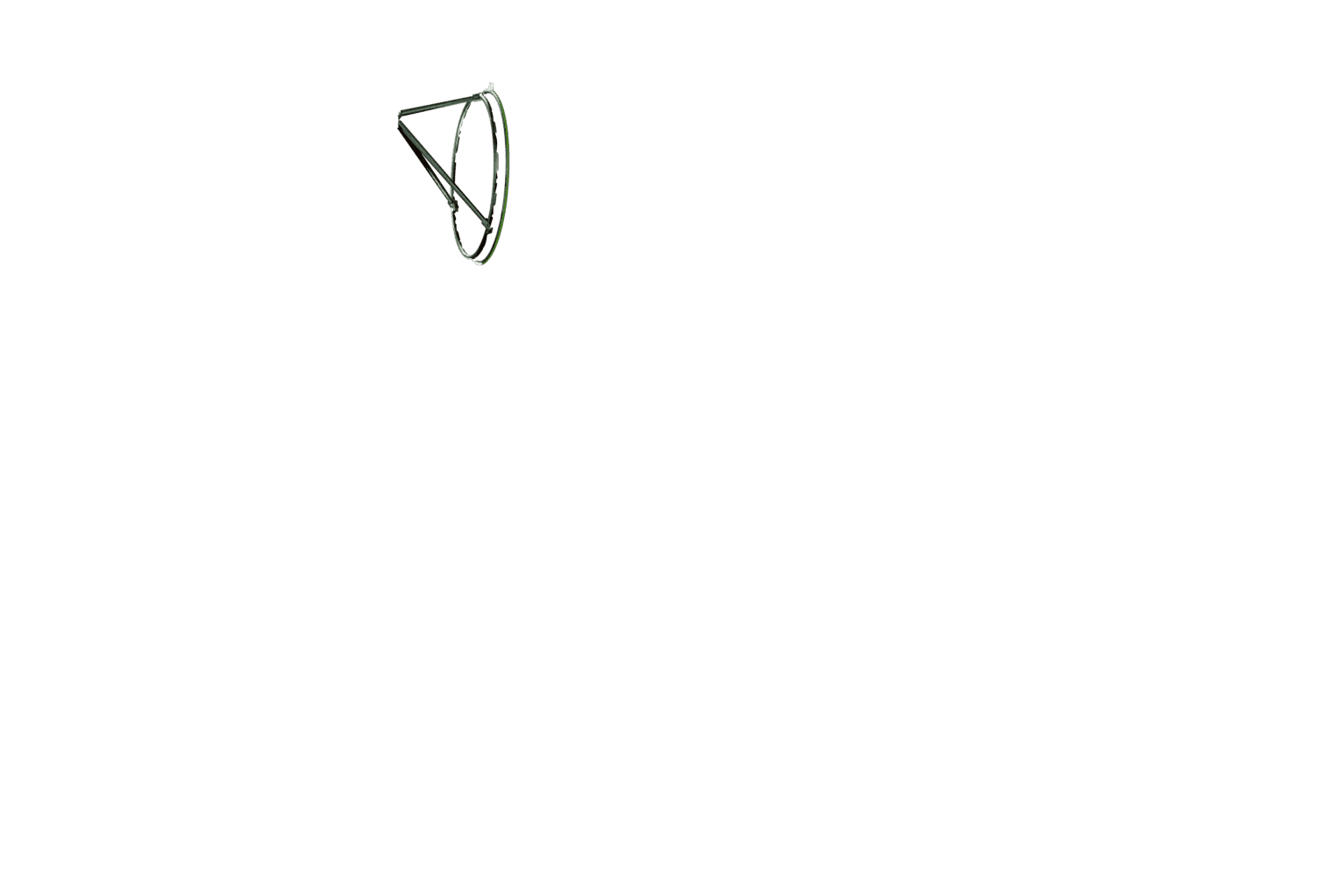
Support Basket
The open frame at the base of the cone that holds its mouth open and free to rotate on the mast head. It has to turn with minimal friction so the cone tracks true wind direction rather than lagging or sticking in gusty conditions.
03
Illumination Unit
The light source, mounted internally within a translucent cone or externally as floodlighting onto an opaque cone, that keeps the indicator legible after dusk. This is the component that turns a daytime-only fixture into one that satisfies night-operation requirements.
04
Swivel Bearing
The rotating joint between the support basket and the mast head that lets the whole cone assembly weathervane freely into changing wind direction. A worn or seized bearing is a common cause of a wind cone lagging the true wind direction.
05
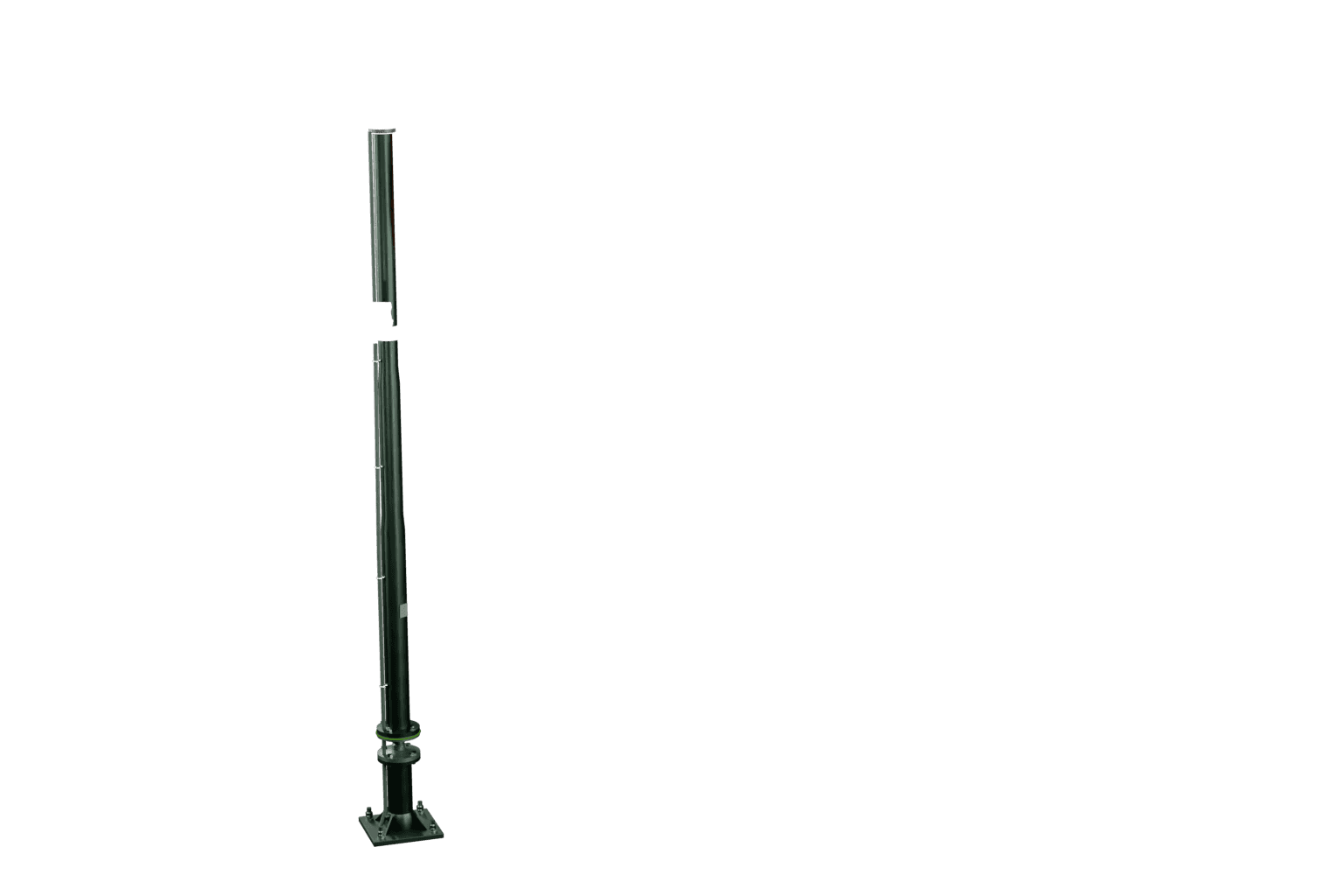
Frangible Mast
The support pole engineered to break away cleanly on impact rather than resist it, keeping the fixture within obstacle-limitation-surface requirements near runways, taxiways, and helipad approach paths. Its height and breakpoint design are set by the same siting rules that govern other frangible airfield fixtures.
06
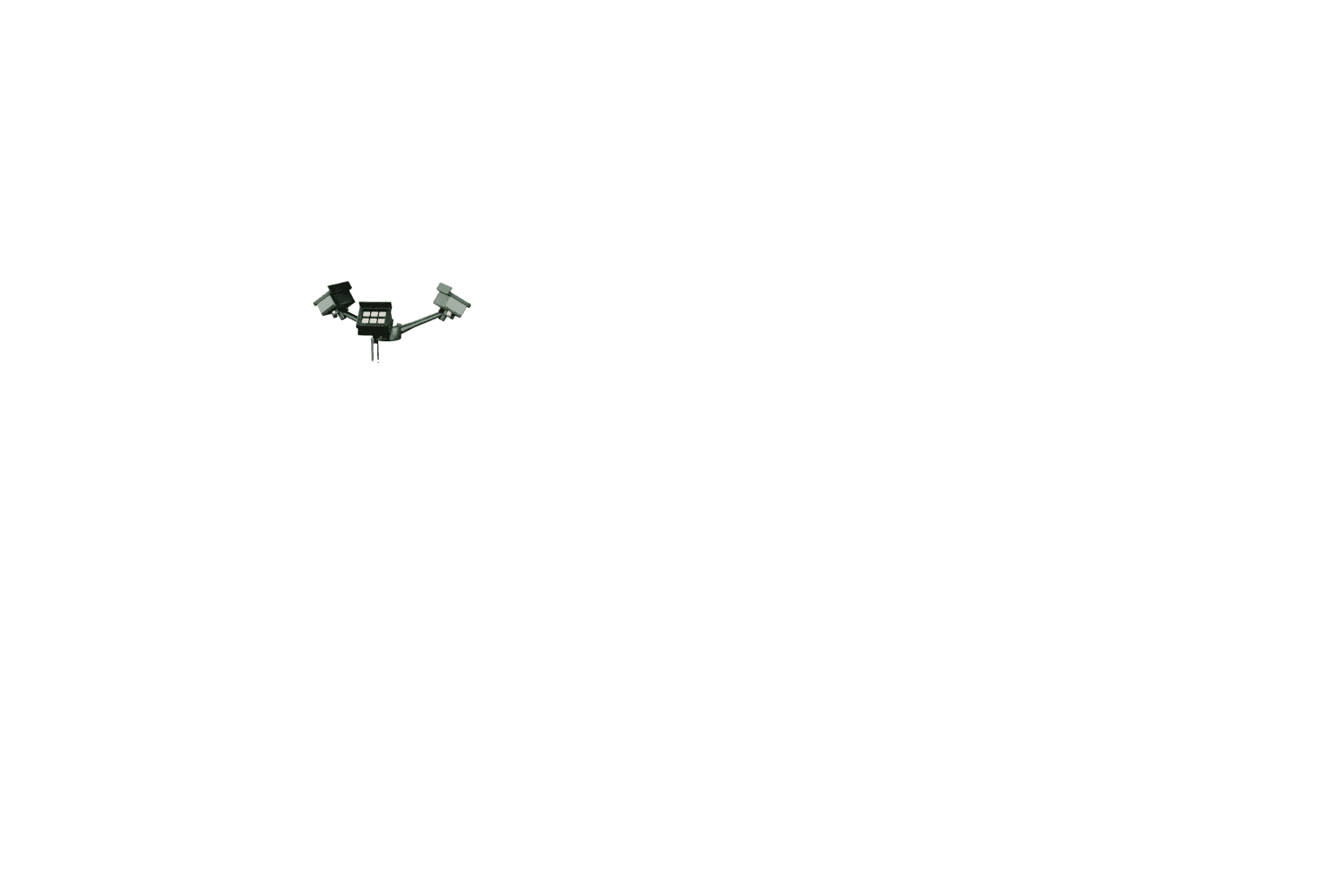
Obstacle Light Unit
A low-intensity marker light fitted to the mast itself in some configurations, flagging the structure as an obstacle to other aircraft independently of the wind cone's own illumination. Included where site obstacle-marking requirements call for it alongside the wind indicator function.
FULLY ASSEMBLED
Illuminated Wind Cones
Explore the assembly
01
Cone Sleeve
The orange and white segmented fabric body that catches the wind and shows its direction and relative strength by the angle it holds. It is the only part a pilot actually reads, so its fabric condition and sizing against the applicable code reference are what regulators inspect first.
02
Support Basket
The open frame at the base of the cone that holds its mouth open and free to rotate on the mast head. It has to turn with minimal friction so the cone tracks true wind direction rather than lagging or sticking in gusty conditions.
03
Illumination Unit
The light source, mounted internally within a translucent cone or externally as floodlighting onto an opaque cone, that keeps the indicator legible after dusk. This is the component that turns a daytime-only fixture into one that satisfies night-operation requirements.
04
Swivel Bearing
The rotating joint between the support basket and the mast head that lets the whole cone assembly weathervane freely into changing wind direction. A worn or seized bearing is a common cause of a wind cone lagging the true wind direction.
05
Frangible Mast
The support pole engineered to break away cleanly on impact rather than resist it, keeping the fixture within obstacle-limitation-surface requirements near runways, taxiways, and helipad approach paths. Its height and breakpoint design are set by the same siting rules that govern other frangible airfield fixtures.
06
Obstacle Light Unit
A low-intensity marker light fitted to the mast itself in some configurations, flagging the structure as an obstacle to other aircraft independently of the wind cone's own illumination. Included where site obstacle-marking requirements call for it alongside the wind indicator function.
| Cone material class | UV-resistant fabric, orange and white segmented pattern |
| Illumination approach | Internal light source within translucent fabric, or external floodlighting onto an opaque cone |
| Power options | AC mains where grid power reaches the mount, or solar with battery backup where it does not |
| Control compatibility | Photocell or timer dusk-to-dawn control, standalone or on a constant current regulator circuit |
| Mounting | Frangible mast with swivel-mounted cone basket, sized to the applicable code reference |
| Operating environment | Outdoor airside exposure, engineered for high-UV and abrasive-sand conditions |
Why illuminated wind cones matter
A wind cone is one of the simplest instruments on an airfield and one of the most relied upon. At night or in reduced visibility, an unlit cone is close to useless to an approaching pilot. Illumination turns it into a functioning visual aid that supports the go/no-go decision on wind direction and gust behavior during landing and takeoff. Regulators treat this as a baseline requirement, not an option, wherever night operations are certified.
Standards and construction
NLS supplies illuminated wind cones built to ICAO Annex 14 Volume I dimensional and conspicuity requirements and to FAA AC 150/5345 series guidance for segmented circle and wind cone assemblies. Cones are manufactured from durable, UV-resistant fabric in the standard orange and white segmented pattern, sized to the applicable code reference. Illumination is delivered either by an internal light source inside a translucent cone fabric or by external floodlighting directed onto an opaque cone, depending on site conditions and client preference. Mounting is on a frangible mast that fails safely on impact, in line with obstacle-limitation-surface requirements near runways, taxiways, and helipad approach and takeoff paths.
Power and control options
Sites range from grid-connected airports to remote helipads with no fixed power infrastructure. NLS specifies AC mains-fed units where grid power reaches the mount, and solar-powered, battery-backed units where it does not, with photocell or timer-based dusk-to-dawn control as standard. Units can be specified for compatibility with constant current regulator (CCR) circuits on AGL series circuits, or as standalone fixtures on their own local supply, matched to how the rest of the airfield lighting is controlled.
Turnkey supply and installation
NLS runs illuminated wind cone packages as a single scope: site survey against wind-loading and obstacle-clearance criteria, procurement from established international aviation lighting OEMs, mast foundation and frangible coupling installation, electrical connection or solar system commissioning, and photometric and function verification before handover. Buyers comparing suppliers in Saudi Arabia get one point of contact for design, supply, installation, and commissioning rather than splitting the scope across separate vendors, with pricing available in USD and SAR.
Maintenance considerations
Cone fabric degrades under UV exposure and sand abrasion faster than most airfield fixtures, and a torn or faded cone reads incorrectly to a pilot from altitude. NLS includes wind cone fabric replacement and lamp or LED module servicing as part of ongoing airfield lighting maintenance contracts, so the fixture stays within its intended service life rather than being left until a compliance inspection flags it.
Specifications
- ✓Conforms to ICAO Annex 14 Volume I wind cone dimensional and conspicuity criteria
- ✓Built to FAA AC 150/5345 series wind cone and segmented circle guidance
- ✓Orange and white segmented UV-resistant fabric, internal or external illumination
- ✓Mounted on a frangible mast for safe failure within obstacle-limitation surfaces
- ✓AC mains or solar-battery power options with dusk-to-dawn photocell control
- ✓Compatible with CCR-fed AGL circuits or standalone local supply
Frequently Asked Questions
Do wind cones need to be illuminated for night flying?+
Yes. Any airfield or helipad certified for night operations needs its primary wind indicator illuminated so pilots can read wind direction on approach and takeoff in darkness, per ICAO Annex 14 and FAA guidance.
Can an illuminated wind cone run on solar power at a remote helipad?+
Yes. NLS specifies solar-powered wind cone units with battery backup and photocell control for sites without a reliable grid connection, sized to run through multiple overcast days.
What mast type does an illuminated wind cone need?+
A frangible mast is required wherever the wind cone sits inside an obstacle-limitation surface, so the mount fails safely under aircraft impact rather than acting as a rigid obstruction.
Does NLS supply and install illuminated wind cones or only the fixture?+
NLS runs the full scope: site survey, sourcing from established aviation lighting OEMs, foundation and mast installation, electrical or solar commissioning, and function verification, as a single turnkey package.
Is an illuminated wind cone the same as a windsock?+
Yes. Wind cone is the term ICAO Annex 14 and the FAA AC 150/5345 series use, while tenders and site teams usually write windsock or wind sock. We supply illuminated windsocks complete with the frangible mast and light source for airports, heliports and helidecks across Saudi Arabia.
What is the role of the Cone Sleeve in Illuminated Wind Cones?+
The orange and white segmented fabric body that catches the wind and shows its direction and relative strength by the angle it holds. It is the only part a pilot actually reads, so its fabric condition and sizing against the applicable code reference are what regulators inspect first.
What is the role of the Support Basket in Illuminated Wind Cones?+
The open frame at the base of the cone that holds its mouth open and free to rotate on the mast head. It has to turn with minimal friction so the cone tracks true wind direction rather than lagging or sticking in gusty conditions.
What is the role of the Illumination Unit in Illuminated Wind Cones?+
The light source, mounted internally within a translucent cone or externally as floodlighting onto an opaque cone, that keeps the indicator legible after dusk. This is the component that turns a daytime-only fixture into one that satisfies night-operation requirements.
What is the role of the Swivel Bearing in Illuminated Wind Cones?+
The rotating joint between the support basket and the mast head that lets the whole cone assembly weathervane freely into changing wind direction. A worn or seized bearing is a common cause of a wind cone lagging the true wind direction.
What is the role of the Frangible Mast in Illuminated Wind Cones?+
The support pole engineered to break away cleanly on impact rather than resist it, keeping the fixture within obstacle-limitation-surface requirements near runways, taxiways, and helipad approach paths. Its height and breakpoint design are set by the same siting rules that govern other frangible airfield fixtures.
What is the role of the Obstacle Light Unit in Illuminated Wind Cones?+
A low-intensity marker light fitted to the mast itself in some configurations, flagging the structure as an obstacle to other aircraft independently of the wind cone's own illumination. Included where site obstacle-marking requirements call for it alongside the wind indicator function.
Who supplies Illuminated Wind Cones (Windsocks) in Saudi Arabia?+
Northlane Solutions (Northlane Solutions Company) supplies Illuminated Wind Cones (Windsocks) across Saudi Arabia, including Riyadh, Jeddah, Dammam and Jubail. Send your specification and quantities to info@northlanesolution.com for a quotation.
Related products
Solar Wind Cones
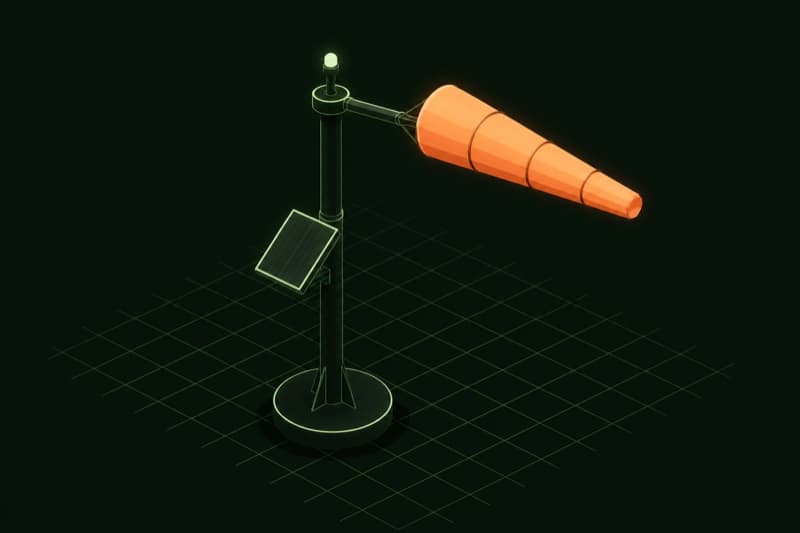
Solar wind cones combine a standard ICAO-compliant wind indicator with an independent photovoltaic power system, giving remote airfields, helipads, and heliports functioning night wind indication without a grid connection. NLS supplies and installs solar wind cone systems sourced from established international aviation lighting OEMs, sized to KSA solar conditions and matched to the site's obstacle-limitation and frangibility requirements.
Heliport Wind Cones
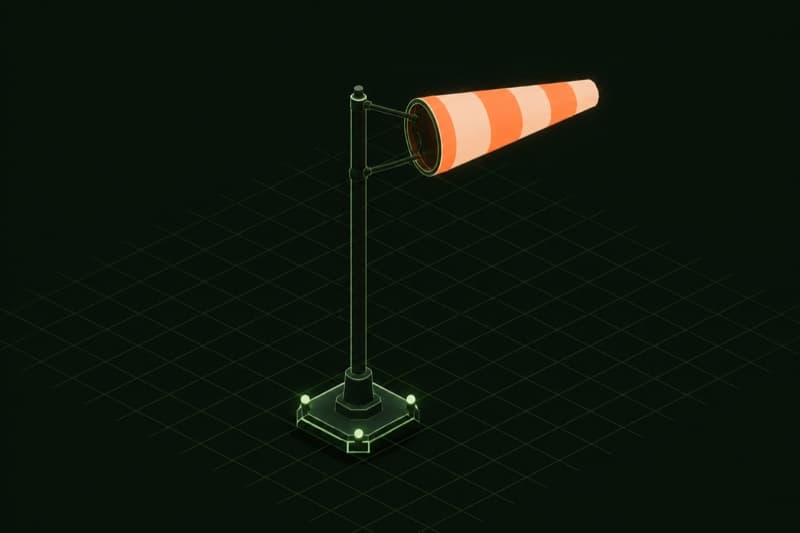
Heliport wind cones are sized and positioned to the wind indicator requirements in ICAO Doc 9261 and CAP 437 for helidecks, giving helicopter pilots a clear read on surface wind during approach, hover, and departure at rooftop, ground-level, and offshore-style heliports. NLS supplies and installs heliport wind cones as part of turnkey heliport lighting and marking packages.
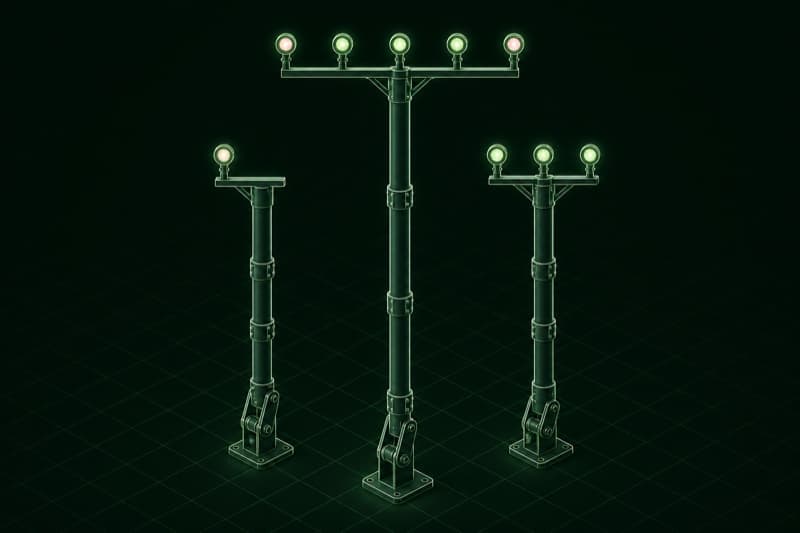
Frangible Masts
Frangible masts are the low-mass, low-strength support structures required under ICAO Annex 14 and FAA guidance for any fixture, wind cone, light, or antenna sited within a runway, taxiway, or helipad obstacle-limitation surface, designed to break away on aircraft impact rather than cause structural damage. NLS supplies frangible masts sized and coupled to the fixture and site loading they support.
Guides
Helipad Lighting Requirements: Perimeter, Floodlighting, Beacons and Wind Cones Under ICAO
What ICAO Annex 14 Volume II and GACAR Part 138 expect from helipad lighting, covering perimeter lights, floodlighting, heliport beacons and illuminated wind cones, explained qualitatively without invented specification values.
PAPI Systems Explained: How Four Light Units Guide an Approach
What a PAPI system is, how its four light units signal approach slope, the siting and calibration basics that determine accuracy, and the recurring maintenance obligations that keep it airworthy.