
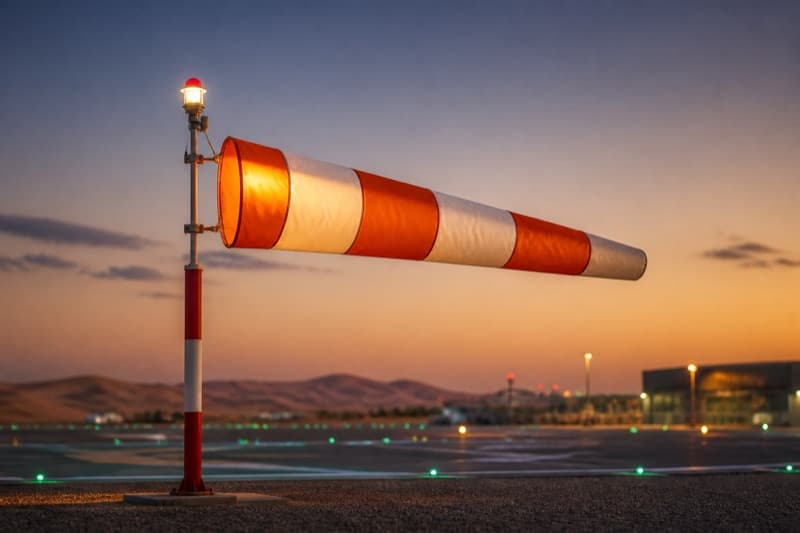
Wind Indicator Systems
Northlane Solutions supplies illuminated wind cones, solar powered wind cones, heliport wind cones and frangible masts for Saudi airfields and helipads, sized and positioned in accordance with ICAO Annex 14 so wind direction and an approximate strength reading remain visible to pilots at every stage of approach and landing.
A wind cone looks like the simplest piece of equipment on an airfield, and that appearance is exactly why it is easy to under-specify. It is also, for a pilot on final approach, one of the last visual references confirming wind direction and giving an approximate sense of strength before touchdown, and ICAO Annex 14 sets fairly specific requirements for its size, color, positioning and visibility rather than leaving it to a generic windsock.
Sizing, visibility and positioning
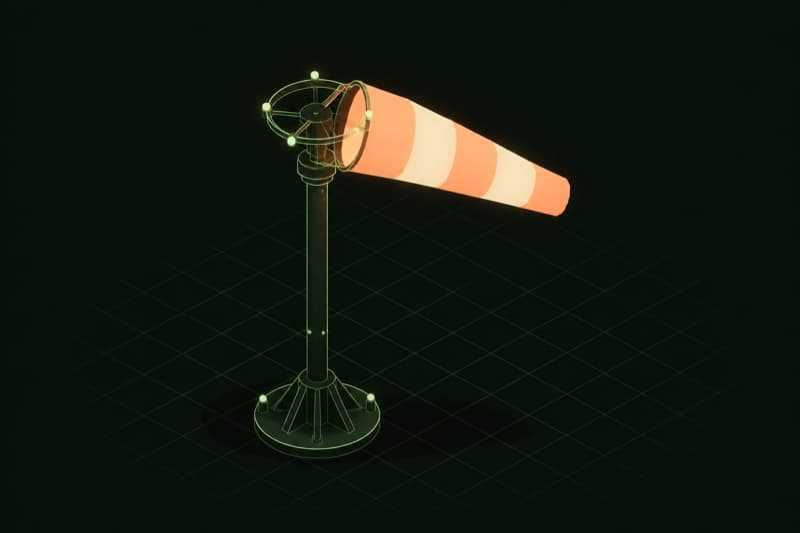
Wind cone dimensions and color scheme are set by the standard rather than by what happens to be available locally, since a cone that is too small or positioned where it can be obscured by nearby structures or terrain does not reliably convey wind information at the range a pilot needs it. At night, illumination is required so the cone remains readable in the dark, either through internal lighting or a floodlit installation, and NLS specifies the lighting method to the airfield's own operating hours and layout.
Solar power for remote and unlit sites
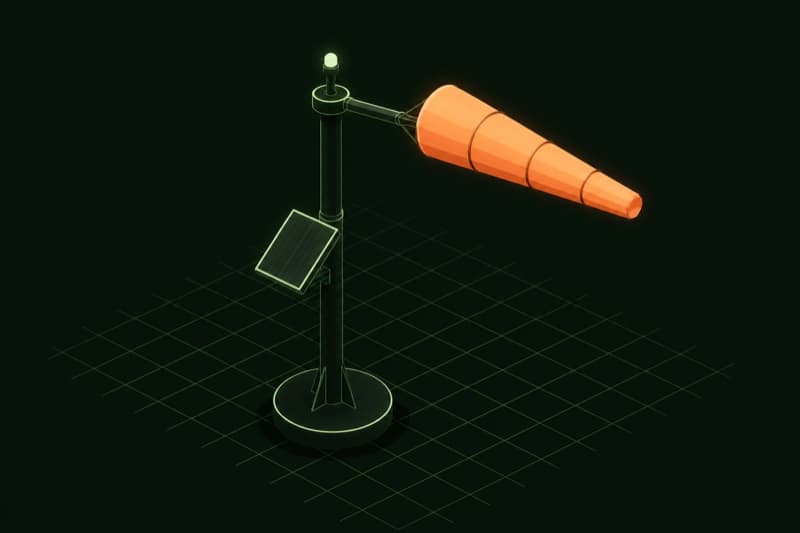
Not every wind cone location sits near a convenient power source, particularly on helipads at remote sites or facilities that operate without a full electrical infrastructure nearby. Solar powered wind cone units, with battery backup for continuous night operation, remove the need to run new cabling to a mast that may sit some distance from the nearest building, which is often the deciding factor on smaller or remote helipad projects.
Heliport specific requirements
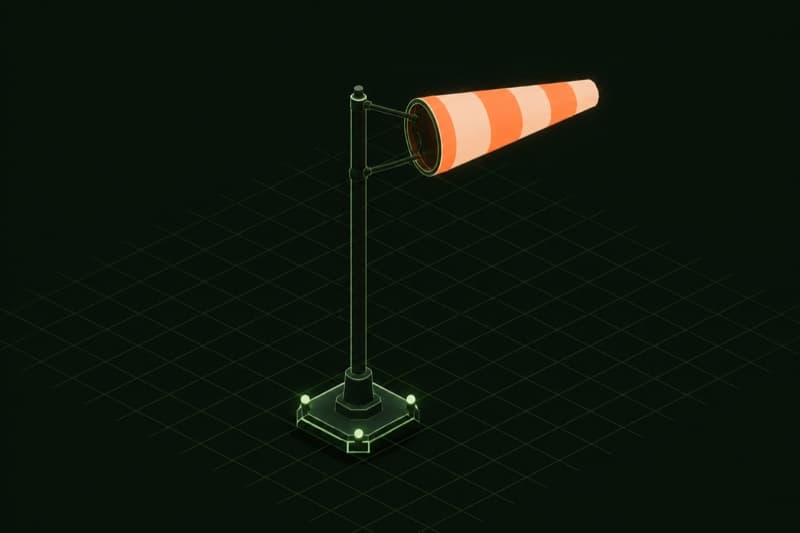
Heliports carry their own wind indicator requirements distinct from fixed wing airfields, generally involving a smaller cone suited to the shorter viewing distances involved in helicopter approach and departure, positioned so it remains visible from the final approach and take off area without interfering with rotor wash or obstacle clearance.
Frangible masts
The mast a wind cone sits on has its own requirement: where it stands within an area an aircraft could contact during an excursion, it must be frangible, engineered to break away on impact rather than remain rigid, so it does not become a secondary hazard to an aircraft that has already left the intended surface. This is a structural specification as much as an aviation one, and NLS supplies masts engineered to that frangibility requirement rather than a standard fixed pole.
Delivery
NLS supplies illuminated, solar powered and heliport wind cones together with frangible masts, positions each installation to the site's specific layout and lighting needs, and maintains the installed units so visibility and structural condition are checked on a scheduled basis rather than only when a fault is reported.
Related products
Guides
Frequently Asked Questions
What standard sets wind cone size and color?+
ICAO Annex 14 specifies wind cone dimensions, color scheme, positioning and visibility requirements. NLS sizes and positions each unit against the standard rather than a generic windsock size.
Why would a wind cone need to be solar powered?+
Where the mast location sits away from an existing power source, a solar unit with battery backup avoids running new cabling and still lights the cone for night operation, which is common at remote helipad sites.
Why does the mast need to be frangible?+
Where the mast stands in an area an aircraft could contact during an excursion, ICAO Annex 14 requires it to break away on impact rather than remain rigid, so it does not become a secondary hazard.
Are heliport wind cones different from airfield wind cones?+
Yes. Heliport wind cones are generally smaller, sized and positioned for the shorter viewing distances of helicopter approach and departure, and placed to remain visible without interfering with rotor wash or obstacle clearance.
Do you supply windsocks?+
Yes. Windsock is the everyday name for what ICAO Annex 14 and FAA specifications call a wind cone. We supply illuminated, solar powered and heliport windsocks with frangible masts for airfields and helipads across Saudi Arabia.