
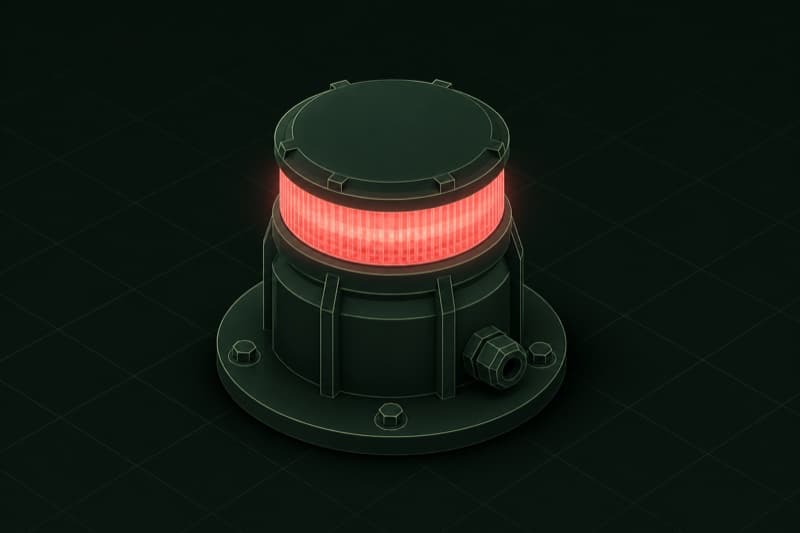
Helideck Status Lights
Helideck status lighting signals to an approaching pilot whether a deck is available, with a flashing red state indicating the deck is unsafe to land, controlled from the deck operator's station under CAP 437. NLS sources and installs helideck status lighting for helideck and heliport projects in Saudi Arabia.
Inside the Helideck Status Lights
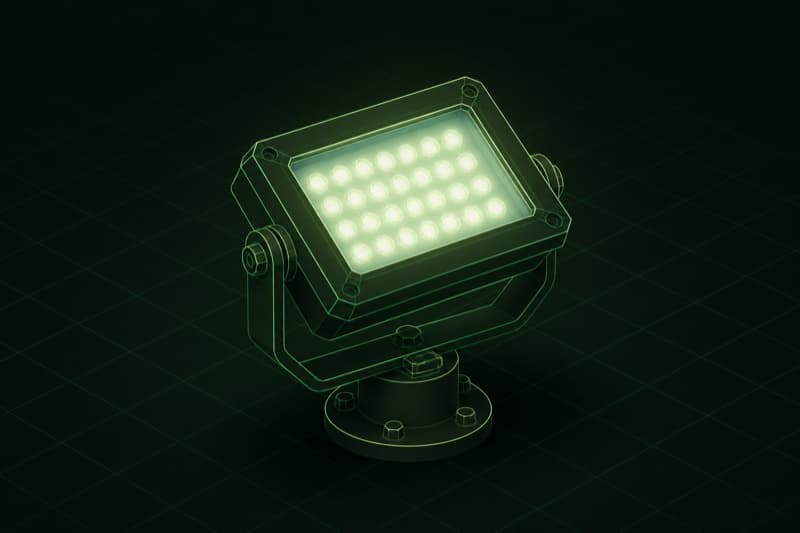
Helideck status lights tell an approaching pilot in one glance whether the deck is available to land. The assembly pairs a two-colour or dedicated red lens with an LED source and a control interface wired back to the deck operator's station, so the displayed state always matches the operator's own decision.
01
Light Housing
The sealed enclosure holds the lens, LED source and wiring against the deck's marine or rooftop exposure, keeping the fixture operational through salt spray, washdown and vibration.
02
Status Lens Assembly
Displays the deck status as a distinct colour, typically red for unsafe and green or off for available, shaped and filtered so the state is unambiguous from the approach path.
03
LED Source Module
Generates the light output behind the status lens at the intensity needed for the status to remain legible in daylight and at night from the pilot's viewing angle.
04
Status Control Interface
Receives the go or no-go command from the deck operator's station and switches the displayed colour accordingly, forming the direct link between the operator's decision and what the pilot sees.
05
Mounting Bracket
Fixes the fixture at the deck perimeter position and orientation the layout requires, low profile enough to stay clear of the rotor disc and passenger movement.
| Status colours | Distinct colour states for deck available and deck unsafe to land, matched to the operator's control logic |
| Control link | Wired connection to the deck operator's control station for direct status switching |
| Ingress protection approach | Sealed housing rated for marine or rooftop washdown and salt spray exposure |
| Mounting position | Deck perimeter mounting visible from the primary approach and departure paths |
| Body material class | Corrosion resistant metal or marine grade polymer suited to continuous salt air exposure |
| Operating environment | Engineered for offshore or rooftop helideck exposure across the Kingdom's climate conditions |
Helideck status lights are the switchable coloured perimeter units that communicate the deck's operational status to an approaching pilot before touchdown, distinct from the fixed TLOF perimeter lighting that simply marks the deck boundary at all times. A flashing red status light signals the deck is unsafe to land under CAP 437, the UK helideck design guidance widely referenced for offshore and onshore helideck lighting worldwide, alongside ICAO Annex 14 Volume II for the general heliport lighting framework. Additional status states, such as a clear or restricted indication, are configured by the deck operator's own procedures rather than fixed by CAP 437 itself.
Status lights are switched from the helideck operator's control station, whether that's a dedicated helideck control room on an offshore platform or a simpler local control point on a hospital rooftop pad or industrial site helideck, and the switching logic ties into the deck's operational procedures: a deck goes red the moment an obstruction, weather limit, or safety condition takes it out of service, and green only when the deck operator has confirmed it clear. This makes the control panel and its integration into deck operating procedure as much a part of the specification as the light fixtures themselves.
NLS sources status light fixtures to IEC 60598 luminaire safety, in the perimeter-mounted format CAP 437 specifies, matched to a control panel sized for the number of status states a specific deck's operating procedure requires, whether a simple red/green two-state system or a more elaborate scheme with an amber intermediate state. This sits inside the same coordinated helideck lighting design as TLOF perimeter lighting, floodlighting, and identification beacons rather than as an isolated add-on fixture.
Offshore and elevated onshore helidecks in the Gulf region see combined wind, salt-air, and high-heat exposure that pushes fixture and control panel housing selection past a standard onshore rating. IP66 or higher sealed enclosures, corrosion-resistant materials on the fixture body and control panel housing, and wind-rated mounting brackets matter more on an elevated or offshore deck than on a sheltered ground installation, and NLS checks these against the specific site's exposure category before recommending a fixture and control package.
NLS delivers helideck status lighting as part of a turnkey helideck package, design, supply, installation, and commissioning under one desk, sourced from established international aviation lighting manufacturers, priced in USD for supply and SAR for the customer-facing offer. A project team typically shares the deck's operating procedure and status states required, and NLS returns a fixture, control panel, and switching logic recommendation with a matched quote.
Specifications
- ✓Flashing red unsafe-to-land signal per CAP 437, within the wider ICAO Annex 14 Volume II heliport lighting framework
- ✓Switchable status states controlled from a deck operator control panel, configured to the operator's own procedures
- ✓Luminaire safety to IEC 60598
- ✓Corrosion-resistant housings specified to the ingress protection rating offshore and elevated Gulf-region exposure requires
- ✓Wind-rated mounting brackets for offshore and elevated onshore helidecks
- ✓Control panel sized to the number of status states a site's operating procedure requires
Frequently Asked Questions
What's the difference between helideck status lights and TLOF perimeter lights?+
TLOF perimeter lights are fixed green and simply mark the deck boundary at all times. Status lights are switchable, with a flashing red state under CAP 437 indicating the deck is unsafe to land, controlled from the deck operator's station.
What standard governs helideck status light colours?+
CAP 437 specifies a flashing red state indicating the deck is unsafe to land; additional status states are configured by the deck operator's own procedures, within the wider ICAO Annex 14 Volume II heliport lighting framework NLS engineers to.
Who supplies helideck status lighting in Saudi Arabia?+
NLS sources helideck status lighting and control panels engineered to CAP 437 and ICAO Annex 14 Volume II and delivers them turnkey, design, supply, installation, and commissioning, for helideck and heliport projects across the Kingdom.
What is the role of the Light Housing in Helideck Status Lights?+
The sealed enclosure holds the lens, LED source and wiring against the deck's marine or rooftop exposure, keeping the fixture operational through salt spray, washdown and vibration.
What is the role of the Status Lens Assembly in Helideck Status Lights?+
Displays the deck status as a distinct colour, typically red for unsafe and green or off for available, shaped and filtered so the state is unambiguous from the approach path.
What is the role of the LED Source Module in Helideck Status Lights?+
Generates the light output behind the status lens at the intensity needed for the status to remain legible in daylight and at night from the pilot's viewing angle.
What is the role of the Status Control Interface in Helideck Status Lights?+
Receives the go or no-go command from the deck operator's station and switches the displayed colour accordingly, forming the direct link between the operator's decision and what the pilot sees.
What is the role of the Mounting Bracket in Helideck Status Lights?+
Fixes the fixture at the deck perimeter position and orientation the layout requires, low profile enough to stay clear of the rotor disc and passenger movement.
Who supplies Helideck Status Lights in Saudi Arabia?+
Northlane Solutions (Northlane Solutions Company) supplies Helideck Status Lights across Saudi Arabia, including Riyadh, Jeddah, Dammam and Jubail. Send your specification and quantities to info@northlanesolution.com for a quotation.
Related products
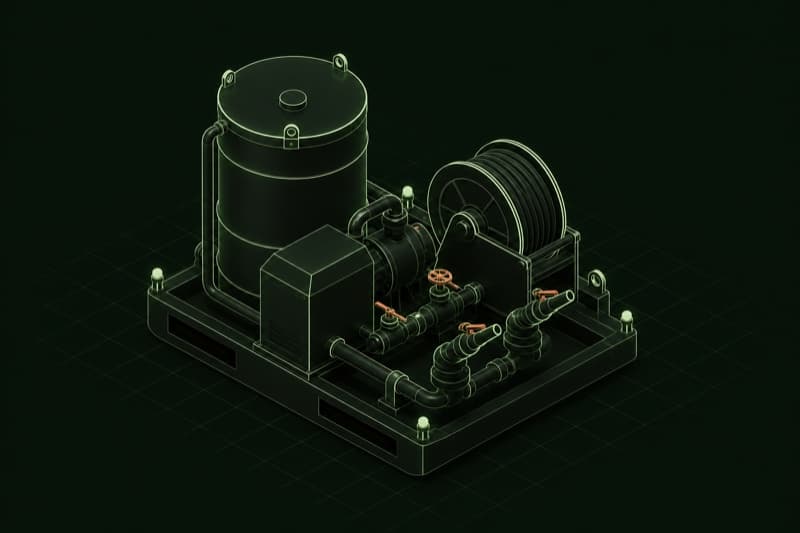
Heliport Firefighting Systems
Heliport firefighting systems supply the fixed or mobile foam and dry chemical equipment, plus the trained-response capability, that a helipad or heliport needs to meet its required aviation rescue and firefighting category under ICAO Doc 9261 and NFPA 418. NLS scopes, supplies, and installs heliport firefighting equipment, matched to a site's category and deck configuration.
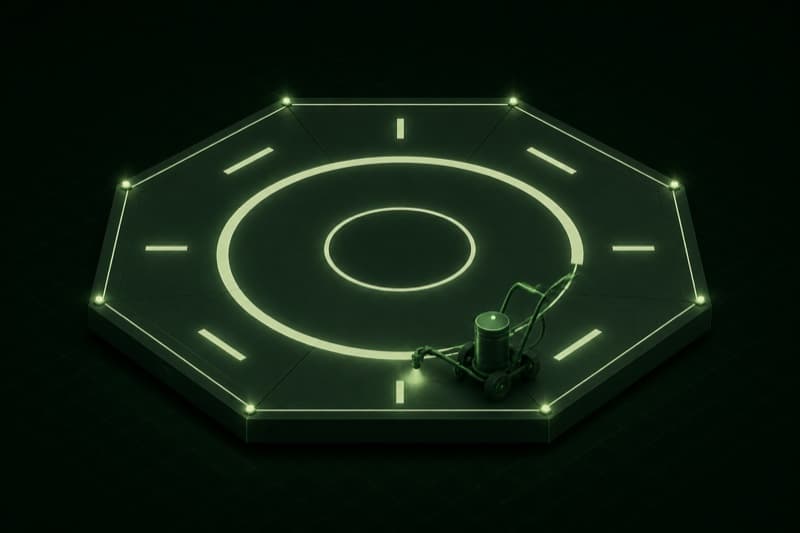
Heliport Marking Services
Heliport marking services paint and apply the TLOF and FATO boundary lines, the H identification marking, the maximum weight figure, and approach and wind direction markings a helipad needs, engineered to ICAO Annex 14 Volume II and GACAR Part 138 dimensions, tolerances, and colours. NLS delivers heliport marking, survey through application and inspection, across Saudi Arabia.
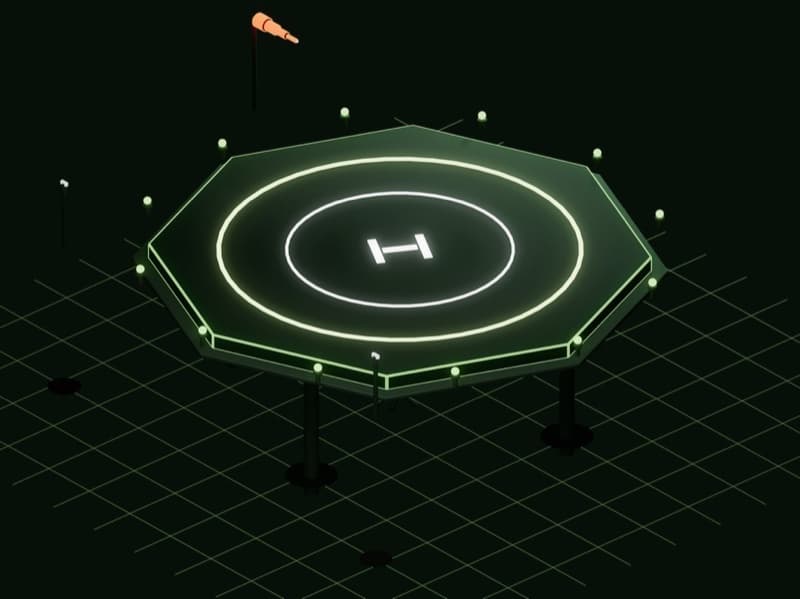
TLOF Perimeter Lights
TLOF perimeter lights are the fixed green fixtures that outline the touchdown and lift-off area of a helipad or heliport so a pilot can identify its edges and orientation at night or in low visibility. NLS sources and installs TLOF perimeter lighting engineered to ICAO Annex 14 Volume II and GACAR Part 138 across Saudi Arabia.
Heliport Floodlights
Heliport floodlights illuminate the touchdown and lift-off area, apron, and approach surface of a helipad broadly enough for a pilot to judge the deck surface and any surrounding obstacles during a night approach, working alongside perimeter and marking lights. NLS sources and installs heliport floodlighting engineered to ICAO Annex 14 Volume II for helipad and heliport projects in Saudi Arabia.

Heliport Beacons
Heliport beacons are the flashing identification lights that mark a heliport's location from a distance so an approaching pilot can find the site before the TLOF area and detailed markings become visible. NLS supplies beacons whose flash signature matches the standard the site is approved under, ICAO Annex 14 Volume II for a heliport designed to the ICAO framework.
Guides
Offshore Helideck Requirements Under CAP 437: What Operators Need to Know
What CAP 437 actually requires on an offshore helideck: perimeter lighting, status lights, friction, drainage, net versus no-net deck design, and the inspection routine that keeps a deck operational.
PAPI Systems Explained: How Four Light Units Guide an Approach
What a PAPI system is, how its four light units signal approach slope, the siting and calibration basics that determine accuracy, and the recurring maintenance obligations that keep it airworthy.