

Heliport Beacons
Heliport beacons are the flashing identification lights that mark a heliport's location from a distance so an approaching pilot can find the site before the TLOF area and detailed markings become visible. NLS supplies beacons whose flash signature matches the standard the site is approved under, ICAO Annex 14 Volume II for a heliport designed to the ICAO framework.
Inside the Heliport Beacons
A heliport beacon is the long-range identification light that draws a pilot's eye to the site before any pad markings are visible. A sealed optical head, its light source, a flashing control unit and a mounting mast work together to put a consistent, code-compliant flash signature above the surrounding terrain.
01
Dome Housing
The weatherproof outer dome protects the optical and electrical components from rain, dust and impact while allowing the light output to pass unobstructed through 360 degrees of azimuth.
02
Optical Lens
Shapes the raw light source into the wide-angle beam a beacon needs to be visible from any direction of approach, and gives the fixture its aviation green or white colour output.
03
Light Source Module
Generates the beacon's light output at the intensity the site's aeronautical study requires. An LED source gives long service life at height, where relamping means closing the approach.
04
Flasher Control Unit
Drives the beacon's flash rate and, on rotating designs, its rotation speed, holding the signature within the flash frequency the applicable standard specifies so the beacon reads correctly against other aeronautical lights.
05
Mounting Mast
Raises the beacon clear of surrounding structures and terrain to the height the site layout requires, while itself staying low enough not to become an obstruction to the approach it marks.
| Light colour | Aviation green or white per the site's approved flash signature |
| Flash pattern | Rotating or flashing beam meeting the applicable heliport beacon flash frequency |
| Visibility coverage | 360 degree azimuth output for identification from any approach direction |
| Body material class | Corrosion resistant metal and impact rated polymer dome suited to continuous outdoor exposure |
| Mounting | Mast or pole mounted at the height and offset the aeronautical study specifies |
| Operating environment | Engineered for outdoor heliport exposure across the Kingdom's temperature and dust conditions |
A heliport beacon is the long-range identification light that lets a pilot locate a heliport site before any other lighting or ground marking is visible, functioning the same way an airport rotating beacon does for a fixed-wing aerodrome but scaled and specified for a helicopter's shorter, steeper approach profile. The signature, typically an alternating or flashing white and green sequence under ICAO Annex 14 Volume II, distinguishes a heliport beacon from other aeronautical or obstruction lighting a pilot might pick up in the same sight line, which is why beacon flash pattern and colour sequence are not a fixture the market treats as interchangeable with generic amber warning beacons.
Beacon placement matters as much as the fixture itself. On a rooftop or elevated helideck, the beacon usually mounts at the highest practical point of the structure to maximise line-of-sight range against surrounding buildings, while a ground-level pad places the beacon where it stays visible from the expected approach direction without being confused with nearby obstruction lighting on adjacent structures. A poorly sited beacon, technically compliant on the fixture spec but hidden behind a parapet or a taller neighbouring building, defeats the purpose the standard exists for.
NLS sources heliport beacons to IEC 60598 luminaire safety, LED format for the flash reliability and reduced maintenance burden LED gives over older xenon or incandescent rotating beacon technology, and specifies the beacon as part of the same coordinated lighting package as TLOF perimeter lights, floodlighting, and approach aids rather than as a stand-alone fixture bolted on separately. This keeps flash timing, intensity, and visual hierarchy consistent across the whole heliport lighting scheme instead of one fixture competing visually with another.
Saudi elevated helideck installations carry the same wind-loading and thermal exposure considerations that apply to other rooftop-mounted heliport fixtures: a beacon housing and mounting bracket rated for the wind speed the structure sees at height, and a lens material and thermal derating checked against actual rooftop surface conditions rather than a generic ambient rating. Dust accumulation on the lens over time also reduces effective visual range on a longer interval than most maintenance programmes plan for, worth building into the site's maintenance schedule from the start.
NLS delivers heliport beacons as part of a turnkey helipad and heliport package, design, supply, installation, and commissioning under one desk, sourced from established international aviation lighting manufacturers, priced in USD for supply and SAR for the customer-facing offer. A project team typically shares the site layout and structure height, and NLS returns a beacon placement and fixture recommendation with a matched quote.
Specifications
- ✓Flash signature matched to the standard the site is approved under, ICAO Annex 14 Volume II for a heliport designed to the ICAO framework
- ✓Luminaire safety to IEC 60598, LED source for flash reliability over legacy xenon or incandescent rotating beacons
- ✓Beacon siting engineered for line-of-sight range from the expected approach direction, coordinated with the wider heliport lighting scheme
- ✓Wind-rated mounting brackets for rooftop and elevated helideck structures
- ✓IP-rated sealed housings for dust and sand exposure on Saudi sites
- ✓Compatible with standalone circuits or integration into a shared heliport lighting control panel
Frequently Asked Questions
What colour sequence does a heliport beacon flash?+
A heliport beacon's flash signature is matched to the standard the site is approved under. Under ICAO Annex 14 Volume II, that signature is a repeated series of short white flashes, distinct from generic amber obstruction beacons so a pilot can pick the heliport out from other lights in the same sight line.
Where should a heliport beacon be mounted on a rooftop helideck?+
At the highest practical point of the structure, chosen for line-of-sight range against surrounding buildings and the expected approach direction rather than a fixed default position. NLS reviews the site layout and structure height before recommending a placement.
Who supplies heliport beacons in Saudi Arabia?+
NLS sources LED heliport identification beacons engineered to ICAO Annex 14 Volume II and delivers them turnkey, design, supply, installation, and commissioning, as part of a coordinated heliport lighting package across the Kingdom.
What is the role of the Dome Housing in Heliport Beacons?+
The weatherproof outer dome protects the optical and electrical components from rain, dust and impact while allowing the light output to pass unobstructed through 360 degrees of azimuth.
What is the role of the Optical Lens in Heliport Beacons?+
Shapes the raw light source into the wide-angle beam a beacon needs to be visible from any direction of approach, and gives the fixture its aviation green or white colour output.
What is the role of the Light Source Module in Heliport Beacons?+
Generates the beacon's light output at the intensity the site's aeronautical study requires. An LED source gives long service life at height, where relamping means closing the approach.
What is the role of the Flasher Control Unit in Heliport Beacons?+
Drives the beacon's flash rate and, on rotating designs, its rotation speed, holding the signature within the flash frequency the applicable standard specifies so the beacon reads correctly against other aeronautical lights.
What is the role of the Mounting Mast in Heliport Beacons?+
Raises the beacon clear of surrounding structures and terrain to the height the site layout requires, while itself staying low enough not to become an obstruction to the approach it marks.
Who supplies Heliport Beacons in Saudi Arabia?+
Northlane Solutions (Northlane Solutions Company) supplies Heliport Beacons across Saudi Arabia, including Riyadh, Jeddah, Dammam and Jubail. Send your specification and quantities to info@northlanesolution.com for a quotation.
Related products

Helideck Status Lights
Helideck status lighting signals to an approaching pilot whether a deck is available, with a flashing red state indicating the deck is unsafe to land, controlled from the deck operator's station under CAP 437. NLS sources and installs helideck status lighting for helideck and heliport projects in Saudi Arabia.
Heliport Firefighting Systems
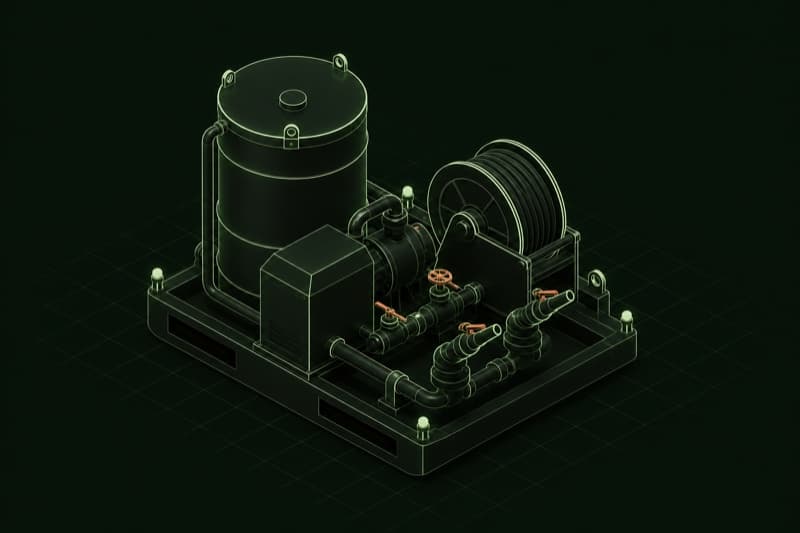
Heliport firefighting systems supply the fixed or mobile foam and dry chemical equipment, plus the trained-response capability, that a helipad or heliport needs to meet its required aviation rescue and firefighting category under ICAO Doc 9261 and NFPA 418. NLS scopes, supplies, and installs heliport firefighting equipment, matched to a site's category and deck configuration.

Heliport Marking Services
Heliport marking services paint and apply the TLOF and FATO boundary lines, the H identification marking, the maximum weight figure, and approach and wind direction markings a helipad needs, engineered to ICAO Annex 14 Volume II and GACAR Part 138 dimensions, tolerances, and colours. NLS delivers heliport marking, survey through application and inspection, across Saudi Arabia.

TLOF Perimeter Lights
TLOF perimeter lights are the fixed green fixtures that outline the touchdown and lift-off area of a helipad or heliport so a pilot can identify its edges and orientation at night or in low visibility. NLS sources and installs TLOF perimeter lighting engineered to ICAO Annex 14 Volume II and GACAR Part 138 across Saudi Arabia.
Heliport Floodlights
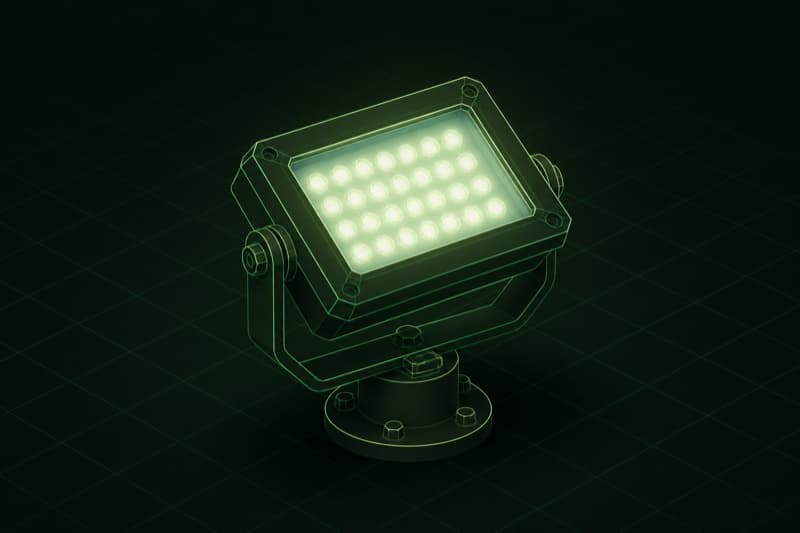
Heliport floodlights illuminate the touchdown and lift-off area, apron, and approach surface of a helipad broadly enough for a pilot to judge the deck surface and any surrounding obstacles during a night approach, working alongside perimeter and marking lights. NLS sources and installs heliport floodlighting engineered to ICAO Annex 14 Volume II for helipad and heliport projects in Saudi Arabia.