
Runway & Apron Services
Northlane Solutions provides runway rubber removal, runway and taxiway apron marking, airfield marking materials and airfield civil works for Saudi airports, restoring surface friction and repainting markings to ICAO Annex 14 standards without the extended runway closures a full resurfacing project would require.
A runway surface degrades in two separate ways that get confused with each other. Rubber deposit from repeated aircraft touchdown builds up in the touchdown zones and lowers the friction the surface can actually deliver, while markings fade under UV exposure and traffic and simply become harder to see. Neither problem requires resurfacing the runway, and treating both as a resurfacing job wastes money and, worse, wastes runway closure time an operating airport rarely has to spare.
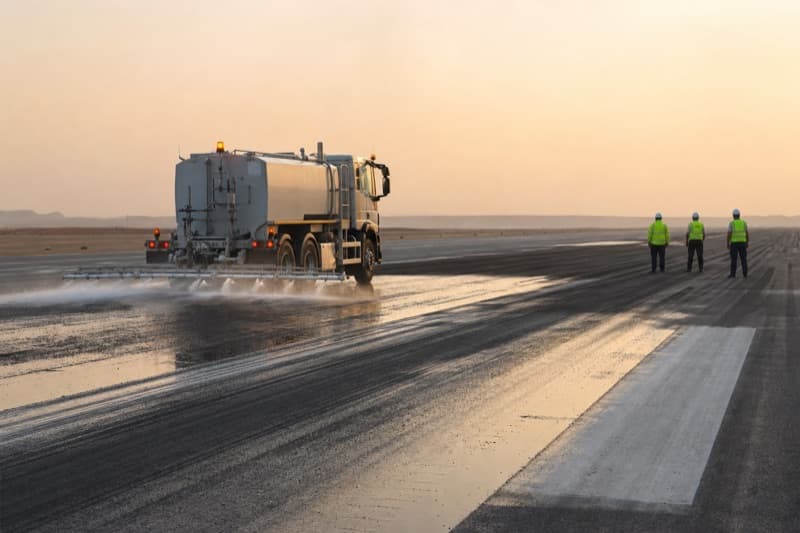
Rubber removal and friction restoration
Rubber deposit accumulates fastest in the touchdown zones where aircraft tires first contact the surface under load, and a heavy deposit can measurably reduce the friction available to a landing aircraft, which is exactly the condition surface friction testing is designed to catch. Removal methods range from high pressure water blasting to chemical treatment, chosen according to the deposit thickness and the surface material, and the objective in every case is to restore the pavement's own friction characteristics without damaging the surface texture that provides grip in the first place.
Marking that meets the standard
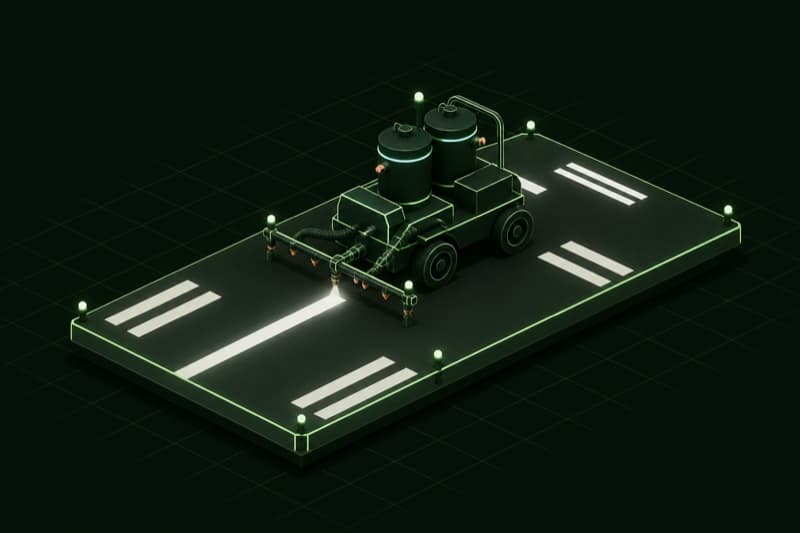
Runway and taxiway markings, threshold markings, touchdown zone markings, centreline and edge markings, and apron markings including stand guidance and equipment restraint lines, all follow specific dimensions, colors and placement set out in ICAO Annex 14. A repaint that gets the color right but the dimensions or reflectivity wrong has not actually restored compliance, it has restored appearance. NLS uses airfield grade marking materials selected for the traffic loading, surface type and climate the pavement experiences, since general purpose road marking paint does not survive aircraft loading or Saudi summer surface temperatures in the way airfield specified material does.
Civil works
Where the pavement itself, rather than only its surface treatment, needs attention, joint repair, crack sealing, and localized pavement repair fall under the same scope, addressed before they progress into the kind of structural distress that does force a full resurfacing project.
How the work is scheduled
Airfield surface work happens inside closure windows measured in hours, not days, on an operating airport, so NLS plans rubber removal, marking and any localized repair around the runway's actual available closure schedule rather than requiring an extended shutdown, sequencing the work so the surface returns to service within the window the airport can actually give it.
Related products

Guides
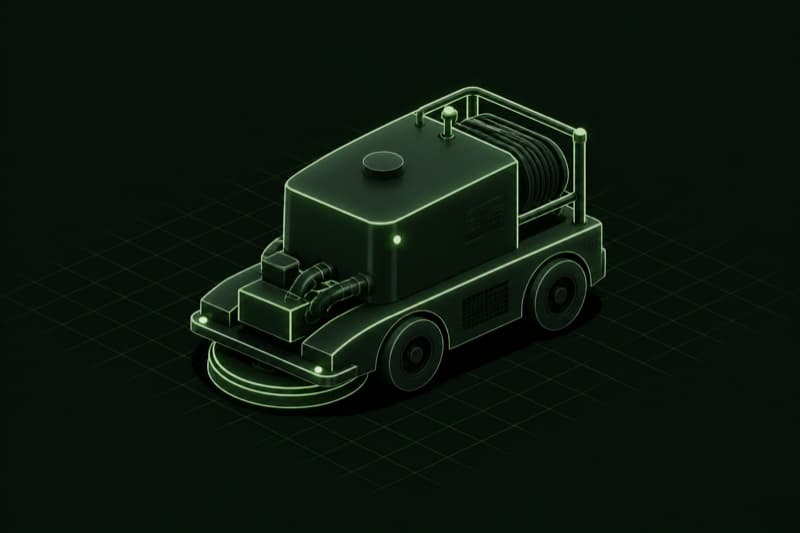
Runway Rubber Removal and Friction Testing: Why Airports Schedule Both Together
Why rubber deposits from landing aircraft drive runway friction loss, how friction testing catches it, why ultra high pressure water removal is the standard method, and how airports build a rubber removal schedule around traffic volume.
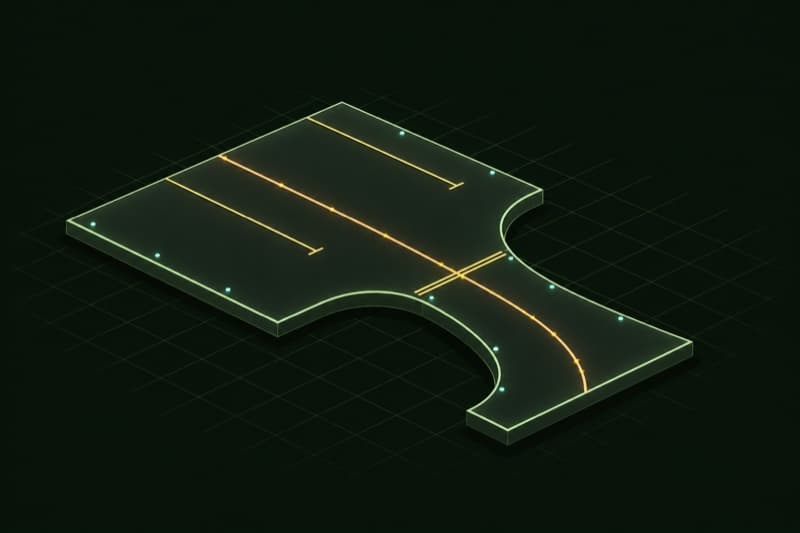
Prohibited Landing Marker: Definition, Standards & Installation Guide
Learn what a prohibited landing marker is, Saudi regulations, design standards, and how Northlane Solutions can supply and install compliant markers for your airfield.
Frequently Asked Questions
How often does runway rubber removal need to happen?+
It depends on traffic volume and aircraft type rather than a fixed calendar interval. Surface friction testing results are what determine when the touchdown zone friction has dropped enough to schedule removal.
Can rubber removal be done without closing the runway for days?+
Yes. This work is planned around the closure windows an operating airport can actually give, measured in hours, with the sequence of removal and marking arranged so the surface returns to service within that window.
Why can't ordinary road marking paint be used on a runway?+
Airfield markings need to survive aircraft tire loading, jet blast and Saudi surface temperatures while holding the reflectivity and dimensions ICAO Annex 14 sets. General purpose road paint is not tested against those conditions and fails faster.
Does this scope include repairing the pavement itself as well as the surface?+
Yes, where needed. Joint repair, crack sealing and localized pavement repair are addressed under airfield civil works before they develop into distress serious enough to force a full resurfacing project.