
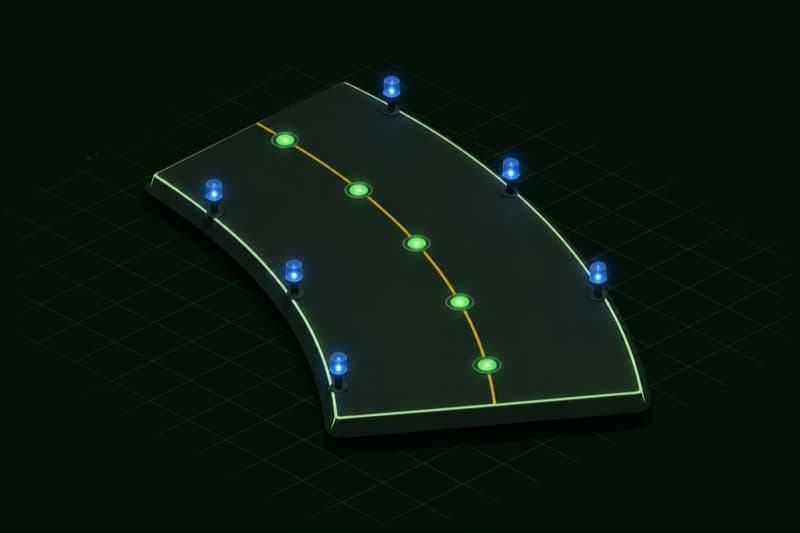
Taxiway Lighting
Taxiway lighting, blue edge lights and green centreline lights, guides an aircraft between the runway and apron on the ground at night or in low visibility. Northlane Solutions supplies taxiway edge and centreline fixtures built to ICAO Annex 14 Volume I, including elevated and in-pavement centreline options, as turnkey supply and installation for airfield and heliport projects across Saudi Arabia.
Inside the Taxiway Lighting
Taxiway centreline fixtures sit flush with the pavement and must carry repeated aircraft wheel loads, giving them a different anatomy from the elevated edge units used along the same taxiway. A load-bearing housing, prismatic lens, light engine, isolating transformer, and sealed cable gland work together so the flush unit stays watertight and level under continuous ground traffic.

01
Prismatic Lens
A flush, impact-resistant lens, blue for taxiway edge units and green for centreline units, that refracts the light engine's output into the low-angle beam a pilot sees while taxiing.

02
LED Light Engine
Generates the fixture's coloured output and holds a steady intensity over long service life, an important trait for centreline units that see continuous ground traffic passing directly over them.

03
Load-Bearing Housing
A reinforced flush-mount body rated to withstand repeated aircraft wheel loading without cracking or shifting, the feature that separates an inset fixture from an elevated edge light.

04
Isolating Transformer
Steps the constant current series circuit down to the fixture's operating voltage and isolates each unit so a single failure does not interrupt the loop feeding the rest of the taxiway.

05
Sealing Gasket and Cable Gland
Keeps surface water, fuel, and de-icing fluid out of the fixture body and cable entry, a requirement that matters more for an inset unit sitting flush in the pavement than for an elevated fixture above it.
FULLY ASSEMBLED
Taxiway Lighting


| Body material | Cast aluminium alloy or bronze housing rated for embedded pavement mounting |
| Colour output | Blue for taxiway edge lights, green for taxiway centreline lights per ICAO Annex 14 Volume I |
| Fixture type | Flush inset for centreline units, elevated omnidirectional for edge units |
| Load rating | Housing rated for repeated aircraft wheel loading on inset units |
| Power supply | Constant current series circuit via isolating transformer, matched to the taxiway lighting circuit |
| Control compatibility | Brightness step selection via ALCMS or manual regulator step control |
| Operating environment | Rated for sustained high-temperature, dust, sand, and surface fluid exposure |
The two taxiway lighting systems
Taxiway edge lights, blue fixtures set along the outer boundary of the taxiway surface, mark its usable width the same way runway edge lights mark a runway. Taxiway centreline lights, green fixtures embedded along the taxiway's centre line, give a pilot a precise track to follow at low ground speed through turns, intersections, and runway-holding positions where a wider edge-only reference would not be precise enough. Larger and more complex aprons generally specify centreline lighting in addition to edge lighting, while simpler taxiways may run on edge lighting alone.
Standards and where each type applies
ICAO Annex 14 Volume I sets the colour, intensity, and spacing for both fixture types, and GACAR Part 139 applies the same reference at licensed Saudi aerodromes. Centreline fixtures are almost always in-pavement units, since a raised fixture on the centre line itself would be a foreign object hazard directly under the aircraft's nose gear track. At runway-taxiway intersections and holding positions, centreline lighting frequently switches to a distinct colour pattern, alternating green and yellow, to warn the pilot of an approaching runway-holding point, a detail the lighting design specifies fixture by fixture.
Built for continuous ground movement
Taxiway fixtures see more repeated tyre and nose-wheel contact over their service life than most runway fixtures, since every aircraft movement between runway and stand crosses the same taxiway lanes. Northlane Solutions sources in-pavement taxiway fixtures rated for this load pattern, with housings sealed to IP66/IP68 against dust, sand, and the fuel and hydraulic fluid exposure common on active aprons, and checks fixture thermal rating against actual Saudi pavement surface temperature rather than the ambient air figure alone.
Turnkey delivery
Northlane Solutions delivers taxiway lighting as part of a coordinated airfield ground lighting scope: fixture selection for edge and centreline, intersection and holding-position pattern design where the layout calls for it, circuit and constant current regulator sizing, installation, and commissioning against the approved taxiway lighting plan. Fixtures are sourced from established international aviation lighting manufacturers, quoted in USD and SAR.
What to send for a quote
Send the taxiway lighting plan or layout showing edge and centreline extent, any intersection or holding-position lighting pattern, and the circuit configuration. Northlane Solutions returns a fixture and circuit recommendation with lead time and pricing, coordinated with runway lighting scope on the same project so installation is sequenced as one programme.
Specifications
- ✓Taxiway edge lights (blue) and centreline lights (green) per ICAO Annex 14 Volume I colour, intensity, and spacing requirements; GACAR Part 139 applies the same reference at licensed Saudi aerodromes
- ✓Centreline fixtures supplied as in-pavement units rated for direct nose-wheel and main-gear contact
- ✓Alternating green/yellow centreline pattern available for runway-holding position warning where the design specifies
- ✓Luminaire construction to IEC 60598
- ✓Housings specified to the ingress protection rating fuel, hydraulic fluid, dust, and sand exposure requires on active aprons
- ✓Constant current regulator sizing coordinated with the taxiway circuit configuration
Frequently Asked Questions
What is the difference between taxiway edge lights and centreline lights?+
Taxiway edge lights are blue fixtures marking the outer boundary of the taxiway surface. Taxiway centreline lights are green in-pavement fixtures along the centre line, giving a more precise track for low-speed ground movement through turns and intersections than edge lighting alone provides.
Why do some taxiway centreline lights turn yellow near a runway?+
Where a taxiway approaches a runway-holding position, the lighting design commonly switches the centreline pattern to alternating green and yellow, warning the pilot that the runway boundary is close and holding clearance may be required before proceeding.
Who supplies taxiway lighting for airfield projects in Saudi Arabia?+
Northlane Solutions sources and supplies taxiway edge and centreline lighting fixtures built to ICAO Annex 14, as turnkey supply and installation for airfield and heliport projects across the Kingdom.
What is the role of the Prismatic Lens in Taxiway Lighting?+
A flush, impact-resistant lens, blue for taxiway edge units and green for centreline units, that refracts the light engine's output into the low-angle beam a pilot sees while taxiing.
What is the role of the LED Light Engine in Taxiway Lighting?+
Generates the fixture's coloured output and holds a steady intensity over long service life, an important trait for centreline units that see continuous ground traffic passing directly over them.
What is the role of the Load-Bearing Housing in Taxiway Lighting?+
A reinforced flush-mount body rated to withstand repeated aircraft wheel loading without cracking or shifting, the feature that separates an inset fixture from an elevated edge light.
What is the role of the Isolating Transformer in Taxiway Lighting?+
Steps the constant current series circuit down to the fixture's operating voltage and isolates each unit so a single failure does not interrupt the loop feeding the rest of the taxiway.
What is the role of the Sealing Gasket and Cable Gland in Taxiway Lighting?+
Keeps surface water, fuel, and de-icing fluid out of the fixture body and cable entry, a requirement that matters more for an inset unit sitting flush in the pavement than for an elevated fixture above it.
Who supplies Taxiway Lighting in Saudi Arabia?+
Northlane Solutions (Northlane Solutions Company) supplies Taxiway Lighting across Saudi Arabia, including Riyadh, Jeddah, Dammam and Jubail. Send your specification and quantities to info@northlanesolution.com for a quotation.
Related products
PAPI Systems
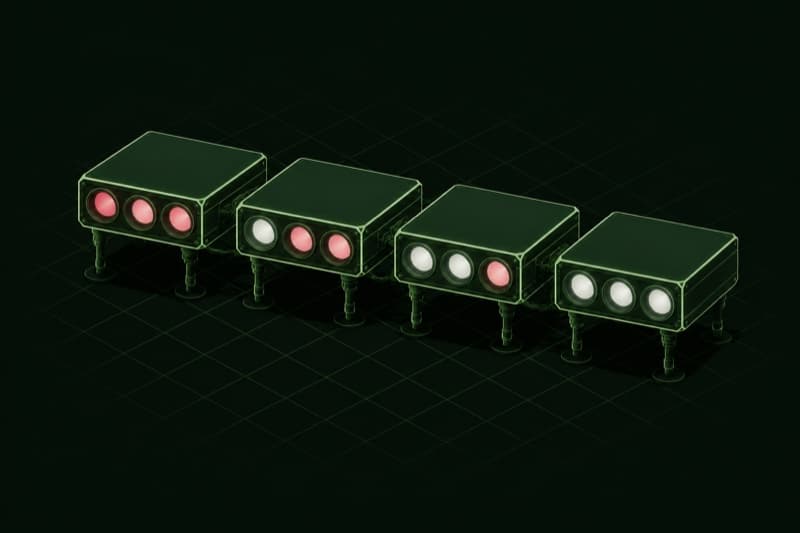
A PAPI, precision approach path indicator, is a row of ground units beside the runway that shows a pilot on final approach whether the aircraft sits above, on, or below the correct glide path through red and white lights. Northlane Solutions supplies PAPI systems built to ICAO Annex 14 Volume I for runway and heliport approaches across Saudi Arabia.
Approach Lighting Systems
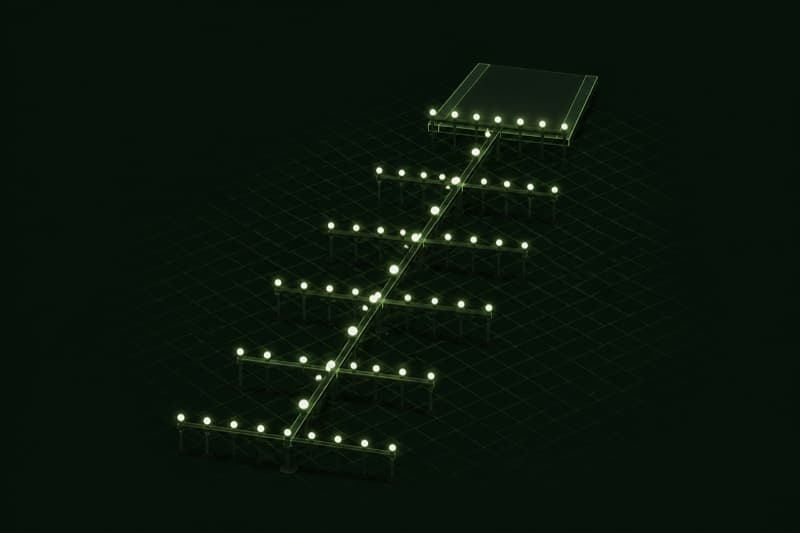
An approach lighting system extends a defined pattern of light bars, and on longer configurations sequenced flashing lights, outward from the runway threshold along the extended centreline, giving a pilot on final approach horizontal guidance before the runway itself becomes visible. Northlane Solutions supplies approach lighting sized to the runway's approach category, engineered to ICAO Annex 14 Volume I.

Airfield Guidance Signs
Airfield guidance signs, illuminated mandatory instruction, location, and direction signs placed along runways and taxiways, tell a pilot where they are and what boundary or intersection lies ahead, backing up ground lighting and radio instructions with a fixed visual reference. Northlane Solutions supplies illuminated airfield signage engineered to ICAO Annex 14 Volume I sizing and legend requirements across Saudi Arabia.
Runway Edge Lights
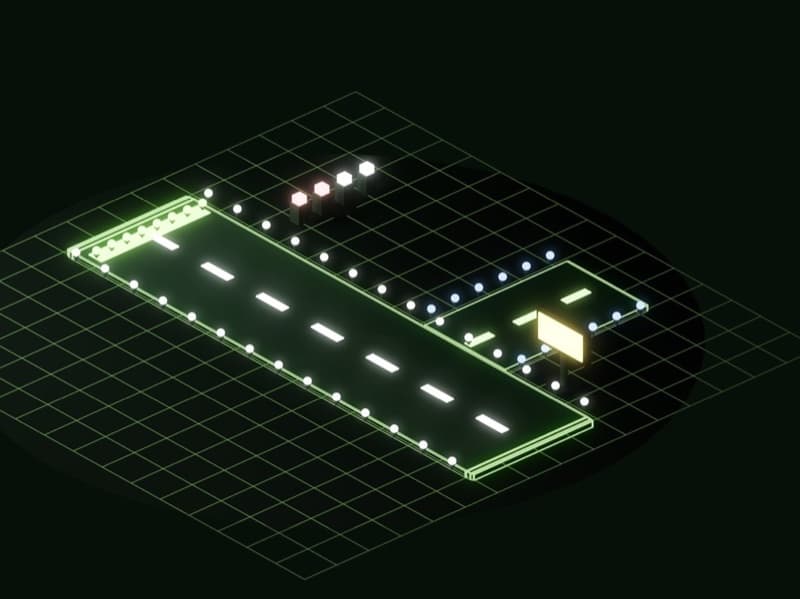
Runway edge lights are the fixed white fixtures spaced along both sides of a runway that define its usable width at night or in low visibility, switching to yellow along the final section approaching the runway end on longer runways. Northlane Solutions supplies runway edge light fixtures engineered to ICAO Annex 14 Volume I, elevated and in-pavement, across Saudi Arabia.

Threshold & Runway End Lights
Threshold and runway end lights mark where the landing surface begins and ends, showing green to an approaching aircraft and red to one departing off the far end. Northlane Solutions supplies threshold and end light fixtures, wing-bar arrays, and associated circuit components engineered to ICAO Annex 14 Volume I, for airfield and heliport projects across Saudi Arabia.