
Posted on 2026-08-01
Planning an Airfield Ground Lighting Project in Saudi Arabia
An airfield ground lighting project is a sequence of decisions that each narrow the ones after it. Get the scope wrong at the start, runway versus taxiway versus approach, and the control architecture, fixture choice and spares plan all inherit that mistake. This is a working sequence for planning the project in a Saudi context, where most facilities are either adding capability to an operational airfield or building new capacity that has to be commissioned without disrupting flights already using the field.
Start by separating the three lighting systems, not the budget
Runway edge and threshold lighting, taxiway centerline and edge lighting, and approach lighting systems serve different functions under different parts of the applicable standard, whether the facility falls under GACAR Part 139 for an aerodrome or is planned against the equivalent ICAO Annex 14 Volume I provisions it draws on. Treating them as one budget line invites the wrong tradeoff, cutting fixture count or spec on one system to protect another. Scope each system on its own operational requirement first: what category of operation the runway supports, what taxiway routing needs edge definition at night, and whether the approach lighting configuration is dictated by the runway's approach category. The budget conversation should follow the scope, not shape it.
The CCR is the system, not an accessory to it
A constant current regulator bank and the control and monitoring system built around it determine how the lighting behaves in operation: brightness stepping for visibility conditions, individual circuit monitoring so a failed fixture is flagged rather than discovered on a walk-down, and the interface to the tower or operations desk that lets a controller change intensity without a site visit. Specifying fixtures before the CCR and control architecture is settled is a common sequencing error, because fixture current draw and circuit design both depend on the CCR capacity chosen, not the other way around. On a project adding circuits to an existing airfield, the honest first question is whether the existing CCR and control system can absorb the addition, or whether the addition is really a CCR upgrade with new fixtures attached to it.
Halogen versus LED is a lifecycle decision, not a unit price decision
Halogen airfield fixtures remain in service across the Kingdom and are still a valid specification, particularly where an existing circuit is being extended and matching the installed base avoids a mixed-fixture circuit. LED airfield lighting draws meaningfully less power per fixture, runs cooler, and needs less frequent lamp replacement, which changes maintenance visit frequency more than it changes the up-front spec. The decision is not which fixture costs less to buy, it is whether the operating horizon and maintenance access justify the different lifecycle profile. A facility with in-house maintenance has a different answer than a remote site where every visit is a mobilization cost in its own right. Retrofitting an existing halogen circuit to LED is its own project with its own CCR compatibility question, not a fixture swap.
Phasing around live operations is a design constraint, not a construction afterthought
Most airfield ground lighting work in Saudi Arabia happens on a field that is already operating, which means the phasing plan has to be part of the design, not something worked out once construction starts. Circuits that must stay live through the work need to be identified before trenching starts, reduced-capability operation during transition windows needs to be agreed with the operator in advance, and any night-work window has to account for the lighting system itself being under construction. A phasing plan written after the design is finished tends to force compromises a phasing-aware design would have avoided, such as circuit segmentation that does not line up with the maintenance windows the operator can actually offer.
Control integration failures show up after commissioning, not during it
A CCR and control system that passes commissioning in isolation can still fail to integrate cleanly with an existing airfield control system, a tower interface, or a monitoring platform already on site. Compatibility should be confirmed at the specification stage, not discovered during integration testing, because a system that cannot report circuit status the way the operations desk expects becomes a permanent workaround rather than a fault that gets fixed. Naming the existing control platform and its interface protocol in the tender documentation prevents a larger problem later.
Spares strategy is where projects quietly fail after handover
A lighting system commissioned without a spares plan is a system that goes dark, circuit by circuit, as fixtures fail with no replacement on hand locally. The dominant driver here is not the spares themselves, it is the lead time to source a specific fixture, lamp, or CCR component from an international OEM once the installed base needs it, several times longer than most facilities plan for if spares were not held from day one. A spares strategy built alongside procurement, sized against the installed fixture count and CCR configuration, costs a fraction of an emergency mobilization later. Standardizing on fewer OEM part numbers across runway, taxiway and approach systems also pays off, concentrating the spares holding instead of spreading it across incompatible fixture families.
Sequencing the decisions in practice
The workable order is scope by system, settle the CCR and control architecture, choose the fixture technology against the maintenance picture, build phasing into the design rather than after it, confirm control integration on paper before site work starts, and size the spares holding against the finished design rather than guessing at handover. Northlane Solutions (NLS) supplies and installs airfield ground lighting systems in Saudi Arabia, from CCR and control integration through fixture supply and ongoing spares support, sourced from international aviation lighting OEMs and engineered to the applicable ICAO Annex 14 Volume I and GACAR Part 139 provisions. See our airfield ground lighting solutions. For the control layer and the spares strategy discussed above, see Airfield Lighting Control and Monitoring System (ALCMS) and AGL Spare Parts.
FAQ
Q: Should runway, taxiway and approach lighting be scoped as one system or separately? A: Each serves a different operational function under different provisions of the applicable standard, so each should be scoped against its own requirement first. A single combined budget line risks trading spec on one system to protect another.
Q: Is LED airfield lighting always the better choice over halogen? A: Not automatically. LED fixtures use less power and need less frequent lamp replacement, favoring sites with limited maintenance access, but an existing halogen circuit and its CCR configuration may make matching the installed base more practical for an extension.
Q: When should the spares strategy be planned, before or after commissioning? A: Before. Sourcing lead time from international OEMs for a specific fixture or CCR component is the dominant driver of downtime risk after handover, and holding spares sized at procurement stage avoids an emergency mobilization later.
Q: What is the biggest risk when adding lighting to an airfield that is already operating? A: Treating phasing as a construction-stage problem rather than a design input. Circuits that must remain live, transition-window operation, and night-work sequencing all need settling during design, not once trenching has started.
Related products
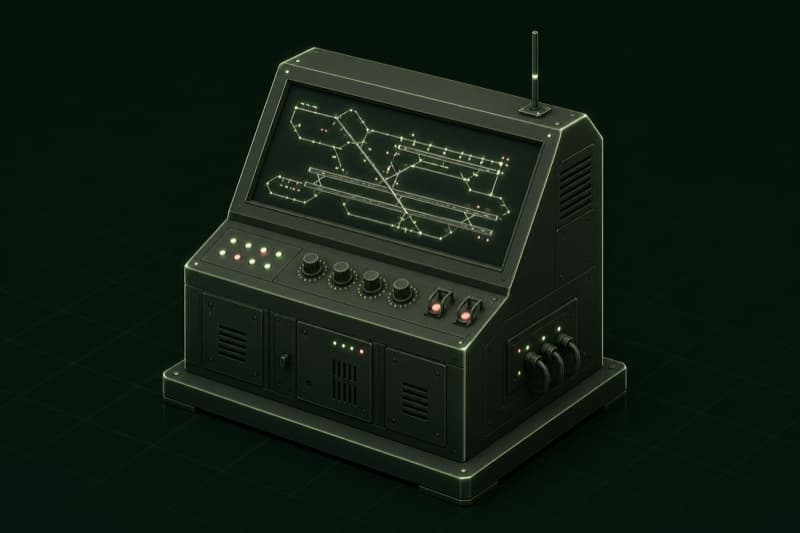
Airfield Lighting Control and Monitoring System (ALCMS)
An ALCMS is the software and control panel platform an air traffic controller uses to switch airfield lighting circuits on and off, select brightness steps, and see live fault status for every CCR and circuit from one workstation. NLS sources ALCMS platforms built to ICAO Annex 14 control requirements, integrated with the CCR equipment already on a project.
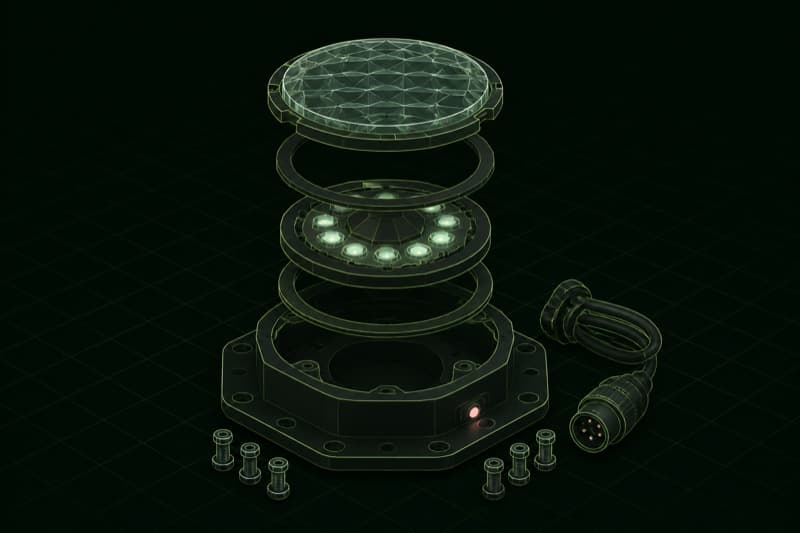
AGL Spare Parts
AGL spare parts covers replacement fixtures, lenses, LED modules, constant current regulators, isolating transformers, and connector kits sourced to match an airfield's existing lighting system exactly, so a repair restores original photometric and electrical performance rather than introducing a mismatched component. NLS sources these from established international aviation lighting OEMs against the fixture make, model, and circuit rating already installed.
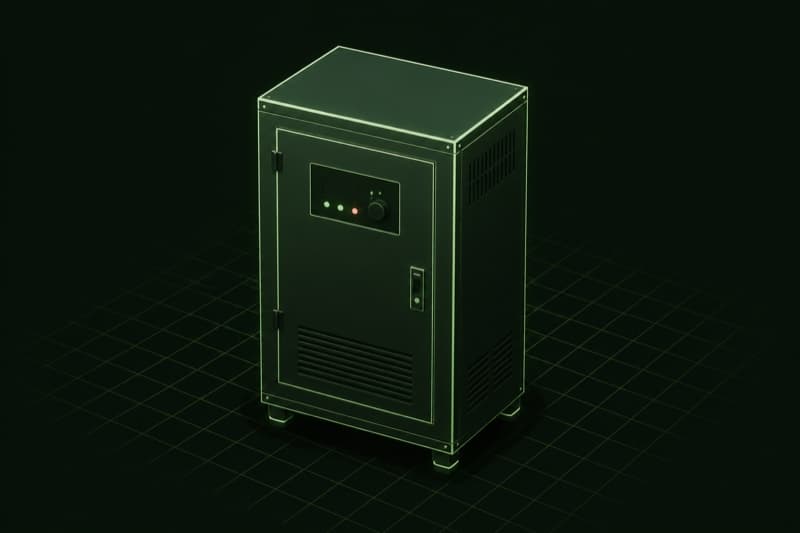
Constant Current Regulators (CCR)
A constant current regulator (CCR) feeds a series airfield lighting circuit a fixed current, commonly 6.6A, regardless of how many fixtures are wired into the loop, so every light in the string burns at the same intensity. NLS sources CCR units built to FAA AC 150/5345-10 and IEC 61822, sized to the circuit length a project's lighting plan specifies.
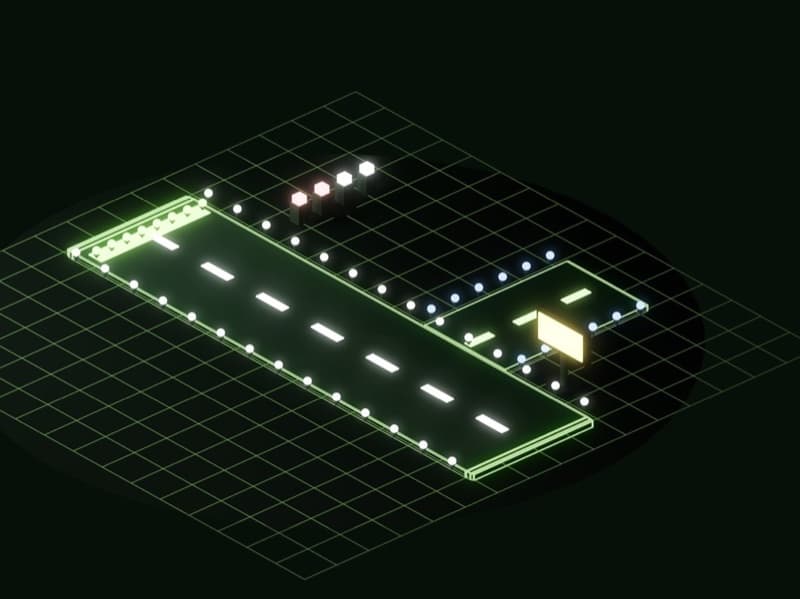
Runway Edge Lights
Runway edge lights are the fixed white fixtures spaced along both sides of a runway that define its usable width at night or in low visibility, switching to yellow along the final section approaching the runway end on longer runways. Northlane Solutions supplies runway edge light fixtures engineered to ICAO Annex 14 Volume I, elevated and in-pavement, across Saudi Arabia.