
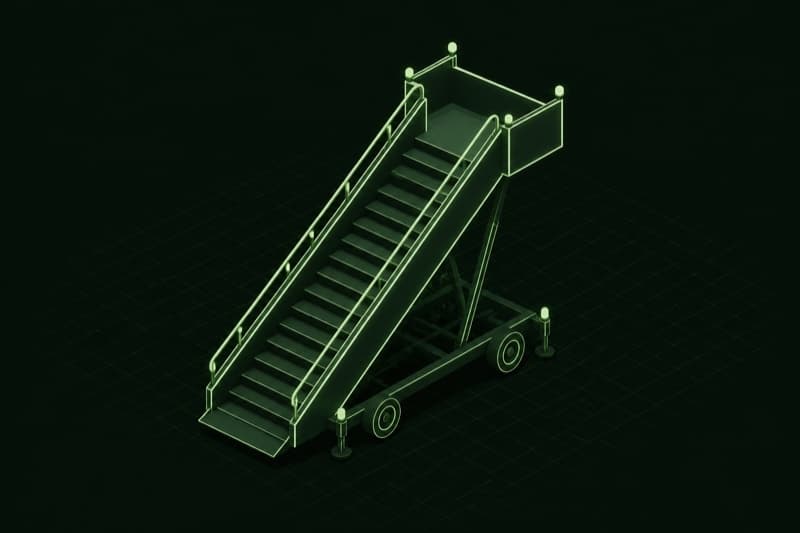
Passenger Boarding Stairs
Passenger boarding stairs let travelers board and disembark aircraft directly on the apron where no jet bridge is available, mobile or self propelled and sized to the aircraft door height served. NLS supplies boarding stairs sourced from established international ground support equipment manufacturers, matched to fleet type and stand layout across Saudi airports.
Inside the Passenger Boarding Stairs
Passenger boarding stairs give travelers a safe path between the apron and an aircraft door where no jet bridge is available, either towed into position or self propelled under their own power. The step assembly, platform, and chassis work together to match the aircraft door sill height and hold steady against wind and repeated boarding loads.
01
Step Assembly
The stairway itself, with tread width, riser height, and handrail spacing set to move passengers safely and quickly, including any deicing or non-slip tread surface for wet weather use.
02
Boarding Platform
The top landing that meets the aircraft door sill, fitted with a canopy or bumper edge on many units to seal the gap against the fuselage and prevent the platform shifting away during boarding.
03
Height Adjustment Mechanism
The hydraulic or mechanical screw system that raises or lowers the platform to align precisely with door sills across different aircraft types, from narrow-body jets to smaller turboprops.
04
Chassis and Undercarriage
The wheeled base carrying the structure, either towable with a hitch point or self propelled with its own engine and drive axle, plus outrigger legs or a wide wheelbase for stability while passengers are on the stairs.
05
Handrail and Safety Guarding
Continuous handrails and side guarding along the full stair run, engineered to protect passengers in wind and to meet ground handling safety requirements at the boarding point.
| Mobility | Towed or self propelled |
| Height range | Adjustable to match narrow-body and regional aircraft door sills |
| Platform sealing | Canopy or bumper edge against the fuselage |
| Stability | Outrigger legs or wide wheelbase during boarding |
| Tread surface | Non-slip, wet weather rated |
| Guarding | Continuous handrail along full stair run |
Where boarding stairs fit in ground operations
Not every stand has a jet bridge, and not every aircraft type is compatible with one. Regional stands, cargo aprons, remote parking positions and smaller aircraft all rely on passenger boarding stairs to move travelers between the terminal or apron bus and the cabin door. A boarding stair has to reach the correct door sill height for the aircraft it serves, sit stable on the apron surface, and hold up to continuous daily use in a high traffic environment.
Mobile versus self propelled
Simpler towed boarding stairs are pulled into position by a tug or tow vehicle and suit stands with lower turnaround frequency. Self propelled stairs carry their own drive system and operator cab, letting ground staff position them independently without a separate tow vehicle, which matters at busy stands where minutes count during turnaround. The choice depends on stand traffic volume and how much ground handling staff time can be allocated per movement.
Height range and aircraft compatibility
Door sill height varies meaningfully across aircraft types, from small regional jets to wide body aircraft, so a single stair height rarely covers a mixed fleet. Adjustable height stairs with a hydraulic or mechanical lift mechanism extend the range a single unit can serve, reducing the number of distinct stair units an operator needs to stock. Canopy options also matter for passenger comfort and equipment protection given sun and occasional rain exposure on Saudi aprons.
Supply from NLS
NLS supplies passenger boarding stairs sourced from established international ground support equipment manufacturers, specified against the door heights and traffic pattern of the stands they will serve. This includes advising on towed versus self propelled configuration, height adjustment range for mixed fleets, and canopy or weather protection options suited to the site. Delivery and positioning are coordinated with the operator's apron layout so units are placed where turnaround flow actually needs them.
Reliability at the gate
A boarding stair out of service disrupts passenger flow immediately, since there is no substitute path onto the aircraft at a non jet bridge stand. NLS supports its stair supply with access to spare parts and maintenance guidance so ground handling teams keep stairs serviceable through daily operating pressure.
Specifications
- ✓Towed and self propelled configurations to match stand traffic and staffing patterns
- ✓Adjustable height range covering regional aircraft through wide body door sills
- ✓Stable platform design rated for continuous daily apron use
- ✓Optional canopy and weather protection for passenger and equipment comfort
- ✓Sourced from established international ground support equipment manufacturers
- ✓Specified against stand layout and aircraft door height requirements
Frequently Asked Questions
How is the correct boarding stair height determined for a fleet?+
Height is set by the door sill of the aircraft types served, and where a fleet mixes several aircraft types, an adjustable height stair is usually the more practical choice than stocking a separate fixed height unit per type. NLS reviews the fleet before recommending a stair specification.
When does a stand need a self propelled stair instead of a towed one?+
Self propelled stairs suit stands with frequent turnarounds where ground staff need to reposition the stair quickly without waiting for a separate tow vehicle. Towed stairs remain a practical, lower cost option for stands with less frequent movement.
Can NLS supply boarding stairs for remote parking stands without a jet bridge?+
Yes. NLS supplies boarding stairs specifically for stands and aprons without jet bridge access, sized and configured for the aircraft types and traffic pattern of that location.
What is the role of the Step Assembly in Passenger Boarding Stairs?+
The stairway itself, with tread width, riser height, and handrail spacing set to move passengers safely and quickly, including any deicing or non-slip tread surface for wet weather use.
What is the role of the Boarding Platform in Passenger Boarding Stairs?+
The top landing that meets the aircraft door sill, fitted with a canopy or bumper edge on many units to seal the gap against the fuselage and prevent the platform shifting away during boarding.
What is the role of the Height Adjustment Mechanism in Passenger Boarding Stairs?+
The hydraulic or mechanical screw system that raises or lowers the platform to align precisely with door sills across different aircraft types, from narrow-body jets to smaller turboprops.
What is the role of the Chassis and Undercarriage in Passenger Boarding Stairs?+
The wheeled base carrying the structure, either towable with a hitch point or self propelled with its own engine and drive axle, plus outrigger legs or a wide wheelbase for stability while passengers are on the stairs.
What is the role of the Handrail and Safety Guarding in Passenger Boarding Stairs?+
Continuous handrails and side guarding along the full stair run, engineered to protect passengers in wind and to meet ground handling safety requirements at the boarding point.
Who supplies Passenger Boarding Stairs in Saudi Arabia?+
Northlane Solutions (Northlane Solutions Company) supplies Passenger Boarding Stairs across Saudi Arabia, including Riyadh, Jeddah, Dammam and Jubail. Send your specification and quantities to info@northlanesolution.com for a quotation.
Related products
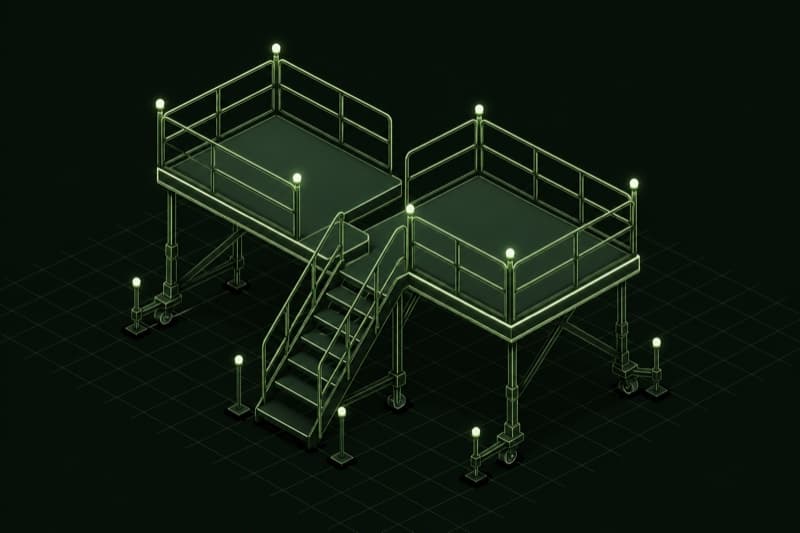
Aircraft Maintenance Platforms
Aircraft maintenance platforms give technicians safe elevated access to the fuselage, engines and upper structure during inspection and repair work, contoured or adjustable to the aircraft type serviced. NLS supplies maintenance platforms sourced from established international ground support equipment manufacturers, matched to fleet type and hangar or line maintenance requirements across Saudi Arabia.
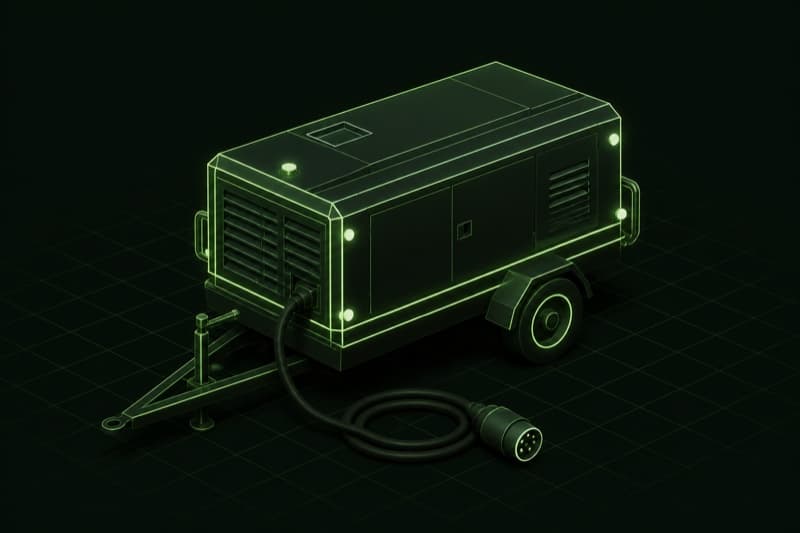
Ground Power Units
Ground power units are mobile or fixed electrical sets that supply aircraft with power on stand, so engines stay off during turnaround, boarding and maintenance. NLS supplies ground power units sourced from established international ground support equipment manufacturers, sized to aircraft type and apron power requirements across Saudi Arabia.
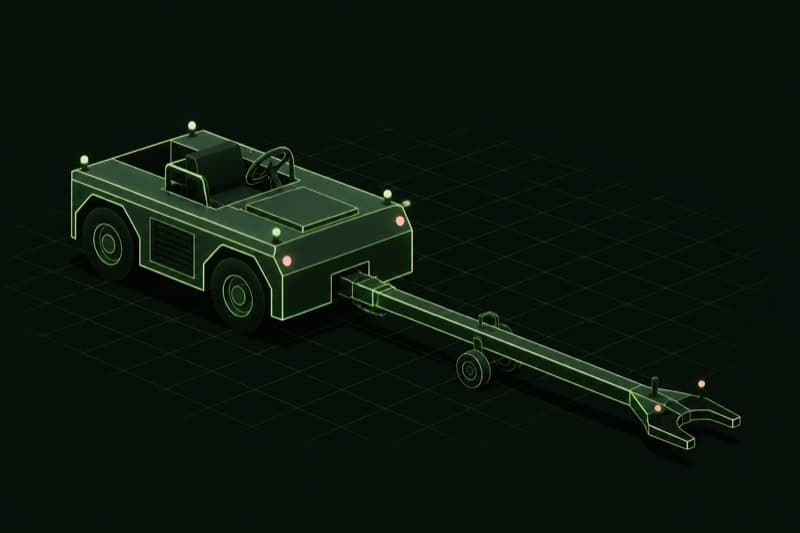
Aircraft Tugs and Towbars
Aircraft tugs and towbars move aircraft on the ground without using their own engines, for pushback, gate repositioning and hangar movements. NLS supplies towbar and towbarless tugs sourced from established international ground support equipment manufacturers, matched to aircraft type and apron operating patterns across Saudi Arabia.