
Aircraft Tugs and Towbars
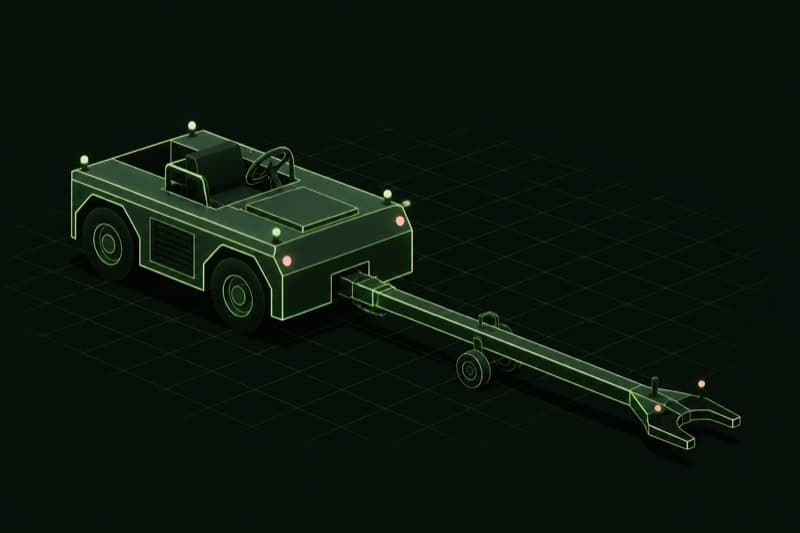
Aircraft tugs and towbars move aircraft on the ground without using their own engines, for pushback, gate repositioning and hangar movements. NLS supplies towbar and towbarless tugs sourced from established international ground support equipment manufacturers, matched to aircraft type and apron operating patterns across Saudi Arabia.
Inside the Aircraft Tugs and Towbars
An aircraft tug or towbar assembly connects to the nose or main landing gear to move an aircraft on the ground without using its own engines, for pushback, gate repositioning, and hangar transfers. A towbarless tug lifts and cradles the nose wheel directly, while a conventional towbar links a separate tractor to the aircraft through a rigid or articulated bar.
01
Tow Head or Cradle Assembly
The interface that grips the nose landing gear wheel, either lifting it clear of the ground on a towbarless tug or receiving the towbar pin on a conventional unit. Its shape and clamping force are matched to the specific aircraft type to avoid gear damage.
02
Towbar Arm
The rigid or articulated bar linking a separate tractor to the aircraft nose gear, sized and rated to the aircraft weight class it serves and fitted with a shear pin that fails safely before gear loads become excessive.
03
Drive Chassis and Wheels
The low-slung ballasted chassis carrying the drivetrain and running gear, built with a low center of gravity and traction wheels to generate the pulling and braking force needed to move aircraft weight on apron and hangar floor surfaces.
04
Operator Cab and Controls
Houses the driving position, steering, and load-monitoring instrumentation, giving the operator clear sightlines to the aircraft nose and gear during the towing or pushback maneuver.
05
Hydraulic Lift and Steering System
Powers the nose gear lifting cradle on towbarless designs and the steering geometry that keeps the tug tracking the aircraft's own steering angle, preventing gear scrubbing during turns.
| Towing method | Towbarless or conventional towbar |
| Aircraft compatibility | Matched to nose gear type and aircraft weight class |
| Drive configuration | Diesel or electric drivetrain, all-wheel traction |
| Steering tracking | Follows aircraft steering angle to prevent gear scrubbing |
| Overload protection | Shear pin or load-limiting cutoff on towbar linkage |
| Operating environment | Apron and hangar floor surfaces |
Moving an aircraft that cannot move itself
An aircraft's own engines are not used for most ground movement, pushback from a gate, repositioning between stands, or towing into a hangar for maintenance. That work falls to an aircraft tug, either a conventional unit connected through a towbar, or a towbarless tug that lifts and cradles the nose gear directly. Both approaches move tons of aircraft weight at walking pace under precise operator control, and the choice between them depends on fleet type, apron layout, and operating procedure.
Towbar versus towbarless
Towbar tugs connect to the aircraft nose gear through a rigid or articulated bar sized to the specific aircraft type, requiring the correct towbar for each fleet variant handled. Towbarless tugs eliminate that step by lifting the nose wheel onto the tug itself, reducing setup time and removing a wear part from the fleet, at a generally higher unit cost. Larger ground handlers with mixed fleets often run both, towbarless for high frequency turnarounds and towbar units for less common aircraft types or hangar work.
Sizing to the fleet
Tug capacity is driven by the maximum aircraft weight it will move, and undersizing a tug against actual fleet weights creates a genuine safety and operational risk on the apron. Saudi apron conditions, high ambient temperature and heavy dust loading, also place additional demand on engine cooling and drivetrain components compared with more temperate markets, a factor worth weighing when specifying a unit for continuous Saudi operation.
What NLS supplies
NLS supplies both towbar and towbarless aircraft tugs sourced from established international ground support equipment manufacturers, specified against the aircraft types and duty cycle of the operator. This includes advising on towbar versus towbarless for the fleet mix in question, coordinating the correct towbar sizes where applicable, and arranging delivery to Saudi airports and hangar facilities. Where an operator runs a mixed fleet across narrow body and wide body aircraft, NLS helps determine whether a single high capacity tug or a combination of units better fits the operation.
Continuity of operation
A tug taken out of service for repair during peak turnaround hours has an immediate operational cost. NLS supports its tug supply with access to spare parts and servicing guidance so ground handling teams can keep tugs available through the demands of a busy schedule.
Specifications
- ✓Towbar and towbarless configurations across narrow body, wide body and business jet capacity classes
- ✓Capacity rated to maximum aircraft weight for the fleet served, with margin for safe operation
- ✓Engine and drivetrain components suited to sustained high temperature, high dust apron duty
- ✓Correctly matched towbar sizing per aircraft type for towbar-configured units
- ✓Sourced from established international ground support equipment manufacturers
- ✓Specified for mixed fleet operations spanning multiple aircraft types
Frequently Asked Questions
Should an operator choose a towbar or towbarless aircraft tug?+
It depends on turnaround frequency and fleet mix. Towbarless tugs suit high frequency operations where setup time matters, while towbar units remain practical for less common aircraft types or hangar movements. NLS reviews the operator's actual pattern before recommending a configuration.
What happens if a tug is undersized for the aircraft it moves?+
An undersized tug creates a real safety and operational risk on the apron, since it may not have the traction or braking capacity to control the aircraft's weight safely. NLS specifies tug capacity against the maximum aircraft weight in the operator's fleet, with margin, before supply.
Can NLS supply tugs for a mixed narrow body and wide body fleet?+
Yes. NLS specifies tugs or a combination of units against the full range of aircraft an operator handles, not sized to a single aircraft type alone.
What is the role of the Tow Head or Cradle Assembly in Aircraft Tugs and Towbars?+
The interface that grips the nose landing gear wheel, either lifting it clear of the ground on a towbarless tug or receiving the towbar pin on a conventional unit. Its shape and clamping force are matched to the specific aircraft type to avoid gear damage.
What is the role of the Towbar Arm in Aircraft Tugs and Towbars?+
The rigid or articulated bar linking a separate tractor to the aircraft nose gear, sized and rated to the aircraft weight class it serves and fitted with a shear pin that fails safely before gear loads become excessive.
What is the role of the Drive Chassis and Wheels in Aircraft Tugs and Towbars?+
The low-slung ballasted chassis carrying the drivetrain and running gear, built with a low center of gravity and traction wheels to generate the pulling and braking force needed to move aircraft weight on apron and hangar floor surfaces.
What is the role of the Operator Cab and Controls in Aircraft Tugs and Towbars?+
Houses the driving position, steering, and load-monitoring instrumentation, giving the operator clear sightlines to the aircraft nose and gear during the towing or pushback maneuver.
What is the role of the Hydraulic Lift and Steering System in Aircraft Tugs and Towbars?+
Powers the nose gear lifting cradle on towbarless designs and the steering geometry that keeps the tug tracking the aircraft's own steering angle, preventing gear scrubbing during turns.
Who supplies Aircraft Tugs and Towbars in Saudi Arabia?+
Northlane Solutions (Northlane Solutions Company) supplies Aircraft Tugs and Towbars across Saudi Arabia, including Riyadh, Jeddah, Dammam and Jubail. Send your specification and quantities to info@northlanesolution.com for a quotation.
Related products
Passenger Boarding Stairs
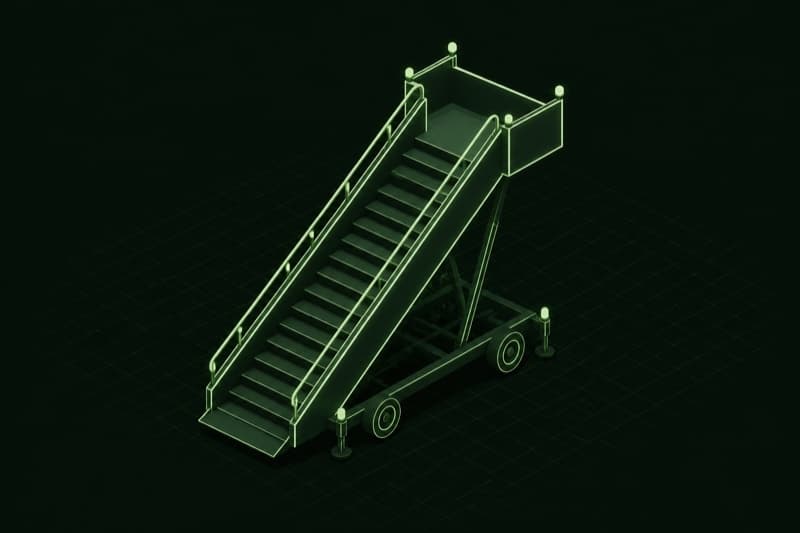
Passenger boarding stairs let travelers board and disembark aircraft directly on the apron where no jet bridge is available, mobile or self propelled and sized to the aircraft door height served. NLS supplies boarding stairs sourced from established international ground support equipment manufacturers, matched to fleet type and stand layout across Saudi airports.
Aircraft Maintenance Platforms
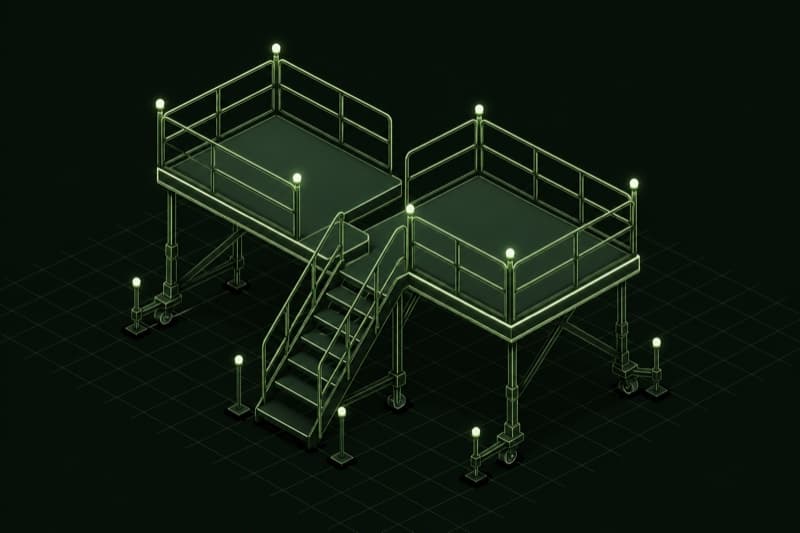
Aircraft maintenance platforms give technicians safe elevated access to the fuselage, engines and upper structure during inspection and repair work, contoured or adjustable to the aircraft type serviced. NLS supplies maintenance platforms sourced from established international ground support equipment manufacturers, matched to fleet type and hangar or line maintenance requirements across Saudi Arabia.
Ground Power Units
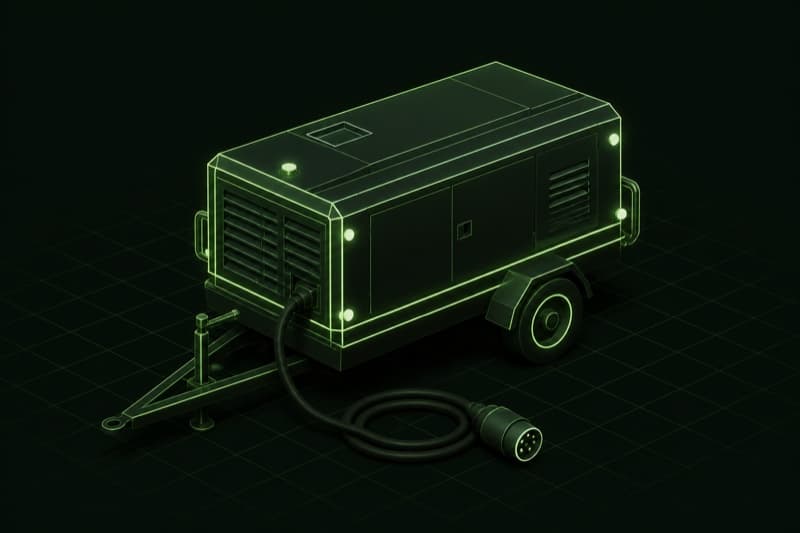
Ground power units are mobile or fixed electrical sets that supply aircraft with power on stand, so engines stay off during turnaround, boarding and maintenance. NLS supplies ground power units sourced from established international ground support equipment manufacturers, sized to aircraft type and apron power requirements across Saudi Arabia.