
Aircraft Arresting Systems
Aircraft arresting systems bring a landing or aborting aircraft to a controlled stop using an engaging cable, an energy absorbing unit, and supporting hardware, installed across military air bases. NLS supplies and supports these systems for military air bases in Saudi Arabia, sourcing from established international manufacturers and delivering the technical and logistics support that keeps installed systems mission ready.
Inside the Aircraft Arresting Systems
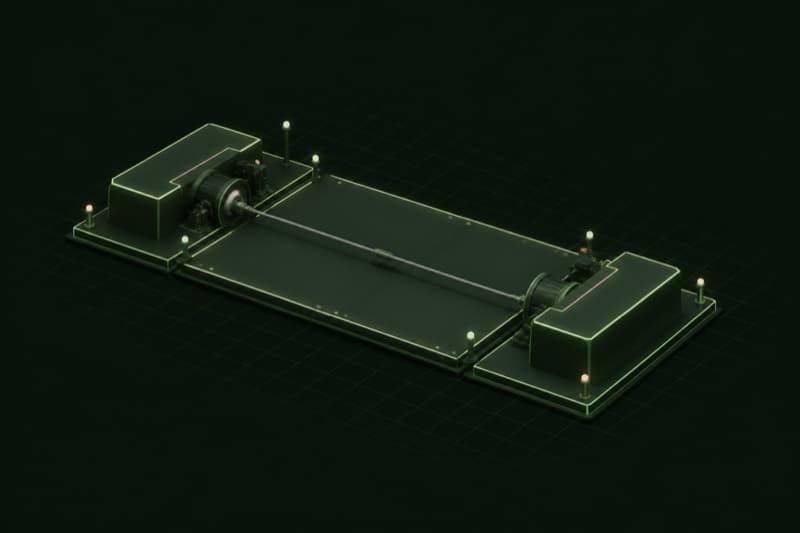
An aircraft arresting system converts an aircraft's forward momentum into controlled deceleration through a cable, an energy absorber, and the deck hardware that keeps the cable positioned across the runway. Each component has to survive repeated high-load engagements and remain serviceable between them, since the system only proves itself in the moment it is needed.

01
Arresting (Pendant) Cable
The steel cable stretched across the runway that the aircraft's tailhook catches on engagement, transmitting the aircraft's kinetic energy to the energy absorber through the purchase cable and sheave system.

02
Energy Absorbing Unit
A rotary friction brake or hydraulic absorber that pays out the purchase cable under a controlled, rising resistance, bringing the aircraft to a stop within the runway distance available without exceeding the airframe's tolerable deceleration.

03
Deck Sheaves
Pulleys set into the runway deck that route the purchase cable from the arresting cable to the energy absorber on each side of the runway, keeping the cable path aligned under load.

04
Cable Support Discs
Rubber or composite discs spaced along the runway that hold the arresting cable slightly clear of the pavement surface, so an approaching tailhook can catch it cleanly instead of the cable lying flat and unengageable.

05
Anchor Foundation
The embedded concrete and fitting that anchors the sheaves and absorber to the runway structure, carrying the full arresting load into the ground on every engagement.
FULLY ASSEMBLED
Aircraft Arresting Systems


| Engagement Method | Tailhook engages a pendant cable stretched across the runway |
| Energy Absorption | Rotary friction or hydraulic absorber, sized to aircraft hook load and approach speed |
| Cable Support | Support discs hold the cable clear of the pavement between engagements |
| Positioning | Fixed at defined runway stations per the base's operational requirement |
| Specification Basis | Selected against the operating aircraft's hook geometry and energy absorption requirement |
| Service Cycle | Rated for repeated engagement and reset without full system replacement |
What an aircraft arresting system does
An aircraft arresting system stops a fixed wing aircraft within a defined distance, either as an emergency measure after an aborted takeoff or a brake failure, or as a routine recovery method for aircraft types built to engage a cable on every landing. The system absorbs the aircraft's kinetic energy through an engaging cable connected to an energy absorbing unit, so the deceleration stays within limits the airframe and crew can tolerate.
Where these systems sit in a military air base
Arresting systems are a runway safety asset, positioned at defined points along the runway according to the base's operational requirements and the aircraft types it serves. They work alongside runway lighting, markings, and other airfield safety systems as part of the base's overall runway infrastructure, not as a standalone piece of equipment. A system that is correctly specified but poorly maintained becomes a liability, not a safety net, which is why supply and long term support need to sit under one accountable scope.
Saudi Arabia's requirement
Military air bases in Saudi Arabia operate a range of fixed wing aircraft types, each with different arresting hook geometry, approach speeds, and energy absorption requirements. Specifying the correct system, cable type, and energy absorber capacity against the aircraft types actually operating from a given base is a technical exercise that draws on the applicable military and aviation engineering specifications for arresting equipment, not a generic catalog selection.
NLS scope
NLS supplies spares, wear components and associated hardware for aircraft arresting systems in service at military air bases in Saudi Arabia, sourced from established international manufacturers with a record in military arresting gear. Requirements are worked from the installed system's documented specification, with part compatibility verified before supply. Where a base operates a system supplied by another party, NLS can support it with compatible spares against that same documented specification.
Continuity of support
An arresting system that sits unused for long stretches between engagements still has to work reliably the moment it is needed. NLS structures its support around that reality, keeping spares availability and technical response aligned with the base's readiness requirements, not treating the system as a one time delivery.
Specifications
- ✓Engaging cable and energy absorbing unit sized to the operating aircraft's arresting hook geometry and approach envelope
- ✓Selection and specification against applicable military and aviation engineering specifications for arresting equipment
- ✓Compatible with runway safety infrastructure including lighting and marking systems already in place
- ✓Sourced from established international manufacturers with a demonstrated record in military arresting gear
- ✓Supported by spares provisioning and technical advisory for installed systems from any source
- ✓Scoped to the specific aircraft types and operating tempo of the requesting air base
Frequently Asked Questions
Does NLS supply aircraft arresting systems for a specific aircraft type?+
The system is specified against the aircraft types actually operating from the base, including hook geometry, approach speed, and energy absorption requirement. NLS carries out this technical evaluation before recommending a system, instead of offering a single fixed configuration.
Can NLS support an arresting system that was not originally supplied by NLS?+
Yes. NLS provides compatible spares and technical advisory for installed arresting systems from other sources, so a base does not need a full system replacement to maintain serviceability.
Is this capability limited to a specific base or program?+
No. NLS supports aircraft arresting system supply and spares across military air bases in Saudi Arabia as a general capability, evaluated individually against each base's aircraft mix and requirement.
What is the role of the Arresting (Pendant) Cable in Aircraft Arresting Systems?+
The steel cable stretched across the runway that the aircraft's tailhook catches on engagement, transmitting the aircraft's kinetic energy to the energy absorber through the purchase cable and sheave system.
What is the role of the Energy Absorbing Unit in Aircraft Arresting Systems?+
A rotary friction brake or hydraulic absorber that pays out the purchase cable under a controlled, rising resistance, bringing the aircraft to a stop within the runway distance available without exceeding the airframe's tolerable deceleration.
What is the role of the Deck Sheaves in Aircraft Arresting Systems?+
Pulleys set into the runway deck that route the purchase cable from the arresting cable to the energy absorber on each side of the runway, keeping the cable path aligned under load.
What is the role of the Cable Support Discs in Aircraft Arresting Systems?+
Rubber or composite discs spaced along the runway that hold the arresting cable slightly clear of the pavement surface, so an approaching tailhook can catch it cleanly instead of the cable lying flat and unengageable.
What is the role of the Anchor Foundation in Aircraft Arresting Systems?+
The embedded concrete and fitting that anchors the sheaves and absorber to the runway structure, carrying the full arresting load into the ground on every engagement.
Who supplies Aircraft Arresting Systems in Saudi Arabia?+
Northlane Solutions (Northlane Solutions Company) supplies Aircraft Arresting Systems across Saudi Arabia, including Riyadh, Jeddah, Dammam and Jubail. Send your specification and quantities to info@northlanesolution.com for a quotation.
Related products
Arresting System Spares
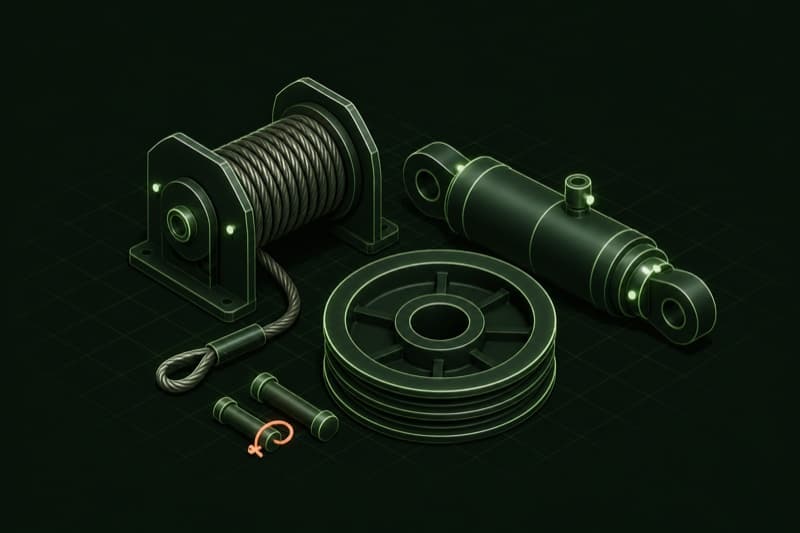
Arresting system spares keep an installed aircraft arresting system serviceable between engagements, covering engaging cables, energy absorbing components, sheaves, fittings, and control hardware. NLS supplies arresting system spares to military air bases in Saudi Arabia, sourced from established international manufacturers, so a system stays mission ready without waiting on a full replacement cycle.

Barrier Nets and Stanchions
Barrier nets and stanchions form a raised net barrier across the runway that engages an aircraft's airframe rather than its arresting hook, used where a hook engagement is not available or has failed. NLS supplies barrier nets, their supporting stanchions, and associated hardware to military air bases in Saudi Arabia, sourced from established international manufacturers.